
NAB Show
Session.
Visual Radio at Scale: Automation, Connected Car Platforms and Smarter Channel Regionalization
Audio-first broadcasting is becoming richly visual, personalized, and platform-driven—demanding new automation, metadata, and delivery architectures. This session explores three complementary advances: broadcast-grade visual radio automation that brings television-quality production to live talk shows with minimal staffing and new monetization options; engineering best practices for in-dash visual platforms that are redefining radio’s role in connected vehicles; and affiliate-based channel creation, where regionalized linear channels are assembled locally using ABR feeds, scheduling data, and dynamic manifests. Together, these papers show how broadcasters can scale visual experiences while improving agility, reliability, and revenue.
Subsessions
-
Successfully Launching Compelling Visual Radio Automation
Sunday, April 19 | 1:30 – 1:50 p.m. | N256
Fritz Golman
A case study in how RadioDNA implemented a steaming first, automated live radio talk show video system for NPR. The visual production value of the system rivals network television quality, substantially exceeding the typical "just put a camera in studio" approach. The system leverages connectivity with radio automation platforms to keep personnel involvement to a minimum. This presentation will chronicle the timeline of this implementation as well as how it's built on standards that allow not only rapid customizations but reuse for other programs and clients. The implementation also provides a mechanism for rolling in video spots that can monetize avails that would otherwise go unsold. Video output is sent to popular steaming platforms but can also be shared with cable or OTA television broadcasters. Recorded output can be automatically edited into short form podcasts.
-
Driving Innovation Through Participation: Engineering Best Practices for In-Dash Visual Platforms
Sunday, April 19 | 1:50 – 2:10 p.m. | N256
Joe Marshall, Alan Jurison
This paper examines the technical and strategic importance of active participation in digital ecosystems that power in-vehicle visual platforms in modern automobiles. For almost two decades, the industry prioritized enhancing RDS and HD Radio metadata quality; however, the focus must now include connected car platforms such as DTS AutoStage, which are rapidly gaining market share. These platforms are redefining radio’s presence in the dashboard, delivering advanced visual experiences that drive listener engagement, strengthen brand identity, enable new revenue models that increase client success, and provide actionable insights through return-IP connectivity. In 2026, delivering a best-in-class experience across RDS, HD Radio, and connected car platforms is no longer optional—it is a baseline requirement for survival. Participation is not merely recommended; it is essential, and broadcast engineers are at the center of this transformation. This paper shares best practices and current technical guidance informed by the Third Annual In-Vehicle Visuals Report, a comprehensive study of the top 100 best-selling new vehicle models in the U.S. and other emerging developments in the connected car ecosystem.
-
Affiliate Edge: Powering the Future of Channel Creation
Sunday, April 19 | 2:10 – 2:30 p.m. | N256
Ehren Stowers
Traditional regionalization of broadcast channels has relied on centralized playout, where every local variant is originated and monitored from a core operations hub. While proven, this model now carries significant pain points, including: • High infrastructure cost • Operational complexity and cost • Slow responsiveness • Limited scalability • High availability targets At the same time, primary distribution is transitioning from satellite contribution and ASI workflows to IP-first, cloud-aligned delivery. Broadcasters now expect 99.999% availability, deterministic failover, real-time monitoring, and greater agility. However, latency comparable to satellite is also required to support live event timing, cues, and confidence. Current centralized architectures strain to deliver these requirements cost-effectively. This paper outlines an alternative approach: Affiliate Edge Channel Creation, achieved by running the signal chain as a cloud-based service in IP. Instead of originating each variant centrally, a single national ABR feed is published into a CDN or distribution network. Each affiliate then receives a custom manifest and dynamically selects media segments to assemble the regionalized channel at the edge. Regional program changes, blackouts, late-running sports, and unique branding updates are applied locally through manifest-driven scheduling rather than baseband switching or manual intervention. Existing scheduling and rights-management systems remain in place, with the Affiliate Edge solution connecting to them through mechanisms such as BXF, SCTE-35, SCTE-104, and SCTE-224 signalling. The service acts as a bridge between the content owner and each affiliate, ingesting metadata and schedule instructions from systems such as Disney-PCC and Gracenote, while standard automation APIs minimize operational change. For blackout management, the system can automatically amend schedules and apply restrictions based on rights metadata or SCTE-224 policies. HTML-5 and templated graphics ensure consistent local branding without requiring deployment of full playout engines at each affiliate. Resilience and high availability are achieved through multi-region cloud deployments and edge caching of schedules and key media, providing continuity during upstream disruption. Current implementations achieve under 5 seconds end-to-end latency, with sub-2-second performance targeted using Low-Latency CMAF and MoQ (Media over QUIC), which can provide congestion-aware, low-latency media delivery suitable for live sports and breaking news. By reducing unnecessary infrastructure duplication, simplifying workflows, and aligning with modern IP-based distribution, Affiliate Edge Channel Creation addresses the core industry challenges of cost, complexity, agility, and latency—while maintaining the reliability and control expected of linear broadcast.
Speakers
 Jason OrnellasRegional Director of TechnologyBonneville International CorporationModeratorVIEW BIO
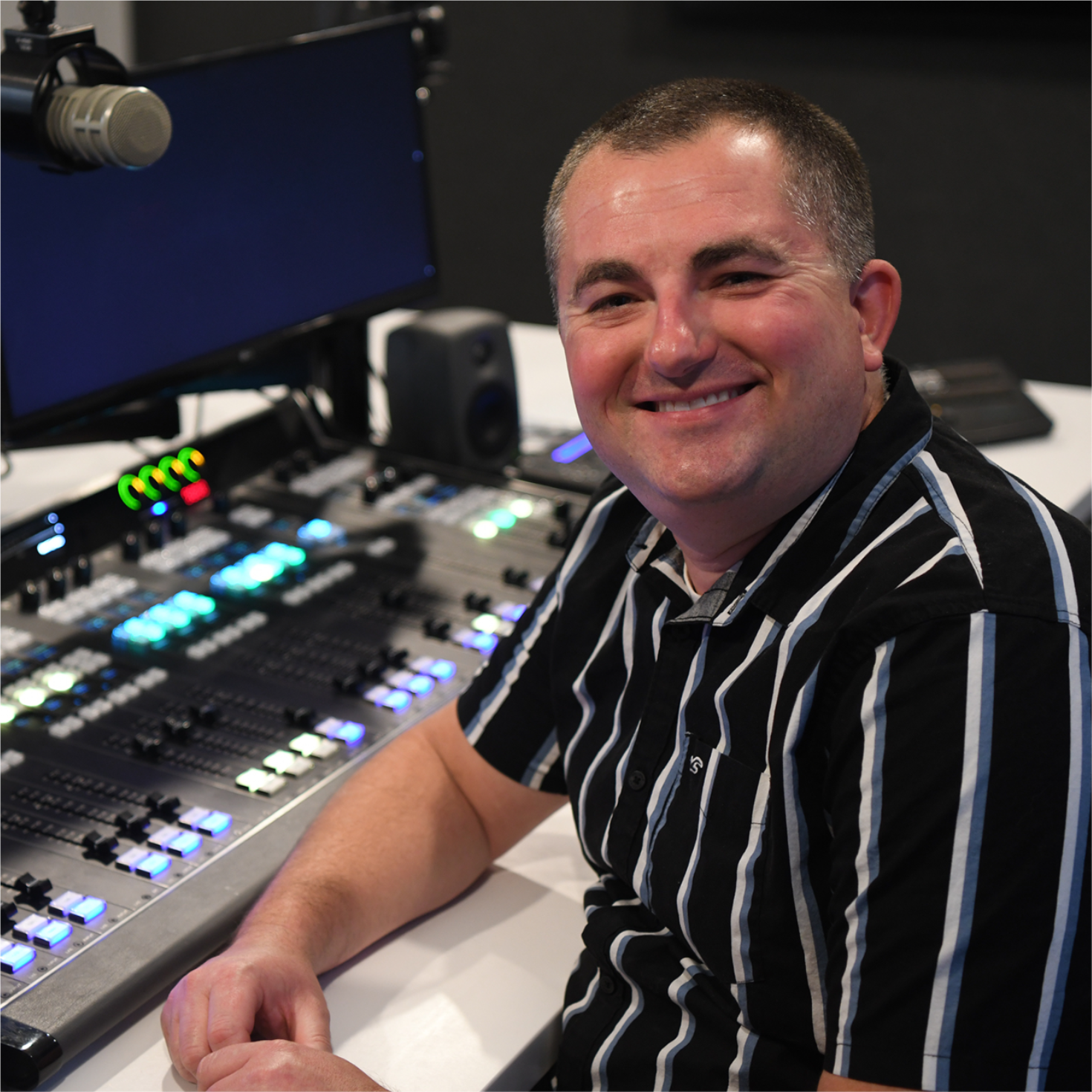 Alan JurisonSpecial Projects and InnovationQuuSpeakerVIEW BIO
 Ehren StowersPrincipal Product ManagerSynamediaSpeakerVIEW BIO
 Fritz GolmanDirector of Video Systems and AutomationRadioDNASpeakerVIEW BIO
 Joe MarshallVice President | Technical SuccessQuuSpeakerVIEW BIO
Interested in Sponsorship Opportunities?
Work with NAB Show’s Sales Team to explore how your brand can power the pros shaping what’s next.