
NAB Show
Exhibitor Rules and Regulations.
NAB Show Rules and Regulations
NAB Show has adopted the International Association of Exhibitions and Events’ “Guidelines for and Display Rules and Regulations.” Show management has the authority to interpret or amend the rules at any time, all decisions are final, and all requested changes are at the exhibitor’s expense. Your display products must fit within the confines of your booth and must be arranged, so they do not obstruct neighboring show-floor. Exhibitors must comply with all rules and regulations outlined in the Las Vegas Convention Center’s “Building User’s Manual” and NAB Show’s “Las Vegas Work Rules and Labor Union Regulations.” NAB reserves the right to apply penalties or enforcement actions as they see fit in response to any violations.
Key Resources
Please review the following key resources below before arriving on site.
Booth Design Guidelines
Review booth configurations, height limits, hanging signs, canopies, multi-level booths and structural requirements.

Booth Review Portal
All booths sized 800 square feet (74.32 square meters) or larger must submit booth designs and technical drawings for review and approval through your Exhibitor Resource Center. Please review booth design guidelines prior to submitting.

LVCC’s Building User Manual
Review Las Vegas Convention Center’s operational policies and building rules, including fire and safety requirements, food and beverage regulations, and facility guidelines.

Union Rules and Labor Regulations
Review labor jurisdictions, exhibitor work rules and on-site labor requirements to ensure you’re compliant before arriving on-site.
On-site Resolution Process
The on-site resolution process outlines the steps NAB Show management may take to address exhibitor policy violations and ensure compliance with event rules, safety requirements and operational standards. These steps will generally be followed in the order listed:
1
Verbal Warning
Minor violations will receive a verbal warning and resolution guidance.
2
Written Booth Adjustment Notice
If the issue remains unresolved, exhibitors may receive a written notice outlining:
- Specific booth concern(s)
- Recommended or required adjustments
- Deadline for compliance
- Next steps required by show management
3
Escalation for Noncompliance
Further action may include:
- Forced power shutoff
- Mandatory crowd-control measures
- Removal of booth elements or fixtures
- Restrictions on future participation in NAB Show
Our goal is to work collaboratively with exhibitors to resolve concerns promptly while maintaining a safe, professional and successful show floor experience for everyone.
Planning Your Exhibit
Before arriving on-site, review the planning requirements for your exhibit, including booth approvals, required documentation and insurance. Completing these steps in advance helps avoid delays, unexpected costs and last-minute changes.
Booth Review Requirements
Island Booths 800+ Square Feet (74.32 Square Meters)
All island booths equal to or greater than 800 square feet (74.32 square meters) are required to submit booth designs and technical renderings, including height and dimension specifications, to show management and the Las Vegas Convention and Visitor Authority at [email protected] by December 15, 2026.
How to Submit Booth Reviews
Booth Reviews and Variance Requests
Submission Deadline: December 15, 2026
Booth designs requiring review and requests for variances must be submitted for approval before booth construction or installation. Detailed submission instructions will be provided as they become available.
Exhibitors with booths under 800 square feet (74.32 square meters) must submit a booth design for review if requesting a variance or exception to the published NAB Show Booth Rules & Regulations.
Please allow approximately five business days for an initial response. Additional review time may be needed depending on the complexity of the design or variance request.
Exhibitors are responsible for obtaining all required approvals from NAB Show Management and the Las Vegas Convention Center Fire & Safety team. Additional submission requirements will be included with the booth review instructions.
What to Include:
Prepare both design renderings and technical drawings for review. All information must be clearly identified in English, with dimensions shown in feet and areas shown in square feet.
Your submission should clearly indicate:
- Exact height from the floor to the highest point of the booth, including structures, signage and hanging graphics
- Heights of all levels for multilevel exhibits
- Booth orientation, including neighboring booth numbers
- Direction in which doors open
- Locations of theaters, presentation areas or demonstration spaces, including anticipated audience capacity
- Locations of solid walls and any open, transparent or see-through areas
- Any booth design elements for which you are requesting a variance from the published rules
Variance Requests:
If requesting a variance, clearly identify:
- The specific NAB Show rule or guideline involved
- The requested exception
- The reason for the request
- Supporting drawings, measurements or other documentation to help evaluate the request
Submitting a variance request does not guarantee approval. Written approval must be received before proceeding with any design that falls outside the published booth regulations.
Important
Booth design approvals and approved variances are valid only for NAB Show 2027 and for the specific design submitted and approved. Changes to an approved design must be submitted for further review.
Questions?
Email NAB Show Exhibitor Services at [email protected] and a member of our team will get back to you as soon as possible.
Insurance Requirements
All exhibitors must obtain and maintain general liability insurance for the duration of NAB Show. The cost of this insurance is the sole responsibility of the exhibitor. Please note: Exhibitor liability insurance is separate from Exhibitor Appointed Contractor insurance.
A certificate of insurance must be emailed to Rainprotection Insurance at [email protected] before the first day of move-in.
Coverage Requirements
Exhibitor liability insurance coverage must remain in effect throughout the exhibitor’s participation in NAB Show and provide protection against claims involving bodily injury, death and property damage arising from the exhibitor’s use or occupancy of exhibit space.
You may be able to add the requirements outlined to an existing insurance policy. Please contact your insurance company directly.
Coverage must include:
- Insurance must be maintained through the term of the contract and must cover against claims for bodily injury, death and property damage occurring in or upon or resulting from the premises leased by NAB Show. Such insurance shall include contractual liability and product liability coverage, with combined single limits of liability.
- General liability coverage that meets required coverage limits
- The National Association of Broadcasters (NAB), Las Vegas Convention Center/LVCVA and Freeman must be named as additionally ensured on the policy.
- Workers’ compensation and occupational disease insurance must comply with all applicable federal and state laws and cover employees performing work on behalf of the exhibitor.
All exhibitor property must remain in exhibitor custody. Exhibitors are also responsible for transporting property to and from show floor throughout the show.
Minimum Coverage Limits
| Coverage Type | Minimum Limit |
|---|---|
| General Aggregate | $2 million |
| Products and Completed Operations Aggregate | $2 million |
| Personal and Advanced Injury | $1 million |
| Each occurrence | $1 million |
| Damage (any one instance) | $1,000,000 |
| Medical Expenses (any one person) | $10,000 |
Property Responsibility
NAB Show, Las Vegas Convention Center, Freeman, all other contracted vendors of the show, and their agents or employees shall not be responsible for any loss, theft, or damage to the property of the exhibitor or its employees or representatives. Further, the aforementioned parties will not be liable for damage or injury to persons or property during the term of this agreement from any cause whatsoever by reason of the use or occupancy of the exhibit space by the exhibitor, and the exhibitor shall indemnify and hold harmless the aforementioned parties from all liability which might ensure from any cause whatsoever. If the exhibitors’ materials fail to arrive, the exhibitor is nevertheless responsible for all due amounts. The exhibitor understands that none of the organizations or sponsors maintain insurance covering the exhibitor’s property, and it is the sole responsibility of the exhibitor to obtain such insurance.
Additional insurance and/or fire marshal approval may be necessary for certain booth sizes or equipment.
Booth Types
Unless you’ve purchased a Turnkey Package, booth space is “raw space” and is unfurnished and uncarpeted. You can rent furnishings through Freeman Online Services.
Types of Booths
Your booth type determines the design, height and display requirements that apply to your exhibit. Identify your booth configuration before reviewing the detailed guidelines.
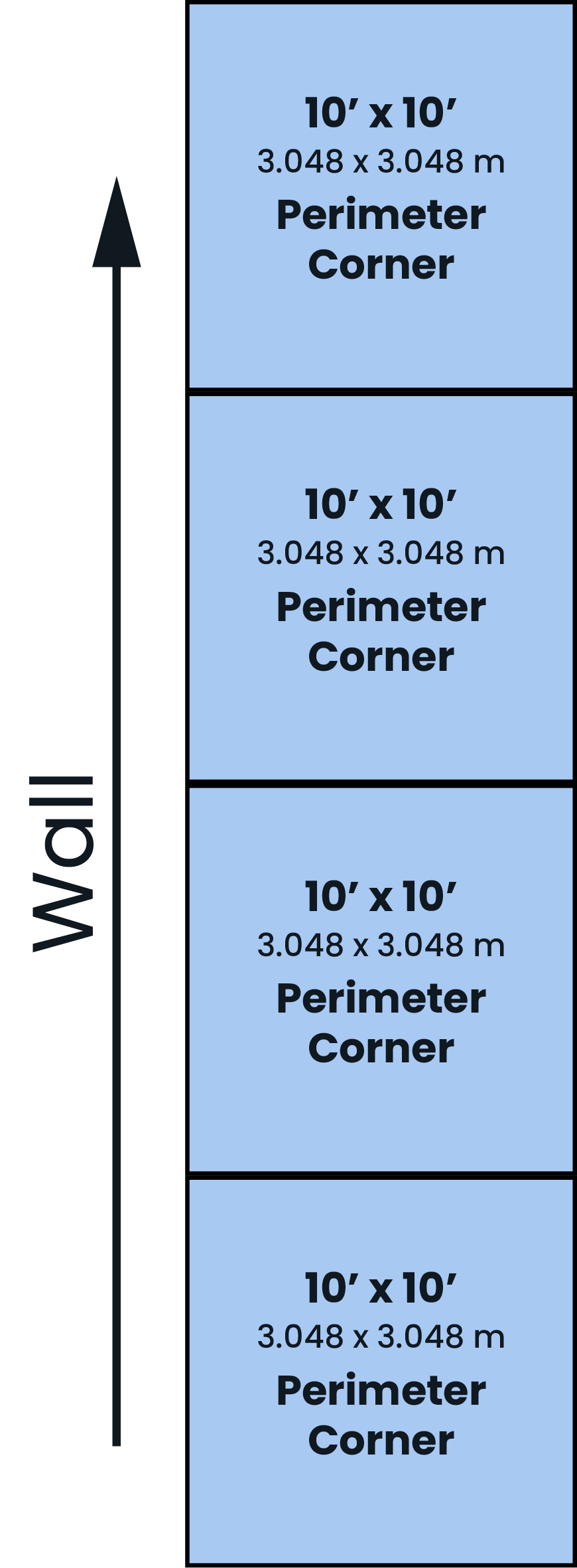
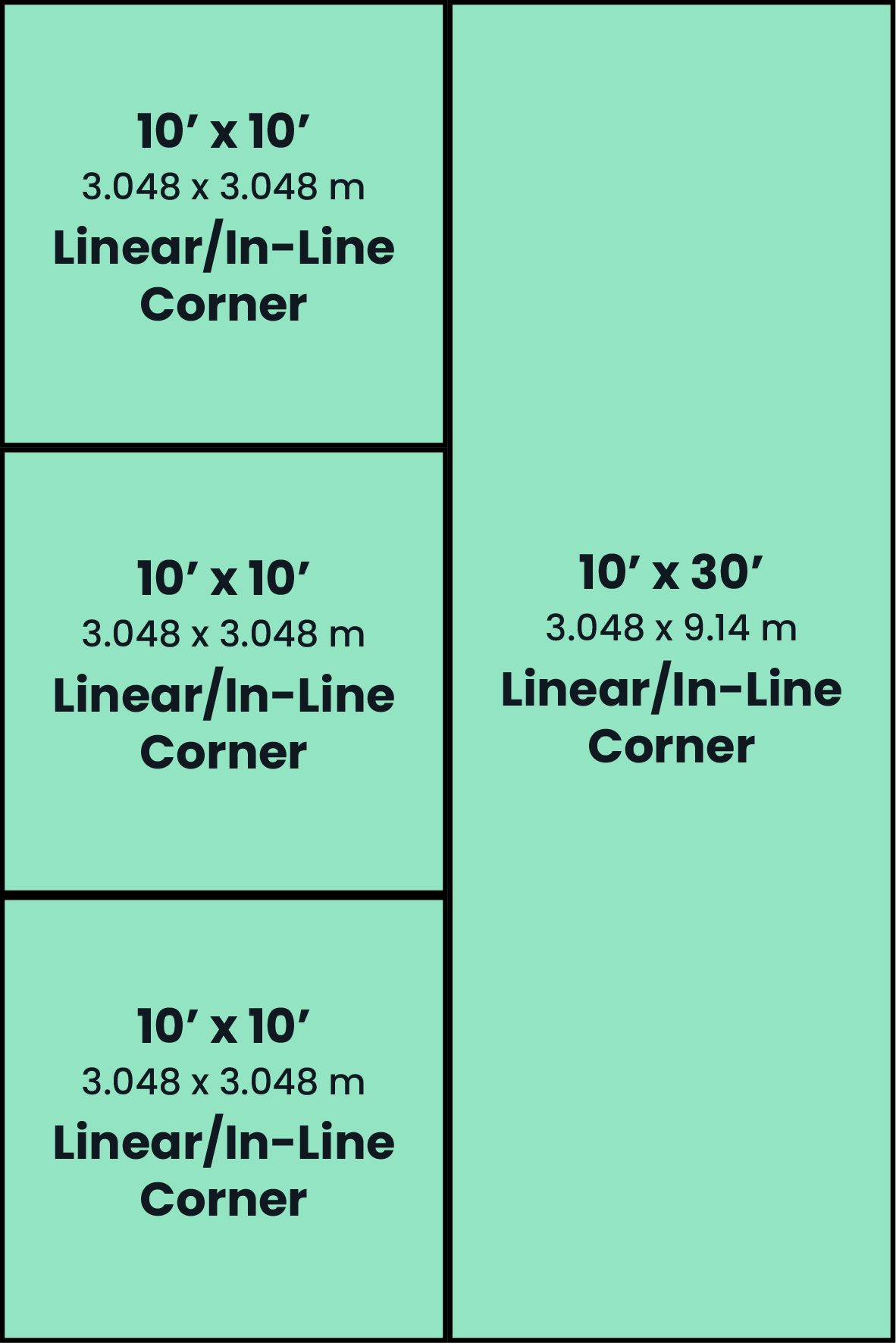
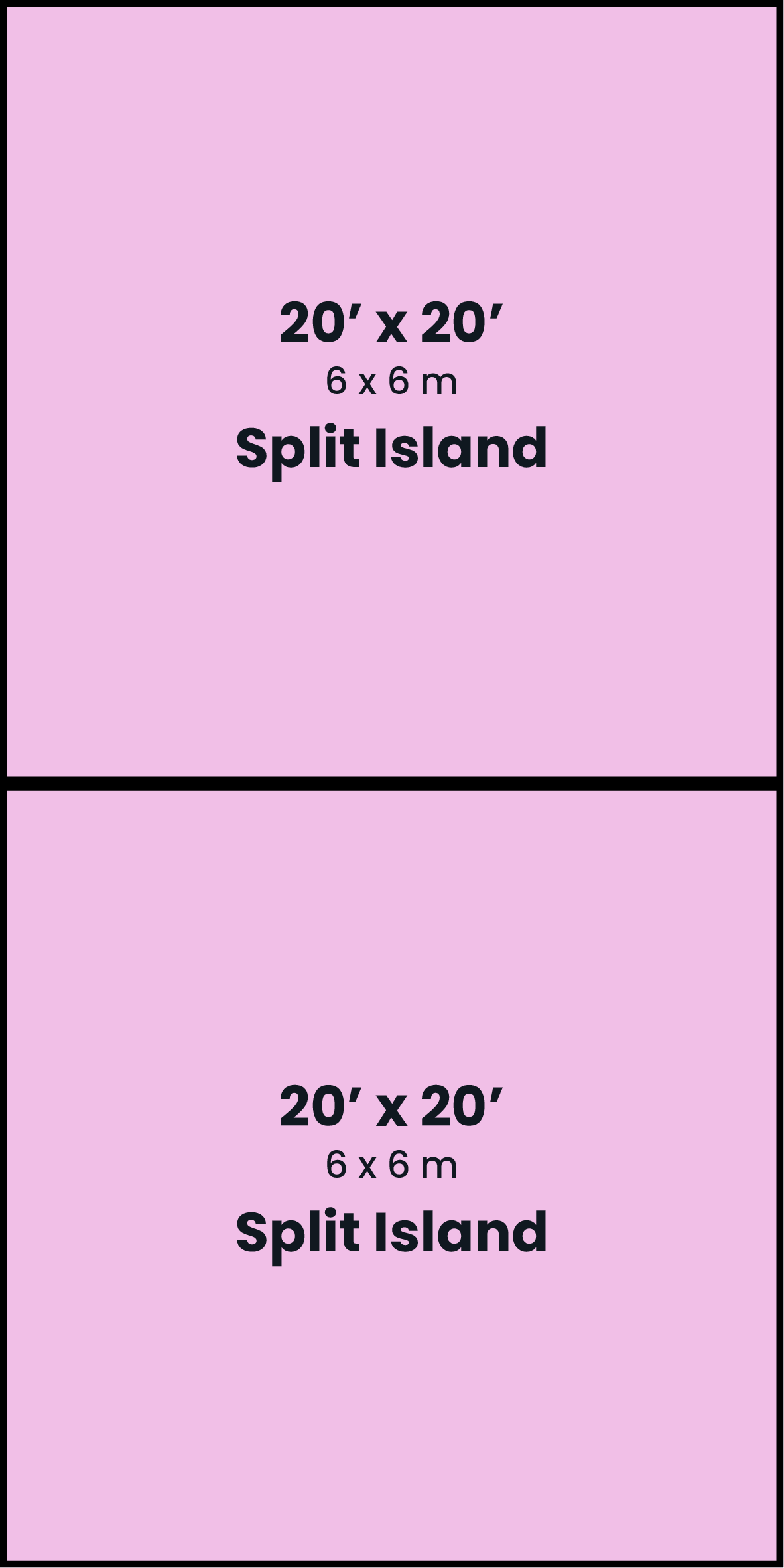
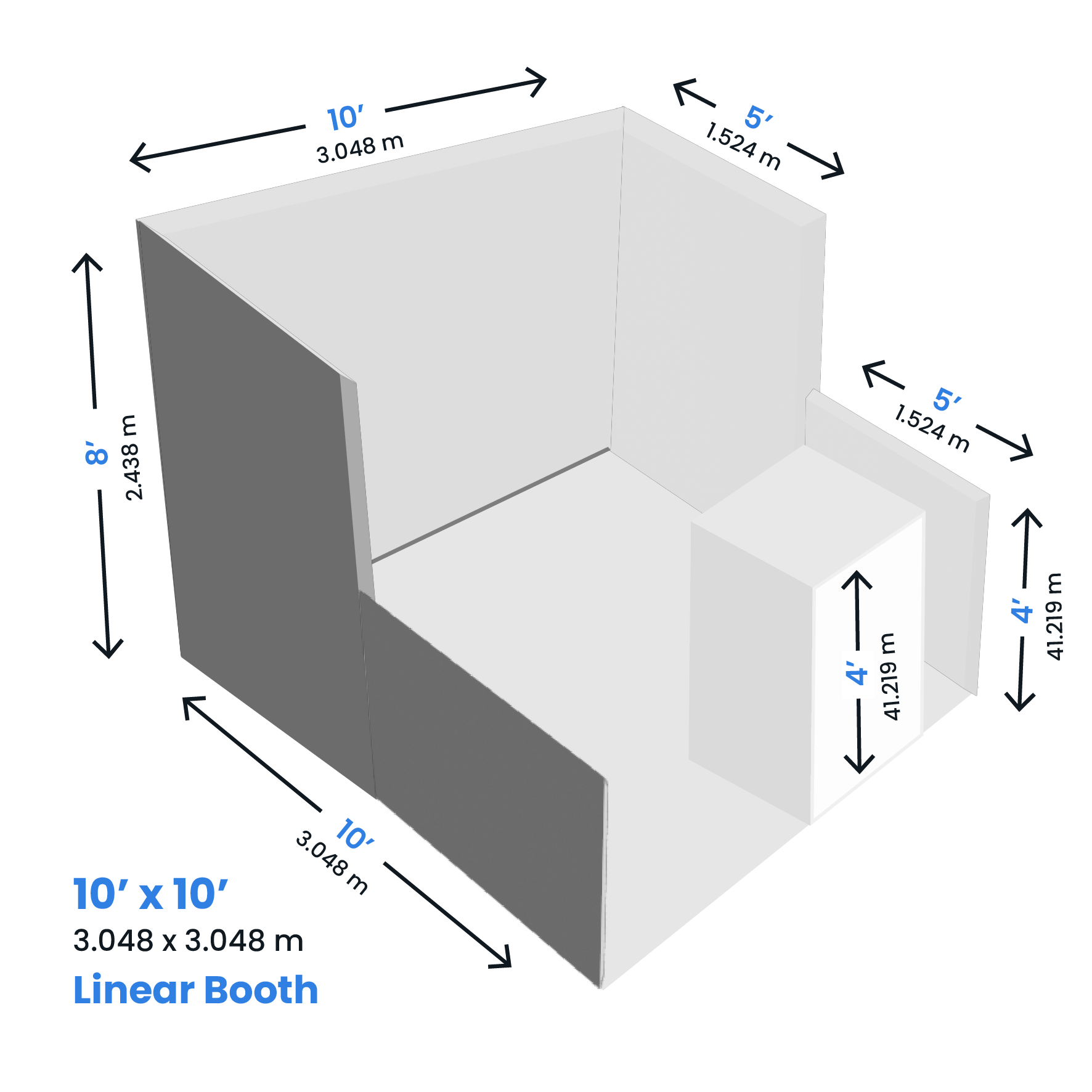
Linear Booth (In-Line)
A linear booth, also referred to as an in-line booth, is arranged in a straight line and has neighboring exhibitors on both sides, leaving one side exposed to the aisle.
Linear Booths are most commonly in 10 ft. (3.05m) wide and 10 ft. (3.05m) deep segments.
Use of Space
| Requirement | Limit |
|---|---|
| Maximum display height in rear half of booth | 8′ (2.44 m) |
| Maximum display height in front half of booth | 4′ (1.22 m) |
When three or more Linear Booths are used in combination as a single exhibit space, the 4 ft. (1.22m) height limit is applied only to that portion of exhibit space, which is within 10 ft. (3.05m) of an adjoining booth.
Additional requirements:
- Display materials should be arranged so they do not obstruct sight lines to neighboring exhibitors.
- Company logos, branding or signage may not face into an adjoining booth, including booths on either side or behind.
- Unfinished backwalls must be draped off; exposed framing and structure should not be visible from an aisle.
- All machinery and other large products must be set back from the aisles 12 inches (0.30m) for safety.
- Canopies have additional rules. Please review the canopies section.
- Hanging signs and trusses are not permitted.
Pipe and Drape
Linear booths include complimentary 8-foot (2.44 meters) back drape and 3-foot (0.91 meters) side drape.
Drape is not intended to function as a display surface. Products, signs and graphics may not be attached directly to the drape. Banners may be attached to the pipe using approved hardware.
Corner Booth
A corner booth is a linear booth located at the end of a row and exposed to two intersecting aisles.
All linear booth requirements apply.
Perimeter Booth
A perimeter booth is a linear booth that backs up to an exterior facility wall rather than another exhibit.
All linear booth requirements apply, except the maximum display height in the rear half of the booth increases 12 feet (or 3.66 meters).
Island Booth
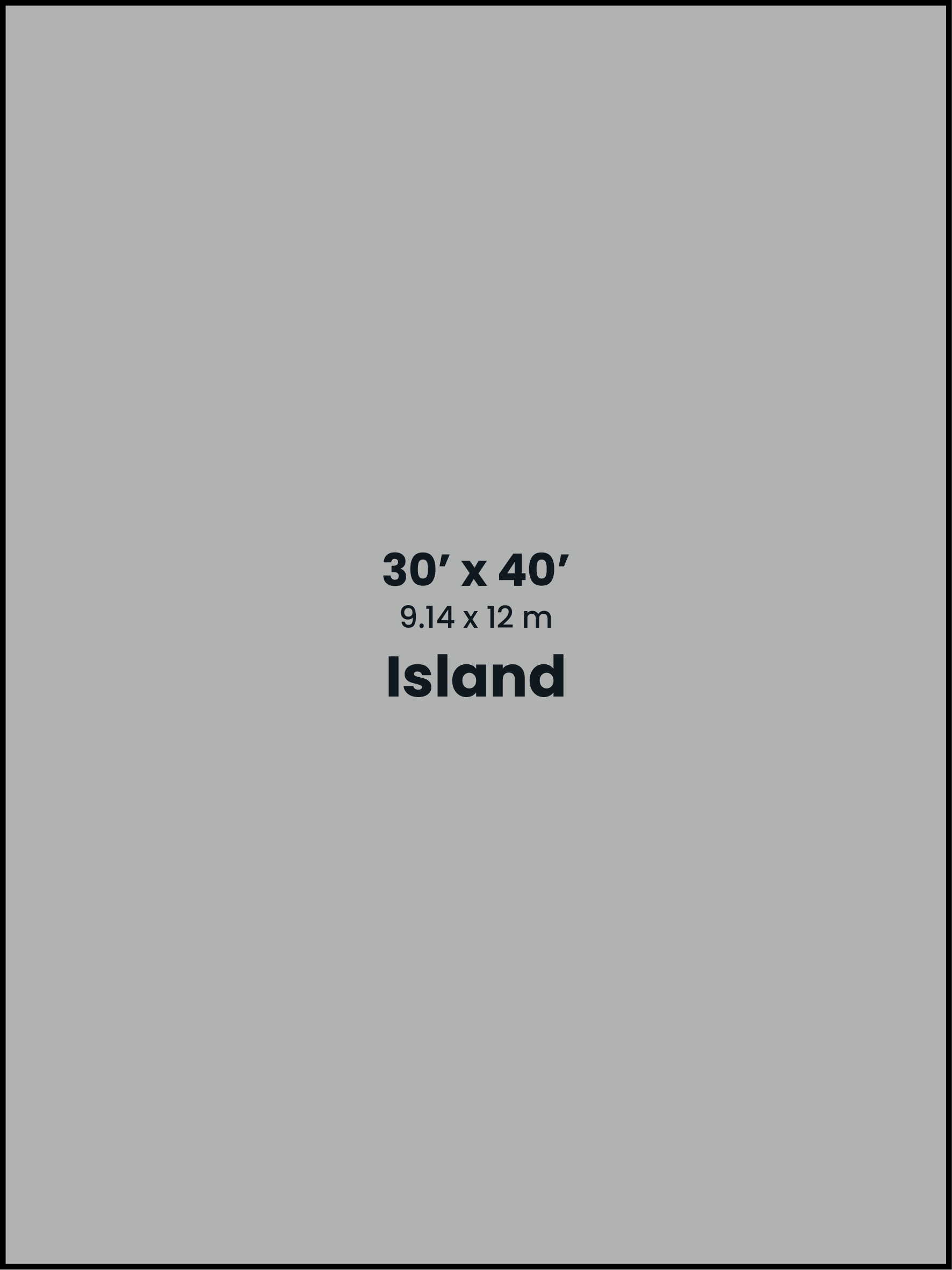
An Island Booth is exposed to aisles on all four sides and must measure at least 20 feet x 20 feet (6.1 × 6.1 meters), with a minimum area of 400 square feet (37.21 square meters).
Height Limitations for Island Booths
The maximum height for structures and hanging varies across the LVCC.
| LVCC Location | Height Limit |
|---|---|
| North Hall | 30 feet (9.14 meters) |
| Central Hall: C1, C2 | 20 feet (6.1 meters) |
| Central Hall: C3, C4, C5 | 25 feet (7.62 meters) |
| West Hall | 30 feet (9.14 meters) |
Use of Space
- The height limit from floor to top of structure and floor to top of hanging sign are the same. Review the hanging sign section for height limits by hall.
- Walls must be finished (no exposed framing or structure) when visible from an aisle.
- Branding and graphics are permitted on walls along the aisle; however, we recommend you avoid solid walls on main aisles, as attendees generally find this type of setup uninviting.
- Machinery and other large products must be set back from the aisles by 12 inches (0.30m) for safety.
Multi-level and covered show floors have additional fire regulations. Please review the Las Vegas Convention Center Building User’s Manual if applicable.
20% Line-of-Site Guideline
To ensure a fair and equitable experience for all exhibitors, we strongly encourage you to do the following:
- Exhibitors located on main aisles should avoid placing taller walls or substantial solid structures at the corners of the show floor, particularly if the wall or structure covers more than 80% of the length or width of the space.
- Solid walls should feature a 6-foot (1.83 meter) break or plexiglass panels every 30 feet (9.14 meters) to allow for clean line-of-sight to nearby booths.
- Exhibitors may use Plexiglass or a similar see-through material to create taller structures and walls that will allow for line-of-sight above 4 feet (1.22 meters).
Recommended Wall Breaks
| Booth Size | Recommended Opening |
|---|---|
| 20′ x 20′ (6 x 6 m) | 4′ (1.22 m) opening on all sides |
| 30′ x 30′ (9 x 9 m) | 6′ (1.83 m) opening on all sides |
| 40′ x 80′ (12 x 24 m) | 8′ (2.44 m) opening on the 40′ (12.19 m) sides; 16′ (4.88 m) opening on the 60′ (24.38 m) sides |
Split-Island Booth
A split-island booth, also known as a peninsula booth, shares a common back wall with another split-island booth and is exposed to aisles on three sides.
Exhibitors are encouraged to coordinate booth plans with neighboring exhibitors when appropriate. Show management will supply you with the proper contact’s name and phone number upon request.
Please email the team at [email protected].
Pipe-and-drape is provided between split-island booths. You can use the provided pipe-and-drape, or you can have Freeman remove it on-site with your neighbor’s permission.
Height Limitations for Split-Island Booths
The maximum height for structures and hanging varies across the LVCC.
| LVCC Location | Height Limit |
|---|---|
| North Hall | 30 feet (9.14 meters) |
| Central Hall: C1, C2 | 20 feet (6.1 meters) |
| Central Hall: C3, C4, C5 | 25 feet (7.62 meters) |
| West Hall | 30 feet (9.14 meters) |
Use of Space
- The height limit from floor to top of structure and floor to top of hanging sign are the same. Review the hanging sign section for height limits by hall.
- Hanging signs are permitted but must be set back 10 feet (3.05 meters) if double-sided and 5 feet (1.52 meters) if single-sided from adjacent booths and be directly over contracted space only. Single-sided graphics may only face into contracted booth space.
- Back-walls facing a neighboring booth must be finished (no exposed framing or structure) in a neutral color without text or graphics. Back walls in violation of this rule will be draped at the exhibitor’s expense.
- Walls must be finished (no exposed framing or structure) when visible from an aisle.
- Branding and graphics are permitted on walls along the aisle; however, we recommend you avoid solid walls on main aisles, as attendees generally find this type of setup uninviting.
- Machinery and other large products must be set back from the aisles by 12 inches (0.30 meters) for safety
Covered show floor has additional fire regulations. Please review the Las Vegas Convention Center Building User’s Manual if applicable.
20% Line-of-Site Guideline
To ensure a fair and equitable experience for all exhibitors, we strongly encourage you to do the following:
- Exhibitors located on main aisles should avoid placing taller walls or substantial solid structures at the corners of the show floor, particularly if the wall or structure covers more than 80% of the length or width of the space.
- Solid walls should feature a 6-foot (1.83 meter) break or plexiglass panels every 30 feet (9.14 meters) to allow for clean line-of-sight to nearby booths.
- Exhibitors may use Plexiglass or a similar see-through material to create taller structures and walls that will allow for line-of-sight above 4 feet (1.22 meters).
To ensure a speedy move-in, we recommend labeling and packing your hanging sign separately so it can be easily identified on site, as it will likely need to be installed before other parts of your exhibit are constructed. Freeman offers dedicated hanging sign shipping labels via Freeman Online Services.
Display Structures
Certain booth structures require additional review, documentation and safety approvals. Exhibitors are responsible for ensuring all specialty structures comply with NAB Show requirements, LVCC regulations and applicable building and fire codes. Booth structures that do not comply with approved plans or applicable requirements may require modification, removal or additional review at the exhibitor’s expense.
Each hard-wall booth must be a minimum of nine inches (0.23 meters) from the booth line for access to electrical.
Please note that all display structures need to be included in your booth design and will need to be approved by NAB Show, show management and the LVCC Fire & Safety.
Hanging Signs
Hanging signs may not exceed the maximum height permitted for the applicable booth type. They must also be included with your booth design for approval.. Please review the booth guidelines prior to submitting your design.
Hanging Signs Height Limitations
The maximum height for structures and hanging varies across the LVCC.
| LVCC Location | Height Limit |
|---|---|
| North Hall | 30 feet (9.14 meters) |
| Central Hall: C1, C2 | 20 feet (6.1 meters) |
| Central Hall: C3, C4, C5 | 25 feet (7.62 meters) |
| West Hall | 30 feet (9.14 meters) |
Booth Eligibility
| Booth Type | Hanging Signs | Hanging Trusses |
|---|---|---|
| Linear | ✖ | ✖ |
| Corner | ✖ | ✖ |
| Perimeter | ✖ | ✖ |
| Island* | ✓ | ✓ |
| Split-Island | ✓ | ✖ |
*Hanging trusses are permitted in island booths larger than 400 square feet (37 square meters) and must comply with all applicable rigging requirements.
Placement Requirements
All hanging signs must be installed directly above the exhibitor’s contracted exhibit space. Review the booth types section to find the rules for your specific booth.
Freeman provides dedicated hanging sign shipping labels through Freeman Online Services.
Rigging Requirements
Freeman is the exclusive rigging provider for NAB Show. Please review the rigging section for detailed rules.
Shipping and Installation
To help ensure an efficient move-in process, exhibitors should label and pack hanging signs separately to help ensure efficient installation during move-in. Hanging sign shipping labels are available through Freeman Online Services.
Video Walls, Truss Systems, Suspended Structures
Video walls, truss systems and suspended structures require additional review and may be subject to engineering and safety requirements. On-site inspections apply; non-compliant structures may require changes at the exhibitor’s expense.
All structures must:
- Remain within the boundaries of the contracted exhibit space.
- Comply with applicable use-of-space requirements.
- Be capable of safely supporting all installed equipment and materials.
Structural drawings are required for:
- Multi-level structures
- Covered booths
- Trusses and suspended structures
- Video walls
- Towers and elevated structures
All trusses and video walls must have a wet-stamped drawing from an engineer licensed in the state of Nevada and the United States per the Las Vegas Convention and Visitors Authority.
Where required, engineering documentation must include applicable structural calculations, including wind and seismic loads.
Review the booth submission process.
Rigging Requirements
Rigging is performed by LVCC employees, and the nature of the work determines which employees may fulfil the work.
A chain hoist is now required starting at 200 pounds (90.7 kilograms), as opposed to the previous requirement of 250 pounds (113.4 kilograms). Freeman will be utilizing a new rigging method (block and tackle) to comply with current OSHA codes and regulations. For more information, visit the Freeman Online Services or contact Freeman.
Video Wall Requirements
- Freeman is the exclusive provider.
- Video walls must comply with ANSI E1.50-1 safety standards.
- All trusses and video walls must have a wet-stamped drawing from an engineer licensed in the U.S. and the state of Nevada. Where required, engineering documentation must include applicable structural calculations, including wind and seismic loads.
Truss Structure Requirements
- All trusses and video walls must have a wet-stamped drawing from an engineer licensed in the U.S. and the state of Nevada. Where required, engineering documentation must include applicable structural calculations, including wind and seismic loads.
- All truss structures require plans to be submitted to LVCVA Fire and Safety 90 days in advance of the show move-in and must meet American National Standards Institute Regulations E-1.21. For truss, this includes, but is not limited to, weather monitoring equipment, standby labor, etc.
- Depending on size, attachments and weight, the facility may require a 3rd party engineer stamp of approval. The engineer stamp of approval must include wind load and seismic load. This will be at the exhibitor’s expense.
- If an exhibitor has their own ballast (weight) but it’s deemed insufficient by the LVCC, they must procure additional ballast from a local source and/or the show’s general contractor at their own expense.
- Any structures of any height, typically over 16 feet tall (4.88 meters) that LVCVA Safety and Fire Prevention deems to be unsafe and/or unstable is subject to being tied off to a structural element at the Exhibitor’s expense.
- Structures must be built exactly to approved drawings.
- Outdoor trusses must include wind load, staking, and ballasting plans per IBC/ANSI E1.21.
Submit truss structure requirements to the LVCA.
Lighting
Lighting plans and lights out requests are available via Freeman Online Services.
General
Lighting — including fixtures, trusses, and overhead — must remain within the boundaries of the contracted exhibit space.
Logos, lights, gobos, projections, flashing lights, lasers and similar effects may not project onto aisles, ceilings, facility walls, neighboring booths or other areas outside the contracted exhibit space.
Lighting that is potentially harmful — including lasers, ultraviolet lights, flashing or strobe lights that can trigger photosensitive epilepsy — should comply with facility rules and be approved in writing by show management.
LED lights are recommended. They are bright and typically generate less heat and require less electricity.
Hanging Sign Lighting
If eligible exhibitors wish to have lighting directed onto the signage from outside of contracted booth spaces, the lighting must be hung within 5 feet (1.5 meters) of the booth space unless the physical structure of the LVCC requires otherwise. In this case, the lights must be placed as close as possible. When this approach is used, lighting must be focused onto the signage and may not bleed into neighboring booth spaces.
Specialty Lighting Effects
Lasers, ultraviolet lighting, flashing lights, strobe effects and other lighting that may create safety concerns require written approval from show management and must comply with all applicable facility requirements.
Rotating, pulsating and other specialty lighting effects must be used in a manner that does not interfere with neighboring exhibitors or detract from the overall event environment.
LED and video walls must comply with ANSI E1.50-1, “Requirements for Display System Structures.”
Please review and follow the LVCC’s guidelines for halogen lighting fixtures outlined in the Building User’s Manual.
Enforcement
Show management reserves the right to require modification, removal or deactivation of lighting that does not comply with event requirements. Any costs associated with corrective action are the responsibility of the exhibitor.
Canopies, Ceilings and Multi-Level Booths
Please review the Las Vegas Convention Center Building User’s Manual for fire and safety rules for multi and covered booths. Any occupied upper deck area must have an approved plan with an engineering stamp registered in the state of Nevada.
Canopies must comply with Use-of-Space rules. The bottom of the canopy should not be lower than 7 feet (2.13 meters) from the floor within 5 feet. (1.52 meters) of any aisle. Canopy support should be no wider than 3 inches (0.08 meters). This applies to any booth configuration that has a sight-line restriction, such as Linear Booth.
General
- Any upper-deck area to be occupied must have an approved plan with an engineering stamp registered in the state of Nevada.
- Multilevel areas that are greater than 300 square feet (28 square meters) or will occupy more than nine people shall have at least two remote means of egress.
- Means of egress shall be of an approved type and constructed to code requirements.
- Spiral stairs are not allowed. Spiral stairways are not an approved means of egress for areas occupied by the public, visitors or clientele.
- Exhibits with multilevel or covered areas exceeding 300 square feet (28 square meters) will require the installation of battery-operated smoke detectors.
- Any covered area that is also enclosed will require the installation of battery-operated smoke detectors regardless of the size of the area. All smoke detectors must emit an audible alarm that can be heard outside of booth.
- Construction and demolition of multilevel booths and exhibits require compliance with OSHA fall protection regulations for general industry requirements.
Fire Sprinkler Systems
Multilevel or covered contiguous areas exceeding 1,000 square feet are required to have a fire sprinkler system installed under the entire area, and every level of the exhibit, only when the following conditions apply:
- Any single-level exhibit over 1,000 square feet must submit a booth plan to the Safety and Fire Prevention Office for approval. Submit plans to [email protected].
- The exhibit is used in an event where the duration is seven calendar days or longer.
- The exhibit contains display vehicles.
- The exhibit contains an open frame.
- The exhibit contains hot work.
Tents, Teardrop Flags and Inflatables
Use our preferred tent provider, Full Circle Events, to avoid any on-site issues and use the preferred tent provider for NAB Show.
- All outdoor tents and/or temporary structures must be installed by facility-approved Exhibitor Appointed Contractors. Exhibitors must also submit and receive an approved staking plan before staking can occur. Staking plans should be submitted 30 days prior to [email protected].
- All tents — defined as a structure covered with a soft top and soft sides — greater than 400 square feet require a Clark County Permit. Tents must also have a 2A40BC Fire Extinguisher with a current Nevada State inspection tag.
- All canopies — defined as a structure covered with a soft top and no sides — greater than 700 square feet require a Clark County Permit. They must also have a 2A40BC fire extinguisher that has a current Nevada State inspection tag.
- Self-installed pop-up canopies require weights or stakes and must be lowered every evening at the close of the show. The facility on site may also determine whether canopies need to be taken down during inclement weather.
Shipping and Installation
To help ensure an efficient move-in process, exhibitors should label and pack hanging signs separately to help ensure efficient installation during move-in.
Freeman provides dedicated hanging sign shipping labels through Freeman Online Services.
Show Floor Policies
Exhibitors are responsible for ensuring all booth activities remain within the confines of their contracted exhibit space and do not interfere with neighboring exhibitors or attendee traffic.
Show Floor Policies
Move-in and Setup
Exhibitor Installation and Dismantle
- Exhibitors may erect and dismantle displays that do not exceed 250 square feet (23 square meters) and can be assembled or dismantled by employees of the exhibiting company without the use of tools or ladders.
- Exhibitors may also unpack, pack and arrange their merchandise and products within their exhibit space.
- Individuals performing this work must be employees of the exhibiting company and may be required to provide identification verifying their employment status.
- LVCC reserves the right to suspend these exceptions if unsafe installation or dismantling conditions exist. In such cases, labor may be assigned at the exhibitor’s expense.
Union Rules and Labor Regulations
Installation, dismantling, rigging, electrical work and other labor activities may be subject to union jurisdiction. Exhibitors should review the Union Rules and Labor Regulations before arriving on-site for more information.
Hand-Carry Policy
Exhibitors may hand carry their own materials into the exhibit space, provided they do not use material-handling equipment to assist them. Any labor used to hand carry must be performed by full-time company employees, and they must be prepared to show proof of employment.
Parking for loading/unloading must be performed from parking lots only. Curbside loading/unloading is prohibited. Parking on LVCC roadways is prohibited, and any unattended vehicles will be towed at the owner’s expense. Only pickups or passenger vans will be allowed to park in LVCC parking lots for hand carry purposes. Any vehicles parked in the lots for hand carry are required to be personally owned vehicles; rentals are not allowed in the lots. Vehicles larger than pickups, vans or vehicles with trailers, must use the show’s contractor for freight unloading.
Examples of Vehicles Allowed vs. Not Allowed
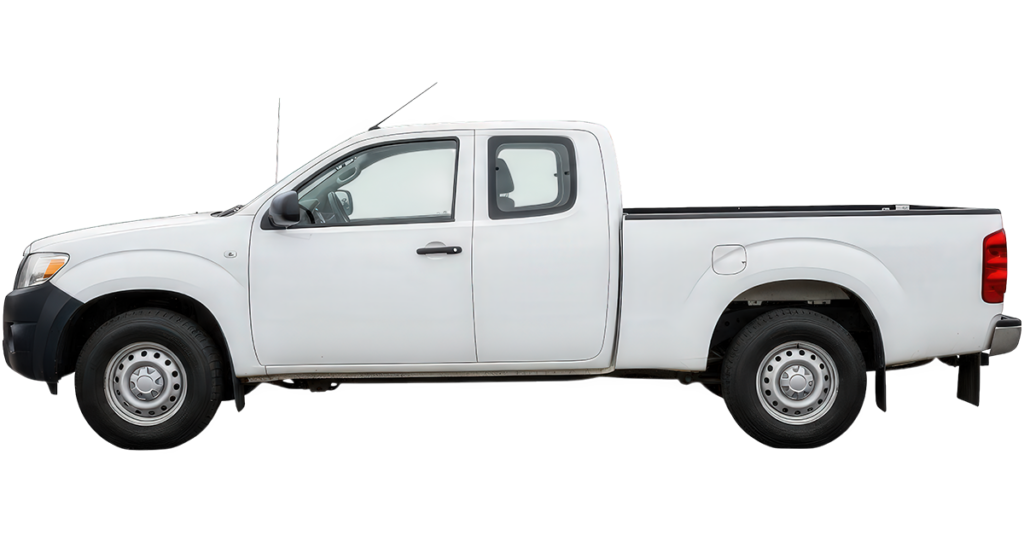
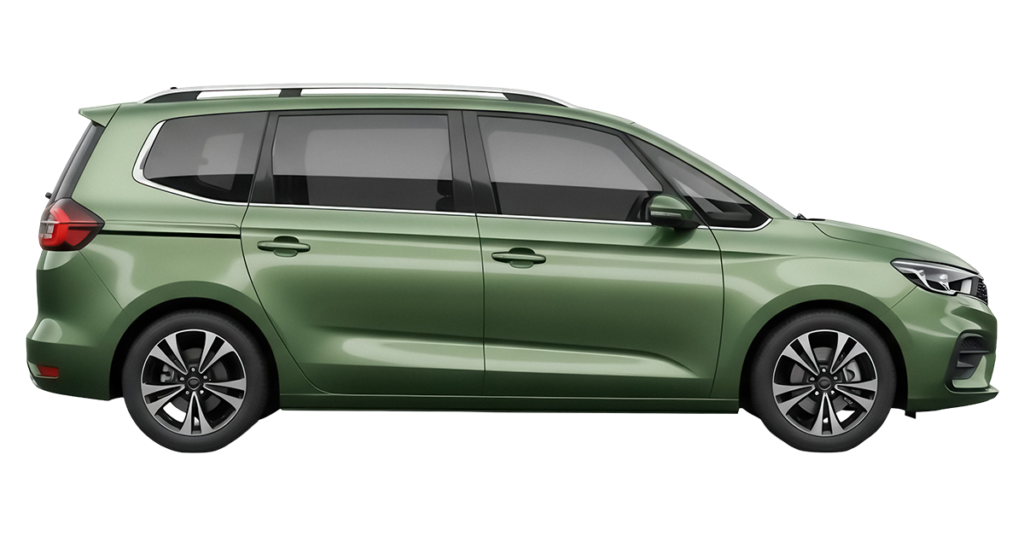
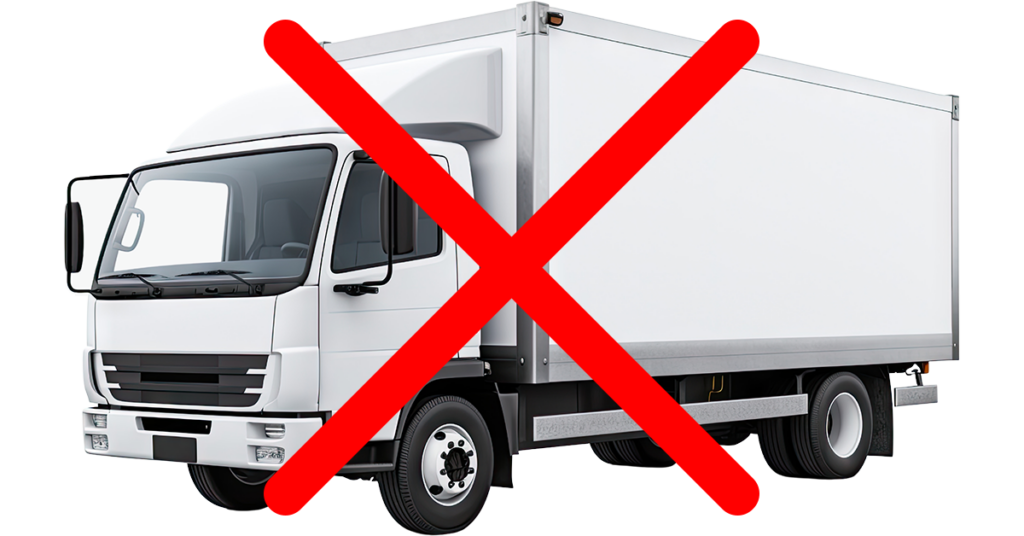
Escalators will no longer be allowed to move hand-carry materials, and all boxes and suitcases will need to use the available elevators without the use of freight-moving equipment.
Approved for Hand Carry Use:
- Lightweight luggage carts.
- Hanging garment racks when moving (and only moving) hanging garments.
- Pop-up displays in rolling cases.
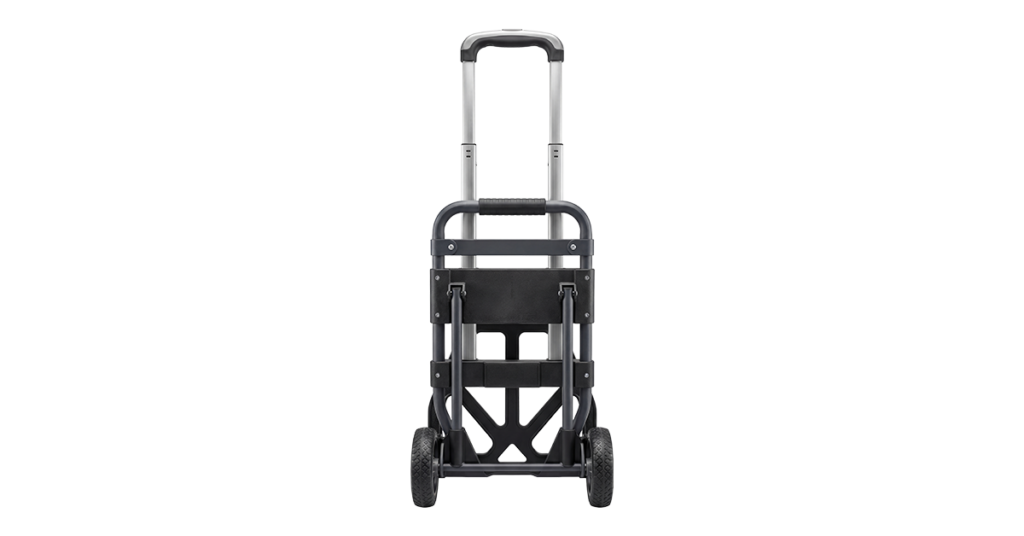
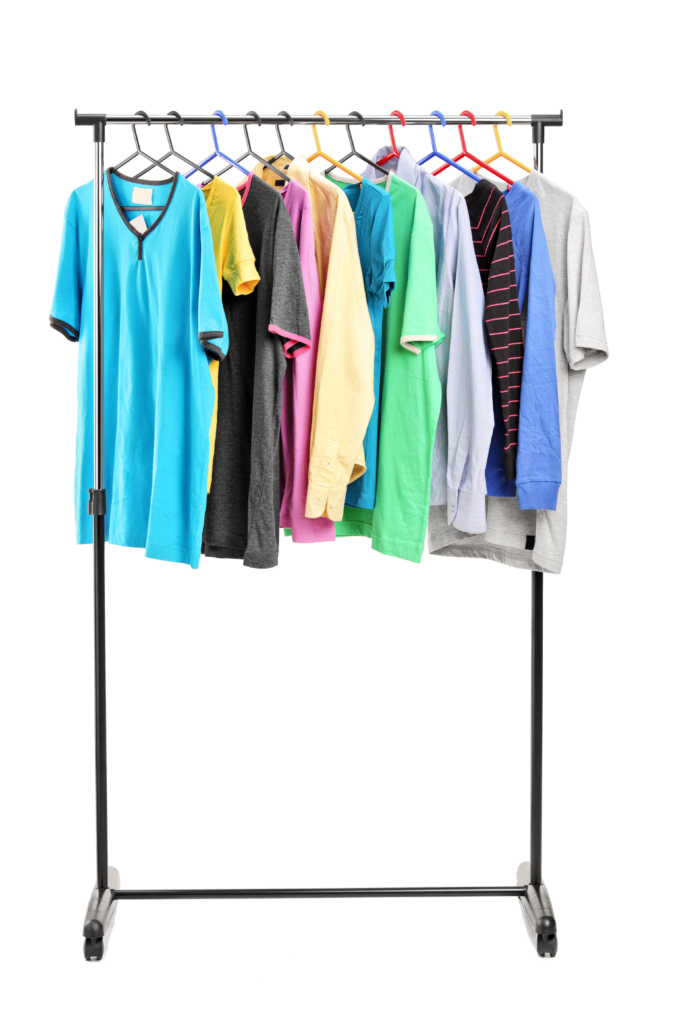
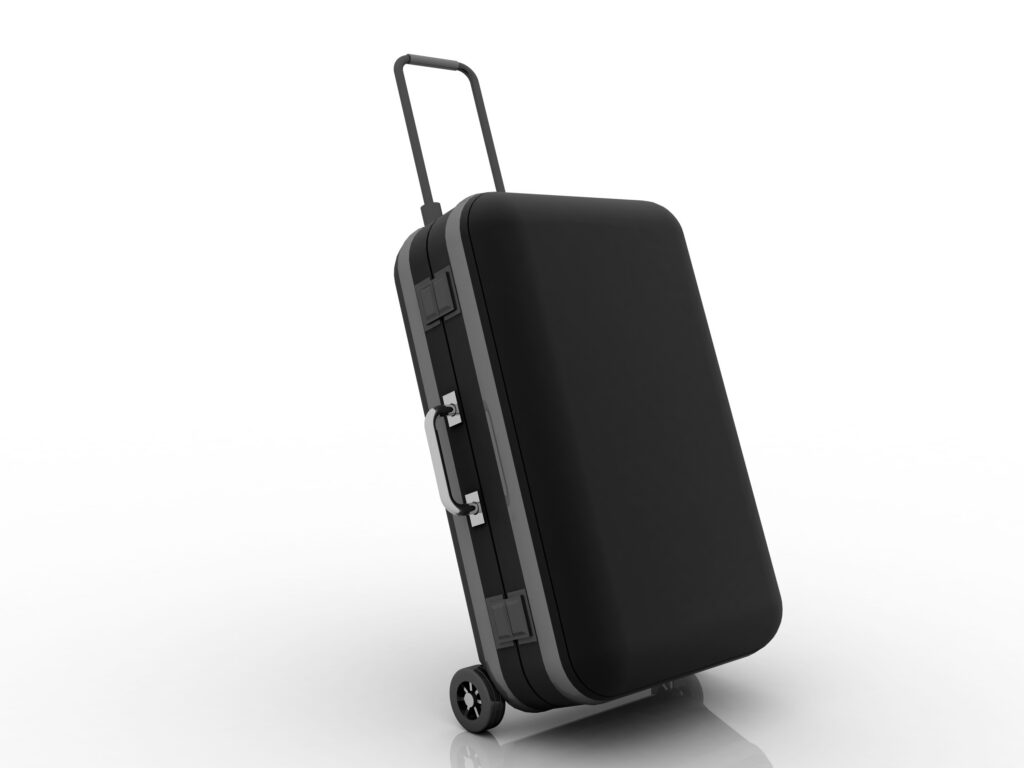
Not Allowed for Hand Carry Use
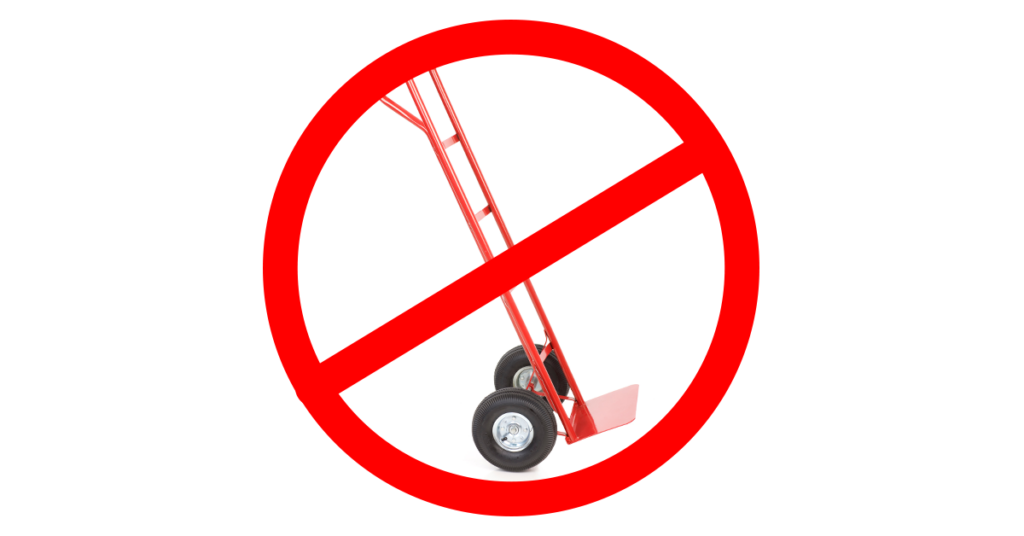
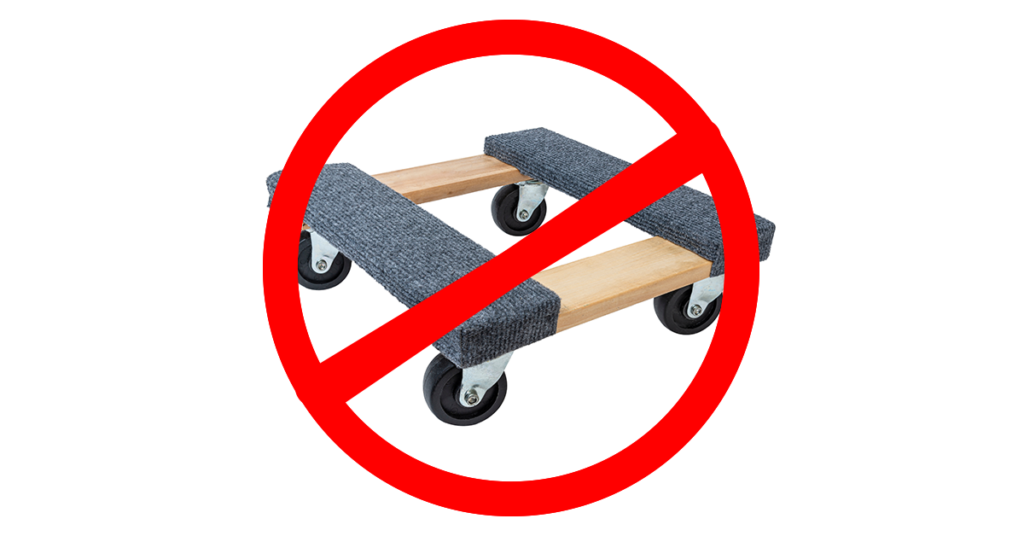
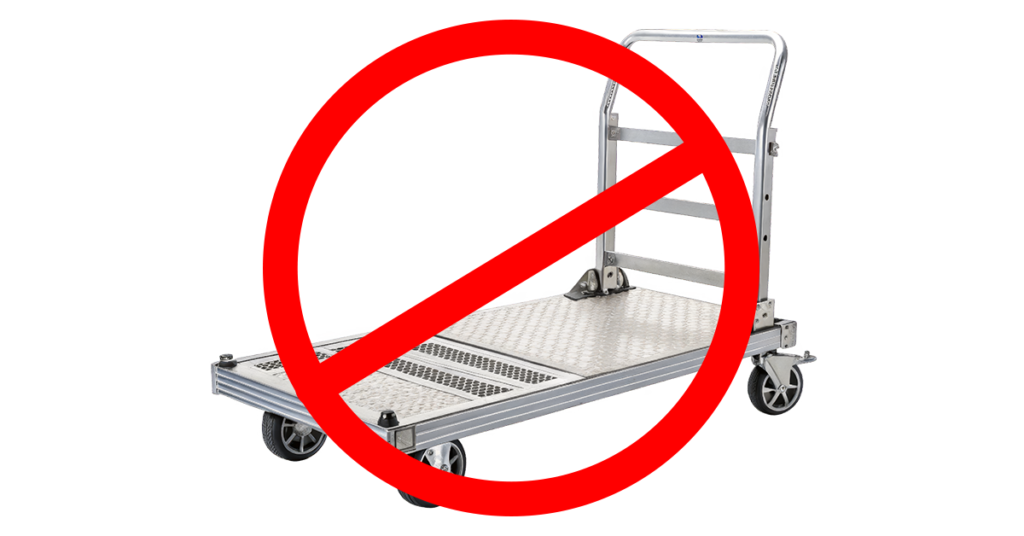
- Hand carts, hand trucks, pallet jacks or any four-wheel cart or dolly. Garment racks loaded with boxes are not allowed.
- Access to the loading dock and/or freight doors.
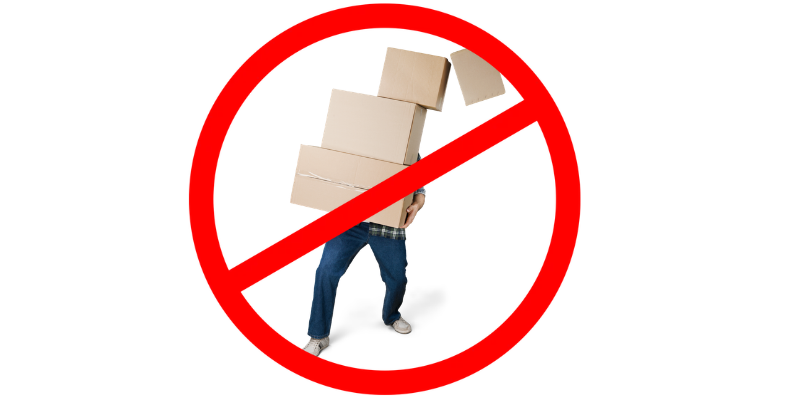
- Any freight that cannot be hand carried by one person.
- Any freight moved by a moving or freight company, contractor, or any persons other than full-time employees of the exhibiting company.
Wireless Transmitters and Satellite Equipment
Exhibitors operating wireless transmitters or transmitting devices are responsible for complying with all applicable Federal Communications Commission rules and regulations. Satellite placement outside the facility requires a complete Satellite Placement Form (Freeman Online Services) and service orders through Spectrum Business. Utility connections (electrical or internet wires, air/water/gas hoses, etc.) must be hidden from view to maintain an elevated level of safety and professional appearance.
Transmitters and transmitting devices include, but are not limited to:
- Wireless microphones
- Walkie-talkies
- Portable transmitters
- Satellite equipment
These devices, when used, may interfere with equipment being used by others. If a signal from a transmitter or transmitting device causes interference, the exhibitor will be required to:
- Turn the transmitter off if it is not properly licensed.
- If it is properly licensed but still causes interference, the exhibitor may be required to turn the power down, redirect the signal or otherwise work with NAB Show and others to help resolve the interference problem.
- The FCC rules regarding transmitters can be complicated; NAB Show New York suggests discussing options with a lawyer or consultant. The Association of Federal Communications Consulting Engineers is a good resource at: afcce.org.
- Licensed devices that cause interference may need reduced power, re-direction, or adjustment.
Carpet and Professional Floor Covering
Carpet or professional floor covering your booth is mandatory. Floor covering is not included with your booth purchase unless you’ve purchased a Turnkey Furniture Package.
If you are not providing your own floor covering, you may rent it via Freeman Online Services.
General Guidelines
- Floor covering must cover the entirety of your booths space; area rugs are unacceptable.
- Booths without floor covering will automatically have carpet installed by show management and be billed by Freeman at the exhibitor’s expense. Utility connections (electrical or internet wires, air/water/gas hoses, etc.) must be hidden from view, to maintain an elevated level of safety and professional appearance.
Cleaning Rules
Las Vegas Convention Center personnel vacuum, shampoo and sweep all carpeting, empty waste baskets and supply and handle containers for removing hazardous waste. Staff work at any time as determined by LVCC management or, when porter service is ordered, at times requested by exhibitors.
Cleaning work exhibitors may do themselves: Exhibitors may clean and wipe down their products and display merchandise and parts of their exhibits.
Storage
Storage is not permitted behind booths or near electrical service per the building’s fire and safety regulations. A one-day supply of product may be kept within the exhibit space. Additional storage services are available through Freeman Online Services.
Electrical
Freeman is the exclusive provider of electrical and rigging and must provide staffing when an integrated system draws more than 20 amps or is suspended from the ceiling:
- Advanced audio-visual technician
- Assistant TV audio tech
- Audio technician
- Audiovisual technician
- Character generator
- Crane operator
- Ground rigger
- High rigger
- Lighting tech
- Projectionist
- Tape operator
- TV sound boom operator
- Video utility person
- Video wall technician
Outdoor Exhibits
Outdoor exhibits are subject to additional requirements to ensure structures, materials and installations meet Las Vegas Convention Center and Clark County safety standards. Review the guidelines before planning or installing any outdoor exhibit.
Overview
Booth personnel, manufacturer representatives, models, promotional staff and mascots must:
- Any temporary assembly structures (structures that have either membrane or solid hard shell or glass) sides that exceed 4,500 square feet have additional requirements set by Clark County. Please refer to the Las Vegas Convention Center Building User’s Manual for more information.
- All banner material used outside must be made of mesh material (a minimum of 30% pass-through) or slated to allow for air flow.
- The use of pipe and drape, MIS or gem wall units outdoors must have advanced approval from Freeman’s customer service manager. However, pipe and drape, MIS or gem wall units are allowed to be used inside fully enclosed structures.
- Reference Fire & Safety Guidelines outlined in the LVCC’s Building User’s Manual for information on propane usage and storage.
- Any fuel storge greater than 10 gallons of gasoline (37.85 liters) or 60 gallons of diesel (227.12 liters) on the property requires a Clark County Permit.
- LVCVA management reserves the right to make any changes on-site deemed necessary without advanced notice, for safety concerns.
Tents and Canopies
Use our preferred tent provider, Full Circle Events, to avoid issues while at NAB Show:
- All outdoor tents and/or temporary structures must be installed by facility-approved Exhibitor Appointed Contractors. Exhibitors must also submit and receive an approved staking plan before staking can occur. Staking plans should be submitted 30 days prior to [email protected].
- All tents — defined as a structure covered with a soft top and soft sides — greater than 400 square feet (37.16 meters) require a Clark County Permit. Tents must also have a 2A40BC Fire Extinguisher with a current Nevada State inspection tag.
- All canopies — defined as a structure covered with a soft top and no sides — greater than 700 square feet (65.03 square meters) require a Clark County Permit. They must also have a 2A40BC fire extinguisher that has a current Nevada State inspection tag.
- Self-installed pop-up canopies require either weights or stakes and must be lowered every evening at the close of the show. The facility on site may also determine that canopies need to be taken down during inclement weather.
Staking
- Install stakes by drilling. Hand staking is prohibited. Anchoring or staking concrete is prohibited throughout the property.
- Trenching or digging asphalt is not allowed without prior approval from a Convention Services Manager. Contact [email protected] for approval.
- Obtain final on-site approval from an LVCA exterior engineer or engineering manager before drilling or staking.
- Restore asphalt to its original condition after removing stakes and follow LVCCA standards:
- Backfill holes with clean, fine sand and tamp to at least 4 inches (10.16 centimeters) below the surface.
- Fill the remaining space to within ½ inch (1.27 centimeters) of the surface with fine-aggregate asphalt patching material and tamp until solid.
- Apply plastic-type asphalt sealer approximately 2 inches (5.08 centimeters) around the patched hole. Use a sealer with a maximum drying time of two hours.
Specialty Equipment and Displays
Display Vehicles
Exhibitors displaying vehicles must complete Freeman’s Vehicle Placement Form, available through Freeman Online Services, before move-in. Display vehicles must comply with all venue safety requirements, including fuel, battery and placement regulations.
Fuel and Battery Requirements
- Fuel tank openings shall be locked or sealed in an approved manner to prevent the escape of vapors.
- Fuel tanks may not contain more than one-quarter of their capacity or more than 5 gallons (18.9 liters) of fuel, whichever is less.
- Batteries must be disconnected.
- Auxiliary batteries not connected to the engine starting system may remain connected.
- Electric and hybrid vehicles must have their operating batteries disconnected whenever possible.
- External power is recommended for demonstration purposes.
- Battery charging is not permitted inside the building.
- Fueling or defueling vehicles is prohibited.
- Combustible/flammable materials must not be stored beneath display vehicles.
- Vehicles shall not be moved during the show and will remain off while freight doors are closed.
- At least 36 inches (.91 meters) of clear access or aisles mush be maintained around the vehicle.
- Vehicles must be a minimum of 20 feet (6 meters) from the door exit or exit pathway.
- Vehicles placed in lobbies and meeting rooms must have approval from Freeman’s customer service manager; they also require leak protection.
Additional requirements or restrictions may apply based on vehicle type, placement location or facility regulations.
Drones
The use of drones, including remotely piloted aircraft systems and unmanned aerial vehicles, requires advance approval and must comply with all facility and regulatory requirements. Additional restrictions may apply regarding aircraft weight, operation and federal regulations.
Exhibitors must submit a Drone Form and obtain approval from NAB show management before operating any drone.
Operating Requirements
- All Federal Aviation Administration and Department of Homeland Security guidelines must be followed.
- Drones carrying weapons are prohibited.
- Drones may not be flown in lobbies, restaurants or other common areas.
- Drones must weigh less than 55 pounds (25 kilograms).
- Drones may operate only within the exhibitor’s contracted exhibit space.
- Drones must be flown in a fully enclosed area (including ceiling) using netting, plastic, or other safety measures. Tethering is not an approved safety measure. Netting must be made of a material that is sturdy enough to prevent drones from breaking or escaping the enclosure. To ensure the material meets safety standards before you arrive on-site, we highly recommend you submit your plan to LVCVA Fire & Safety.
- Drones are prohibited from flying overpopulated areas.
- Drones may not operate within 18 inches (45.7 centimeters) of building structures, including sprinkler systems.
Safety Requirements
Drones must be operated within a fully enclosed area, including a ceiling, using one or more of the following safety measures:
- Netting
- Protective plastic barriers
- Other approved safety measures
Tethering is not an approved safety measure. Netting must be strong enough to prevent the drone from breaking through or escaping the enclosure.
To confirm that enclosure materials meet safety requirements before arriving on-site, exhibitors are strongly encouraged to submit their plans to LVCVA Fire & Safety for review.
Outdoor Usage
FAA regulation restricts drones from being flown within five (5) nautical miles in class Bravo airspace (Harry Reid International Airport) and class Delta airspace (North Las Vegas Airport). Due to the proximity to these airports, drones are prohibited from flying outside on any LVCVA campus.
Waivers obtained through the FAA must be provided to NAB show management before operating any drone. For outdoor use of a drone/UAS that is not operated within a fully enclosed area, refer to the FAA website for more information.
Fog Machines
Use of fog machines requires advance approval from the Safety and Fire Prevention Office. Exhibitors must demonstrate the fog machine and its intended use to the office at least 48 hours before use.
General Requirements
- Fog-generating fluids must be nonhazardous and stored in the original manufacturer-provided containers.
- The Safety Data Sheet (SDS) must remain in the booth or event location at all times.
Balloons
The use of balloons requires advance approval from both show management and the Convention Services Manager. Balloons must comply with all applicable use-of-space, safety and facility requirements.
Approval and Service Requirements
- Helium refills must be arranged through a qualified outside vendor selected by the exhibitor.
- Vendors providing balloon services must be registered as an Exhibitor Appointed Contractor and hold all required credentials.
- LVCVA Fire and Safety require advance notice and elect to supervise balloon filling activities depending on the size and scope of the display.
- Helium storage must be arranged through Freeman Online Services.
- Overnight storage of helium or compressed air cylinders inside the building is prohibited.
- Helium cylinders used for refilling must be secured upright on ANSI-approved fire prevention stands. Regulators and gauges must be protected from potential damage.
Permitted Indoor Balloon Displays
The following balloon displays may be permitted with approval:
- Helium balloons larger than 36 inches (91.4 centimeters), whether individually tethered or grouped together.
- Securely anchored balloon columns and arches located in approved public spaces or meeting rooms.
- Large advertising balloons securely anchored within the exhibit space.
- Air-filled balloons used as decorative elements or handouts*
*Helium ballons may not be distributed as handouts or flown within the show floor.
Prohibited Indoor Balloon Activities
The following are not permitted:
- Overnight storage of helium or compressed-air cylinders within the facility.
- Distribution of helium-filled balloons as attendee giveaways.
- Flying or free-floating helium balloons or blimps within the show floor.
- Unsecured balloon displays.
- Leaving balloons, cylinders or related materials for Freeman, facility staff or cleaning contractors to remove.
Permitted Outdoor Balloon Displays
Moored balloons (includes hot-air balloons) and kites are permitted with the following conditions:
- Must have approval from show management and your Convention Services Manager.
- Balloons and kites must be moored and can only be used for displays. Exhibitors must submit mooring plans to the Las Vegas Convention Center.
- Balloons and kites cannot extend beyond the height of the LVCC.
Hot Air Balloons
- Any hot air balloon that is inflated and standing must have an FAA-certified pilot present at all times. The pilot must hold a commercial rating for lighter-than-air aircraft.
- Hot air balloons cannot be flown on LVCA property due to FAA restrictions related to the proximity of local airports:
- Harry Reid International Airport is less than 5 miles) from the LVCC
- North Las Vegas Airport is less than 5 miles from Cashman Center
Propane cylinders awaiting use must be stored in a secured propane storage cage that meets OSHA requirements. Storage cages must be securely placed outside the building in a location designated by LVCA staff.
Runaway Balloons
If a balloon escapes its mooring and poses a potential threat to air navigation, the operator is responsible for immediately reporting the incident to the appropriate air traffic control authority with the estimated location and time of escape.
Booth Conduct and Engagement
Booth Personnel and Promotional Staff
Booth personnel, manufacturer representatives, models, promotional staff and mascots must:
- Wear a valid exhibitor or manufacturer representative badge at all times.
- Remain within the boundaries of the contracted exhibit space.
- Maintain a professional appearance and conduct themselves in a professional manner.
Any gender used by exhibitors to promote their products at NAB Show New York by using overtly sexual or suggestive methods is prohibited. If for any reason an exhibit and/or its contents are deemed objectionable to show management, the exhibitor will be asked to alter the attire of its staff.
NAB Show further recommends that you encourage your booth personnel to:
- Abstain from overt statements or offensive humor, which would disparage the dignity of any individual or group.
- Substitute asexual words (e.g. sales representative or salesperson instead of salesman).
- Refrain from using labels (e.g., referring to women as “girls”).
- Eliminate from all marketing collateral sexist language (i.e., replace masculine pronouns with he or she, or reword sentences or phrases) and discriminatory jokes or visual aids that show people in stereotypical roles by presenting individuals without bias regardless of sex, race, age, groups, etc.
Live Entertainment, Theater and Product Demonstrations
As a matter of safety and courtesy to others, exhibitors must conduct sales presentations and product demonstrations so that all exhibitor personnel and attendees are within the contracted exhibit space.
- Audience members and booth personnel must be able to fit within the confines of the contracted booth space. Spectators may not block aisle traffic or interfere with access to a neighboring exhibit.
- Exhibitors are responsible for assigning staff or hiring security to manage crowd control and ensure clear access to aisles and neighboring Exhibits. You can hire security through our preferred security vendor, DTA Security Services.
- Special caution should be taken when demonstrating machinery or equipment that has moving parts or any product that is otherwise potentially dangerous. Machinery and other large equipment must be set back 12 inches (0.30 meters) to prevent accidental injury. Demonstrations should only be conducted by qualified personnel.
- Show management reserves the right to determine action for those exhibits in violation including, but not limited to, forcing security and/or shutting off power to the offending portion of the exhibit. The exhibitor will be responsible for any charges related to these actions.
Food and Beverage Sampling
Sodexco is the exclusive food and beverage provider for the Las Vegas Convention Center.
All food and beverages distributed within exhibit spaces, including promotional giveaways such as bottled water, must be purchased from and supplied by the LVCC’s in-house catering provider. Corkage fees may apply to any food and beverage brought into the facility without prior approval.
Sampling Requirements
The LVCC has specific requirements for food preparation and sampling. Review the Building User’s Manual for more information.
All food and beverages distributed as samples are limited to the following sizes:
- Nonalcoholic beverages: 3 ounces (89 milliliters)
- Food items: 2 ounces (57 grams)
Exhibitors sampling of open food or beverage must have a hot-water hand-washing station and a sanitizing station in the booth.
Hand-washing and sanitization stations may be purchased through the Food and Beverage Division or provided by the exhibitor. Exhibitors providing their own stations must contact the Southern Nevada Health District.
Hot water for hand-washing will be provided at refill stations on the show floor. Contact show management for station locations.
Alcoholic Beverages
Exhibitors planning to serve alcoholic beverages must:
- Obtain approval from the Food & Beverage Division.
- Follow Nevada Department of Taxation requirements for serving alcohol at trade shows.
- Use bartenders or servers provided by the in-house catering provider who are TAM certified.
Some exceptions may apply. For questions, contact the LVCVA Food & Beverage Division at +1 702-943-6779 or email [email protected].
Sound and Music
Audio presentations, demonstrations and music must remain within acceptable sound levels and may not interfere with neighboring exhibits:
- The decibel limit is 80 decibels, and all speakers must be within the confines of and face into the contracted booth space. Show management reserves the right to request that an exhibitor turn their sound if it does not meet the decibel limit when measured by show management.
- The Las Vegas Convention Center retains the right to regulate the volume of any sound, whether it be music, voice, special or artificial effects to the extent that the same interferes with other lessees within the facilities or is determined to be offensive or otherwise violates the terms of the lease agreement and the building policies.
- Singing, dancing, use of musical instruments or any other type of live performance must be approved by show management. Please review our theater demonstration guidelines to learn more.
- Music played in your booth, whether live or recorded, may be subject to laws governing the use of copyrighted compositions. ASCAP, BMI and SESAC are three authorized licensing organizations that collect copyright fees on behalf of composers and publishers of music.
- Show management reserves the right to determine action for those exhibits in violation, including but not limited to, requiring modification to the direction of speakers and/or shutting off power to the offending portion of the exhibit. The exhibitor will be responsible for any charges related to these actions.
Photography and Videography
Photographing or recording another exhibitor’s booth, products or displays is prohibited without written permission from the exhibiting company.
Photographing or videotaping in communal areas requires written permission from show management. Please email the NAB Show marketing team to begin the process.
Giveaways, Contests and Raffles
Giveaways, contests and raffles are permitted but must comply with all applicable federal, state and local laws. For raffle/gaming inquiries, please contact the Nevada State Gaming Control Board at +1 702-486-2020.
Accessibility
Exhibitors are responsible for complying with all applicable accessibility and facility requirements.
Americans with Disabilities Act
All exhibitors are responsible for complying with the Americans with Disabilities Act.
Information regarding ADA compliance is available through the U.S. Department of Justice ADA Information Line at +1 800-514-0301 and the ADA website.
Examples of How to Design an ADA-Compliant Exhibit
- Make raised exhibit flooring wheelchair accessible without extending ramps into the aisle. A standard wheelchair ramp should have a grade no steeper than 1:12, meaning that for every 1 inch (2.5 centimeters) of rise, there should be 12 inches (30.5 centimeters) of run.
- Ramp exhibit entrances or provide hydraulic lifts for trailer displays.
- Avoid double-padded or plush carpeting that may make mobility-device navigation difficult.
- Provide an equivalent attendee experience on all accessible levels of a multilevel exhibit.
- Provide appropriate accommodations for audio presentations, such as sign language interpretation, assistive listening options or printed presentation materials.
- Provide audio alternatives for visual presentations when appropriate.
- Position touch-screen displays at an accessible height for attendees using wheelchairs.
Raised Floors and Human Safety
Exhibitors must comply with all applicable local fire and safety regulations. Review the Las Vegas Convention Center Building User’s Manual for additional requirements.
- Review the Exhibitor Liability Insurance section for details about insurance requirements.
- Exhibitors are responsible for injuries that occur within their contracted exhibit space.
- Raised exhibit flooring must be nonhazardous and wheelchair accessible. Edges must be ramped or otherwise protected to prevent tripping or falls at floor transitions.
- Use extra caution when demonstrating machinery, equipment with moving parts or other potentially hazardous products. Machinery and other large equipment must be set back at least 12 inches (30.5 centimeters) from aisles, and demonstrations must be conducted by qualified personnel.
- Segways, skateboards, hoverboards, in-line skates, roller skates and motorized or foot-powered scooters are prohibited on facility property, except for mobility devices permitted under the ADA.
Service Animals
Service animals are welcome in accordance with the Americans with Disabilities Act.
Under ADA regulations, a service animal is generally defined as a dog that has been individually trained to perform work or tasks for a person with a disability. The task performed by the animal must be directly related to the individual’s disability.
Animals whose sole function is to provide comfort, therapy, companionship or emotional support do not qualify as service animals under the ADA.
Other Animals
Animals other than service animals require advance approval from show management and the Convention Services Manager.
The following criteria must be met before the animal is allowed on property:
- Animals must be directly related to the exhibit or event activity, such as an animal featured in a commercial or film.
- Exhibitors must provide a separate certificate of insurance with a $1 million combined single limit for bodily injury and broad-form property damage coverage, including broad-form contractual liability. The Las Vegas Convention and Visitors Authority must be named as an additional insured.
- Animals, except fish, may not remain in the building overnight.
- A trainer must accompany the animal at all times.
Animal owners are responsible for cleaning up after their animals while on facility property.
Fire Safety and Prevention
Exhibitors are responsible for complying with all applicable fire safety and facility requirements. Additional approvals may be required for certain exhibit features, equipment and activities.
General Fire Safety Restrictions
Exhibitors are responsible for complying with all applicable fire and life-safety requirements. Review the Las Vegas Convention Center Building User’s Manual for additional requirements.
Storage Requirements
No storage of any kind is permitted behind booths or near electrical service.
A one-day supply of products may be stored within the exhibit space but may not be stored behind the booth. Additional storage services are available through Freeman Online Services.
Columns and Building Features
Exhibitors with columns located within their exhibit space should review the applicable column diagrams and fire-safety requirements available through Freeman Online Services.
Questions regarding column requirements should be directed to Freeman or LVCVA Fire & Safety.
Fire Equipment Access
Fire hose cabinets, fire extinguishers and emergency exits must remain visible and accessible at all times.
If fire-safety equipment is located within an exhibit space, additional signage identifying the location of the equipment may be required. Access to the equipment must remain clear at all times.
Display Vechicles
Display vehicles are subject to the following fire and safety requirements:
- Fuel tank openings must be locked or sealed to prevent the escape of vapors.
- Batteries must be disconnected.
- Vehicles may not be charged indoors.
- A minimum clearance of 36 inches (91.4 centimeters) must be maintained around the vehicle.
- Vehicles must remain at least 20 feet (6.1 meters) from exits.
- Vehicles may not be moved during show hours.
Review the Display Vehicles section for additional requirements.
Fuel Burning Equipment and Open Flames
Exhibitors planning to demonstrate fuel-burning appliances must obtain approval from the Convention Services Manager at least 60 days before the event.
Candles may be permitted for approved food-service applications when:
- Limited to one candle per table
- Mounted on a substantial noncombustible base
- Protected or enclosed to prevent fire hazards if tipped
- Attended at all times while lit
The Fire Prevention Office has final approval authority for all candle use.
Multi-Level, Enclosed and Covered Exhibits
Multi-level, enclosed and covered exhibits are subject to additional fire and safety requirements. Review the Las Vegas Convention Center Building User’s Manual for applicable requirements.
Hazardous Materials and Equipment
Review the Las Vegas Convention Center Building User’s Manual for requirements related to:
- Chemicals
- Halogen and quartz lamps
- Equipment that uses liquefied petroleum gas (LPG) or natural gas as fuel
- Fireplaces
Except for equipment that uses LPG or natural gas as fuel, compressed gas cylinders, including LPG, and all flammable or combustible liquids are prohibited inside the building.
Exit Access
The travel distance from within an exhibit booth or enclosure to an exit access aisle may not exceed 50 feet (15.24 meters). (2003 NFPA 101, 13.7.4.3.2).
Fuel-Burning Equipment and Open Flames
Exhibitors planning to demonstrate fuel-burning appliances in the Las Vegas Convention Center or Cashman Center must obtain approval from the Convention Services Manager at least 60 days before the event.
Candles may be permitted for decorative purposes at events with food service when:
- Limited to one candle per table
- Supported by a substantial, noncombustible base and positioned to prevent the ignition of combustible materials
- Protected or enclosed so that tipping does not create a fire hazard
- Attended at all times while lit
The Fire Prevention Office has the final approval authority for all candle use.
The intended use of candles for decorative purposes must be included on the Food and Beverage Sampling/On-Site Preparation Approval Form and submitted to [email protected].
Smoking
In accordance with the Nevada Clean Indoor Air Act, the Las Vegas Convention Center is a nonsmoking facility.
Compliance and Legal Requirements
Compliance with Laws
Exhibitors must comply with all applicable federal, state and local laws and regulations, including commerce, tax and export requirements.
Weapons are strictly prohibited. Nevada Revised Statute 202.3673 prohibits concealed weapons on Convention Center property.
Facility Protection and Damage
Exhibitors may not post, tack, nail, screw or otherwise attach materials to columns, walls, floors, ceilings, furniture or other Las Vegas Convention Center property unless specifically approved.
Exhibitors are responsible for any damage caused to the facility by their employees, contractors, representatives or exhibit installations. Repair costs may be assessed and billed to the exhibitor.
Injury occurring within the exhibitor’s contracted exhibit space remains the responsibility of the exhibitor.
Business Conduct Subletting of Exhibit Space, Directory Listings, Goods and Publications
- Per the terms and conditions of the booth reservation contract signed at the time of reservation, exhibitors may not assign, sublet or share their exhibit space with another business or firm unless approval has been obtained in writing from NAB. Any approved entity must sign a contract with NAB.
- An approved firm must be a corporate parent or subsidiary of the exhibitor, or another subsidiary of the parent corporation. Exhibitors must provide NAB written documentation of the relationship upon request. For a fee, NAB will provide directory listings for approved firms.
- A firm that has not signed a contract with NAB may not be represented on the show floor. NAB retains the right to remove any company from the exhibition that does not have a signed contract.
- Exhibitors must display goods manufactured or handled by them in the regular course of business. If an article of a non-exhibiting firm is required to operate or demonstrate an exhibitor’s display, identification of the article must be limited to the usual and regular nameplates, imprint or trademark under which it is ordinarily sold.
- Exhibitors may not distribute show-specific commercial publications or other commercial media specifically directed to Show attendees from their exhibit space without the prior written consent from NAB.
Show and Sell
NAB Show exhibitors may sell products from their contracted exhibit space in accordance with Nevada tax requirements and NAB’s Show and Sell program.
Exhibitors participating in Show and Sell must:
- Charge the required 8.25% sales tax on each sale.
- Provide a receipt for each purchase that includes the company name, date and time of purchase, item description, item price and sales tax.
- Display a sign in the booth indicating participation in the Show and Sell program.
- Keep a copy of the applicable Business Tax License and Reseller’s Permit in the booth.
- Participating exhibitors must fill out the “One Time Sales Tax Return” Form, located in your exhibitor manual. This form must be filled out in entirety and submitted with payment to show management onsite or within five business days of Show ending. All checks should be made payable to the Nevada Department of Taxation.
- Work with Freeman to arrange shipment to the purchaser if an item is too large to hand-carry from the show floor.
Attendees must present their purchase receipt to designated security when exiting the show floor.
International exhibitors must clear all goods intended for sale on a “permanent basis” and pay applicable duties and taxes when the goods are imported into the United States.
Exhibitors that sell at more than two events in Nevada during a 12-month period must register with the Nevada Department of Taxation and obtain their own Sales and Use Tax Permit.
Participating exhibitors are encouraged to hire additional security and take appropriate precautions to protect merchandise. NAB Show, Freeman and the Las Vegas Convention Center are not liable for lost, damaged or stolen merchandise.
Failure to comply with Show and Sell requirements may affect an exhibitor’s standing for NAB Show 2027 and may result in liabilities to the State of Nevada.
Suitcasing and Outboarding
Suitcasing and outboarding rules and regulations pertain to the show floor, NAB Show public areas, the Las Vegas Convention Center and the official conference hotels. NAB Show maintains a zero-tolerance policy regarding suitcasing and outboarding.
Suitcasing
All sales, marketing and promotional activities must remain within the exhibitor’s contracted exhibit space.
Marketing and promotional materials may not be distributed or left in aisles, conference areas or other public areas.
Outboarding
Exhibitors may not host or participate in competing events during official NAB Show hours. This is considered “outboarding” and exhibitors violating may result in cancellation of exhibit space without refund and may affect eligibility to participate in future NAB Show events.
Solicitations and Gratuities
Solicitation of tips or special payments of any kind is prohibited.
Any attempt by a contractor or facility employee to solicit a gratuity for services should be reported to show management immediately.