
NAB Show
Rules and Regulations.
Overview
NAB Show has adopted the following guidelines from the International Association of Exhibitions and Events (IAEE) Guidelines for Display Rules and Regulations.
Show Management has the authority to interpret or amend the rules at any time, all decisions are final, and all requested changes are at the Exhibitor’s expense. Your display products must fit within the confines of your booth and must be arranged so they do not obstruct neighboring show-floor. Exhibitors must comply with all Las Vegas Convention Center (LVCC) rules and regulations. Please also review the NAB Show Las Vegas Work Rules and Labor Union Regulations. NAB reserves the right to apply penalties or enforcement actions as they see fit in response to any violations.
On-Site Resolution Process
- Verbal Warning: Minor violations will receive a verbal warning and resolution guidance.
- Written Violation Notice: If unresolved, exhibitors receive a written notice outlining:
- Specific violation
- Required corrective action
- Compliance deadline
- Potential consequences
- Escalation for Non-Compliance: Further action may include:
- Forced power shutoff
- Mandatory crowd control measures
- Removal of booth fixtures
- Future NAB Show participation restrictions
Explore Rules and Regulations
Balloons | Booth Types | Cameras and AV Systems | Compliance and Legal | Exhibitor Regulations | Ladders | Material Handling and Drayage | Misc
Booth Types
Linear Booth (In-Line)
- Linear booth is referred to as “in-line” booth, is generally arranged in a straight line and has neighboring Exhibitors on its immediate right and left, leaving only one side exposed to the aisle.
- Linear Booths are most commonly in 10 ft. (3.05m) wide and 10 ft. (3.05m) deep segments.
- A Corner Booth is a Linear Booth at the end of a series of in-line booths with exposure to intersecting aisles on two sides. All guidelines for Linear Booths apply.
- Only one side is exposed to the aisle.
Corner Booth
- A Linear Booth located at the end of a series of in-line booths.
- Exposed to aisles on two sides.
- Follows all Linear Booth guidelines.
Perimeter Booth
- A Linear Booth that backs up to an outside wall of the Facility.
- Follows all Linear Booth guidelines except maximum display height in the rear half of the booth is 12 ft. (3.66m).
Use of Space for Linear Corner and Perimeter Booths
- 8 ft. (2.44m) = Maximum height of display in rear half of booth, including products and materials.
- 4 ft. (1.22m) = Maximum height of display in front half of booth, including products and materials.
- When three or more Linear Booths are used in combination as a single exhibit space, the 4 ft. (1.22m) height limit is applied only to that portion of exhibit space, which is within 10 ft. (3.05m) of an adjoining booth.
- Hanging signs and trusses are NOT PERMITTED.
- Display materials should be arranged so they do not obstruct sight lines to neighboring Exhibitors.
- Company logos, branding or signage may not face into an adjoining booth, including booths on either side or behind.
- Unfinished back-walls must be draped off; exposed framing and structure should not be visible from an aisle.
- All machinery and other large products must be set back from the aisles 12 inches (0.30m) for safety
Pipe and Drape
Linear Booths are equipped with complimentary 8 ft. (2.44m) high gray/white/gray back-drape and 3 ft. (1.22m) high gray side-drape. Drape is not intended as a display fixture; therefore, products and signs may not be attached or affixed. If you would like to display a banner, you may attach it to the pipe using s-hooks, which you can typically obtain from the Exhibitor Service Desk onsite.
Island Booth
An Island Booth is a minimum of 20 ft. x 20 ft. = 400 sq. ft. (37.21 sq. m.) and is exposed to aisles on four sides.
Please ensure you meet the rules and regulations on this page and are clear on the work rules and labor union regulations. If you do not comply with the rules, Show Management and the building have the authority to request changes at the Exhibitor’s expense.
Booths equal to or greater than 800 sq.ft. (92.9 sq. m.) are REQUIRED to submit both their design and technical renderings (with height and dimensions) for approval by Show Management and LVCVA Fire & Safety. All multi-level and covered booths are required to submit their renderings to LVCVA Fire & Safety, regardless of size.
Please review the rules and regulations for multi-level and covered show-floor in the Las Vegas Convention Center Building User’s Manual.
Booth renderings for the Facility should be submitted to LVCVA Fire and Safety. Detailed submission requirements are in the Las Vegas Convention Center Building User’s Manual.
Use of Space
- The height limit from floor to top of structure and floor to top of hanging sign are the same. See the hanging sign section below for height limits by Hall.
- Walls must be finished (no exposed framing or structure) when visible from an aisle.
- Branding and graphics are permitted on walls along the aisle; however, we recommend you avoid solid walls on main aisles, as attendees generally find this type of setup uninviting.
- Machinery and other large products must be set back from the aisles by 12 inches (0.30m) for safety.
Multi-level and covered show-floor have additional fire regulations. Please review the Las Vegas Convention Center Building User’s Manual if applicable.
20% Line-of–Sight Guideline
To ensure a fair and equitable experience for all Exhibitors, we strongly encourage you to do the following:
- Exhibitors located on main aisles should avoid placing taller walls or substantial solid structures at the corners of their show-floor, particularly if the wall or structure covers more than 80% of the length or width of the space
- Solid walls should feature a 6 ft. (1.83m) break (or plexiglass panels) every 30 ft. (9.14m) to allow for clean line-of-sight to nearby booths
- Exhibitors may use Plexiglass or a similar see-through material to create taller structures/walls that will allow for line-of-sight above 4 ft.
- 20′ x 20′ (6m x 6m) should include a 4′ break on all four sides on structures above 4′ tall
- 30′ x 30′ (9m x 9m) should include a 6′ break on all four sides on structures above 4′ tall
- 40′ x 80′ (12m x 24m) should include an 8′ break on the two 40′ sides and 16′ on the two 80′ side.
Hanging Signs and Trusses
- Hanging trusses and signs are permitted but must be set back 10 ft. (3.05m) if double-sided and 5 ft. (1.52m) if single-sided from adjacent booths and be directly over contracted space only. Single-sided graphics may only face into the contracted booth space.
- Freeman is the exclusive rigging provider for NAB Show.
- To ensure a speedy move-in, we recommend you label and pack your hanging sign separately, so it can be easily identified on site, as it will likely need to be installed before other parts of your exhibit can be constructed. Freeman offers dedicated hanging sign shipping labels in Freeman Online Services.
Height Limits
- North Hall: 30′ / 9.144m
- Center Hall: 25′ / 7.62m
- West Hall: 30’/9.144m
Split-Island Booth
A Split-Island Booth is a Peninsula Booth, which shares a common back-wall with another Peninsula Booth. Split-Island booths are exposed to aisles on three sides.
Exhibitors are encouraged to contact their neighboring Exhibitor in advance to discuss their designs. Show Management will supply you with the proper contact name and phone number upon request.
Pipe-and-drape is not provided between split-island booths. You can order pipe-and-drape at your expense through the Freeman Online Services.
Use of Space
- The height limit from floor to top of structure and floor to top of hanging sign are the same. See the hanging sign section below for height limits by Hall
- Back-walls facing into a neighboring booth must be finished (no exposed framing or structure) in a neutral color with no text or graphics. Back-walls in violation of this rule will be draped at the Exhibitor’s expense
- Walls must be finished (no exposed framing or structure) when visible from an aisle
- Branding and graphics are permitted on walls along the aisle; however, we recommend you avoid solid walls on main aisles, as attendees generally find this type of setup uninviting
- Machinery and other large products must be set back from the aisles by 12 inches (0.30m) for safety
- Covered show-floor have additional fire regulations. Please review the Las Vegas Convention Center Building User’s Manual if applicable
20% Line of Sight Guideline
- Exhibitors located on main aisles should avoid placing taller walls or substantial solid structures at the corners of their show floor, particularly if the wall or structure covers more than 80% of the length or width of the space
- Solid walls should feature a 6 ft. (1.83m) break (or plexiglass panels) every 30 ft. (9.14m) to allow for a clean line-of-sight to nearby booths
- Exhibitors may use Plexiglass or a similar see-through material to create taller structures/walls that will allow for a line-of-sight above 4 ft
- 20′ x 20′ (6m x 6m) should include a 4′ break on all four sides on structures above 4′ tall
- 30′ x 30′ (9m x 9m) should include a 6′ break on all four sides on structures above 4′ tall
- 40′ x 80′ (12m x 24m) should include an 8′ break on the two 40′ sides and 16′ on the two 80′ sides
Hanging Signs and Trusses
- Hanging signs are permitted but must be set back 10 ft. (3.05m) if double-sided and 5 ft. (1.52m) if single-sided from adjacent booths and be directly over contracted space only. Single-sided graphics may only face into the contracted booth space.
- Hanging trusses are NOT permitted
- Freeman is the exclusive rigging provider for NAB Show. For more information, visit the Freeman Service Kit.
To ensure a speedy move-in, we recommend labeling and packing your hanging sign separately so it can be easily identified on site, as it will likely need to be installed before other parts of your exhibit are constructed. Freeman offers dedicated hanging sign shipping labels in the Freeman Service Kit.
Height Limits
- North Hall: 30′ / 9.144m
- Center Hall: 25′ / 7.62m
- West Hall: 30’/9.144m
Exhibitor Regulations
Carpet and Professional Floor Covering
- Carpet or professional floor covering your booth is MANDATORY but not included with your booth purchase (unless you’ve purchased a Turnkey Furniture Package). Floor covering must be over the entirety of your booths space; area rugs are unacceptable. If you are not providing your own floor covering, you may rent it via Freeman Online Services.
- Booths without floor covering will automatically have carpet installed by Show Management (billed by Freeman) at the Exhibitor’s expense.
- Utility connections (electrical or internet wires, air/water/gas hoses, etc.) must be hidden from view, to maintain an elevated level of safety and professional appearance.
Lighting
Show Management reserves the right to determine action for those Exhibits in violation including, but not limited to, removing/turning off lighting that’s in violation. The Exhibitor will be responsible for any charges related to this action.
Lighting Plans and Lights Out Requests are available in Freeman Online Services.
- Logos, lights, gobos, flashing lights, lasers, and the like, may not shine outside the contracted booth space. For example, Exhibitors may not shine logos onto the ceiling, aisles, facility wall or adjacent booths.
- Lighting fixtures, lighting trusses and overhead lighting must be within the boundaries of the exhibit space.
- If an Exhibitor that is eligible to hang signage wishes to have lighting directed onto the signage from outside of the contracted booth space, the lighting must be hung within 5 ft. (1.5m) of the booth space unless the physical structure of the Convention Center requires otherwise. In this case, the lights must be placed as close as possible. When this approach is used, lighting must be focused onto the signage and may not bleed into neighboring booth spaces.
- Lighting that is potentially harmful, such as lasers, ultraviolet lights, flashing or strobe lights that can trigger photosensitive epilepsy should comply with facility rules and be approved in writing by Show Management.
- Lighting that spins, rotates, pulsates, and other specialized lighting effects should be in good taste and should not interfere with neighboring Exhibitors or otherwise detract from the general atmosphere of the event.
- LED lights are recommended. They can be very bright yet generally generate less heat and require less electricity.
- The Convention Center has guidelines for halogen lighting fixtures. Please review the Las Vegas Convention Center Building User’s Manual for details.
Sound and Music
The decibel limit is 80 decibels and all speakers must be within the confines of and face into the contracted booth space.
- Show Management reserves the right to request that an Exhibitor turns down their sound if it does not meet the decibel limit when measured by Show Management.
- The Las Vegas Convention Center retains the right to regulate the volume of any sound, whether it be music, voice, special or artificial effects to the extent that the same interferes with other lessees within the facilities or is determined to be offensive or otherwise violates the terms of the lease agreement and the building policies.
- Singing, dancing, use of musical instruments or any other type of live performance must be approved by Show Management. See additional guidelines under Theater Demonstrations.
- Music played in your booth, whether live or recorded, may be subject to laws governing the use of copyrighted compositions. ASCAP, BMI, and SESAC are three authorized licensing organizations that collect copyright fees on behalf of composers and publishers of music.
Show Management reserves the right to determine action for those Exhibits in violation, including but not limited to, requiring modification to the direction of speakers and/or shutting off power to the offending portion of the Exhibit. The Exhibitor will be responsible for any charges related to these actions.
Structural Integrity and Exhibitor Liability
Exhibitor Liability Insurance Requirements
Per the booth contract, Exhibitors are required to carry comprehensive general liability insurance and it must be procured at the exhibitor’s sole expense.
All exhibitors must submit a copy of your insurance to Rainprotection Insurance before the first day of move-in.
Note that exhibitor liability insurance is separate from Exhibitor Appointed Contractor (EAC) insurance which does need to be submitted pre-show. Coverage requirements are outlined below.
- The insurance must be maintained through the term of the contract and must cover against claims for bodily injury, death and property damage occurring in or upon or resulting from the premises leased by NAB Show. Such insurance shall include contractual liability and product liability coverage, with combined single limits of liability.
- Such insurance shall name the National Association of Broadcasters (NAB), Las Vegas Convention Center/LVCVA and Freeman as additionally insured.
- Workers Compensation and Occupational Disease Insurance shall be in full compliance with all federal and state laws, covering all the Exhibitor’s employees engaged in the performance of any work for and/or by the Exhibitor.
- All property of the Exhibitor is understood to remain under its custody and control in transit to and from the confines of the Exhibit Hall and during the Show.
You most likely can add the above to an existing insurance policy. Please contact your insurance company directly.
NAB Show, Las Vegas Convention Center, Freeman, all other contracted vendors of the Show and their agents or employees shall not be responsible for any loss, theft, or damage to the property of the Exhibitor or its employees or representatives. Further, the aforementioned parties will not be liable for damage or injury to persons or property during the term of this agreement from any cause whatsoever by reason of the use or occupancy of the exhibit space by the Exhibitor, and the Exhibitor shall indemnify and hold harmless the aforementioned parties from all liability which might ensure from any cause whatsoever. If the Exhibitor’s materials fail to arrive, the Exhibitor is nevertheless responsible for all amounts due. The Exhibitor understands that none of the organizations or sponsors maintain insurance covering the Exhibitor’s property, and it is the sole responsibility of the Exhibitor to obtain such insurance.
Additional insurance and/or fire marshal approval may be necessary for certain booth sizes or equipment.
Human Safety & Raised Floors
Exhibitors should be aware of local fire and safety regulations, to which they must adhere. Please review the Las Vegas Convention Center Building User’s Manual for details.
- The use of Segway’s, skateboards, hoverboards, in-line skates, roller skates, scooters (either motorized or foot-powered) is not permitted on facility property(s). This includes all non-ADA approved mobility devices.
- See Exhibitor Liability Insurance section above for details about insurance requirements.
- Injury within contracted booth space is at the liability of the Exhibitor.
- Per ADA requirements, show-floor without raised floors must be non-hazardous and wheelchair accessible.
- Edges of raised floors must be ramped or guarded sufficiently to prevent people from tripping or falling at transition.
- Special caution should be taken when demonstrating machinery or equipment that has moving parts or any product that is otherwise potentially dangerous. Machinery and other large equipment must be set back 12 inches (0.30m) to prevent accidental injury. Demonstrations should only be conducted by qualified personnel.
- The use of Segway’s, skateboards, hoverboards, in-line skates, roller skates, scooters (either motorized or foot-powered) is not permitted on facility property(s). This includes all non-ADA approved mobility devices.
Material Handling and Drayage
Exhibitor Abilities
Exhibitors May:
- Hand-carry from a privately-owned vehicle, including a passenger automobile, minivan, sport utility vehicle or pick-up truck. Parking on a red curb or in traffic lanes is prohibited.
- Hand-carry small items such as cartons and packages.
- Use a personal luggage or office supply dolly. The use of hand carts is prohibited.
In all other circumstances, items should be considered material handling/drayage.
When exhibitors choose to “hand carry”, they must use designated privately owned vehicle unloading locations and hand carry entrances, which are in the Freeman Service Kit.
You can order Cart Services through the Freeman Service Kit.
Official Contractor Responsibilities
Freeman is the exclusive provider of material handling services:
- Freeman manages freight docks and schedules all vehicles entering and exiting designated material handling areas. This ensures a smooth, orderly and efficient move-in and move-out.
- Freeman loads and unloads all trucks, trailers, common and contract carriers at the Facility and designated material handling areas and is responsible for moving all freight from the loading dock to and from the booths.
- Freeman moves in and out all display vehicles. For more information, review the Las Vegas Convention Center Building User’s Manual.
Truss, Video Walls and Lighting
- Trusses:
- Allowed only in Island Booths larger than 400 sq. ft. (37.2 sqm).
- Not permitted in Linear or Split-Island Booths.
- Truss and equipment hanging from truss must fit within the confines of the booth and comply with Use-of-Space rules.
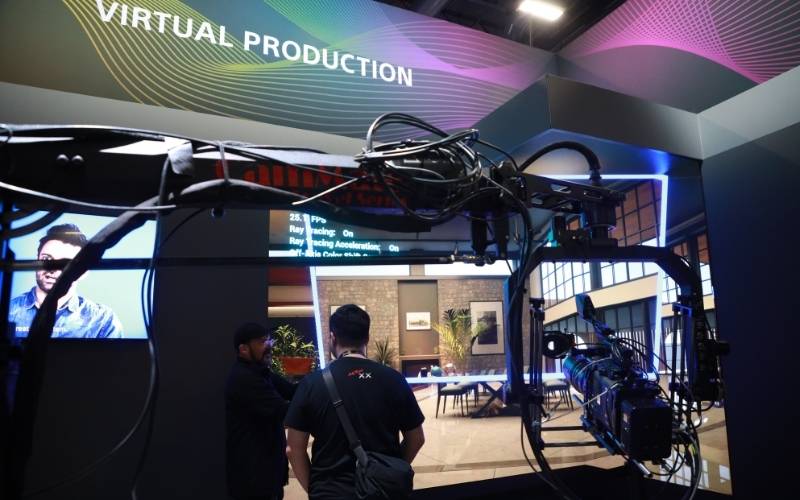
- Video Walls: Freeman is the exclusive provider. Must comply with ANSI E1.50-1 safety standards.
- Structural Requirements:
- All trusses/video walls require wet-stamped drawings from a licensed U.S. engineer.
- Final design must be approved by LVCVA Fire & Safety and Freeman.
- Structures must be built exactly to approved drawings.
- Outdoor trusses must include wind load, staking, and ballasting plans per IBC/ANSI E1.21.
- Structures deemed unsafe may be tied off at the Exhibitor’s expense.
- Onsite inspections apply; non-compliant structures may require changes at Exhibitor’s expense.
Ladders
Exhibitor Abilities
Exhibitors MAY NOT use ladders.
Exhibitor Appointed Contractors MAY use their own ladders, so long as they follow union safety guidelines.
There is no height limitation on ladders. All ladders brought onto the show floor should be ANSI- and CSA-rated, regardless of size or composition. No one is permitted to use another person’s ladder without permission.
Canopies, Ceilings and Multi-Level Booths
Please review the Las Vegas Convention Center Building User’s Manual for fire and safety rules for multi and covered booths. Below are some highlights:
- Multilevel or covered contiguous areas in excess of 1,000 square feet are required to have a fire sprinkler system installed under the entire area and every level of the exhibit only when the following conditions apply:
- The exhibit is used in an event where the duration is seven (7) calendar days or longer.
- The exhibit contains display vehicles.
- The exhibit contains open flame.
- The exhibit contains hot work.
- Any upper-deck area to be occupied must have an approved plan with an engineering stamp registered in the state of Nevada.
- Multilevel areas that are greater than 300 square feet or will occupy more than nine persons shall have at least two remote means of egress.
- Means of egress shall be of an approved type and constructed to the requirement of the code.
- Spiral stairs are not allowed. Spiral stairways are not an approved means of egress for areas occupied by the public, visitors or clientele.
- Exhibits with multilevel or covered areas exceeding 300 square feet in size will require the installation of battery-operated smoke detectors. Any covered area that is also enclosed will require the installation of battery-operated smoke detectors regardless of the size of the area.
Canopies must comply with Use-of-Space rules. The bottom of the canopy should not be lower than 7 ft. (2.13m) from the floor within 5 ft. (1.52m) of any aisle. Canopy supports should be no wider than three inches 3 in. (.08m). This applies to any booth configuration that has a sight-line restriction, such as a Linear Booth.
Cameras, Audio and Video Systems
Official Contractor Responsibilities
Freeman is the exclusive provider of electrical and rigging and must provide staffing when an integrated system draws more than 20 amps or is suspended from the ceiling:
- Advanced audio-visual technician
- Assistant TV audio tech
- Audio technician
- Audiovisual technician
- Character generator
- Crane operator
- Ground rigger
- High rigger
- Lighting tech
- Projectionist
- Tape operator
- TV sound boom operator
- Video utility person
- Video wall technician
Theater Demonstration and Live Entertainment and Product Demos
As a matter of safety and courtesy to others, Exhibitors must conduct sales presentations and product demonstrations so that all Exhibitor Personnel and Attendees are within the contracted exhibit space.
- Audience members and booth personnel must be able to fit within the confines of the contracted booth space. Spectators may not block aisle traffic or interfere with access to a neighboring Exhibit.
- Exhibitors are responsible for assigning staff or hiring security to manage crowd control and ensure clear access to aisles and neighboring Exhibits. You can hire security through our preferred Security Service. Details will be made available later
- Special caution should be taken when demonstrating machinery or equipment that has moving parts or any product that is otherwise potentially dangerous. Machinery and other large equipment must be set back 12 inches (0.30m) to prevent accidental injury. Demonstrations should only be conducted by qualified personnel.
- Show Management reserves the right to determine action for those Exhibits in violation including, but not limited to, forcing security and/or shutting off power to the offending portion of the exhibit. The Exhibitor will be responsible for any charges related to these actions. not limited to, removing/turning off lighting that’s in violation. The Exhibitor will be responsible for any charges related to this action.
Theater Demonstrations and Product Demos
- All presentations, demos, and entertainment must be conducted within booth boundaries.
- Spectators and staff must fit within booth space; aisles must remain clear.
- Exhibitors are responsible for crowd control (staff or hired security).
- Machinery/equipment demos:
- Must be set back at least 12 in. (0.30m).
- Conducted only by qualified personnel.
- Show Management reserves the right to enforce compliance (including security, power shutoff, or fines).
Transmitters and Wireless Devices
- Any transmitter (e.g., wireless mics, walkie-talkies, satellites) requires:
- FCC license(s) and compliance with FCC regulations.
- Non-compliant devices must be turned off.
- Licensed devices that cause interference may need reduced power, re-direction, or adjustment.
- Satellite placement outside the facility requires a completed Satellite Placement Form (Freeman Service Kit) and service orders through COX.
Utility connections (electrical or internet wires, air/water/gas hoses, etc.) must be hidden from view, to maintain an elevated level of safety and professional appearance.
Balloons
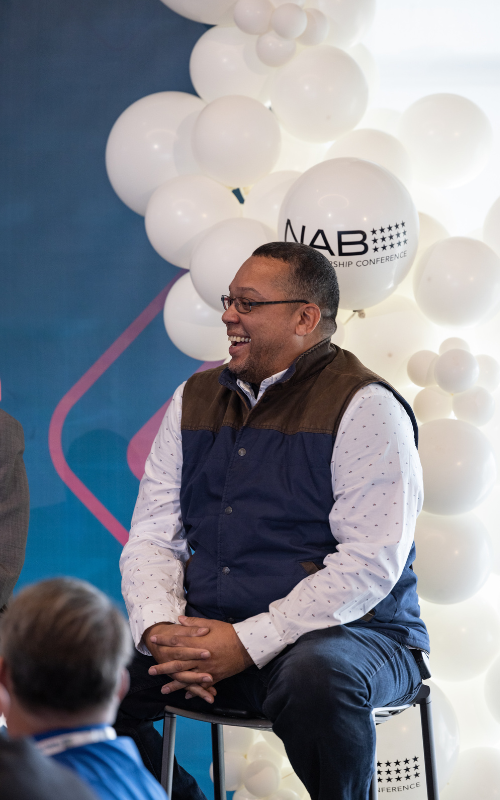
Show management and your Convention Services Manager (CSM) must approve the use of balloons.
Helium refills should be ordered through a local outside vendor of your choosing. This vendor will need to be registered as an Exhibitor Appointed Contractor and have proper credentials. Please also notify LVCVA Fire & Safety, as they sometimes request to supervise the filling of balloons, depending on the size. Helium storage must be ordered through the Freeman Service Kit. Balloons must comply with Use-of-Space rules.
Indoor (Permitted)
- Helium balloons larger than 36 inches separate or tethered, are allowed in the exhibit halls.
- Helium balloon columns and arches are permitted in public space or meeting room areas as long as balloons are properly anchored.
- Large helium-filled balloons, such as advertising balloons, may be used only if they are securely anchored to the exhibit.
- Balloons may be used outside but must be tethered and may require FAA approval.
Indoor (Prohibited)
- Overnight storage of helium or compressed air cylinders in the building is prohibited.
- Helium balloons may not be used for handouts, however smaller air-filled balloons may be used for decoration and/or handouts.
- No helium balloons or blimps may be flown around the exhibit hall.
- Balloons may not be released outdoors due to airport flight patterns in the area.
- Helium gas cylinders used for refilling must be secured in an upright position on ANSI (American National Standards Institute) approved fire prevention stands with the regulators and gauges protected from potential damage.
- Balloons must be removed from the property by the exhibitor or the company that provided them. Balloons must not be left for the Official Service Contractor, cleaning contractor, or the facility.
Outdoor
Moored balloons (to include hot air balloons), and kites are permitted on facility campuses with the following conditions:
- Must have approval from show management and your Convention Services Manager (CSM)
- Balloons/kites must be moored and can only be used for displays. Must submit mooring plan to the Las Vegas Convention Center.
- Balloons/kites must not protrude higher than the building structure of the facility
Hot Air Balloons
- Any hot air balloon that is inflated and standing must have a FAA certified pilot, with a commercial rating for lighter than air aircraft with the balloon at all times.
- Balloons cannot be flown on facility campuses due to the proximity to the local airports, this is an FAA regulation.
- McCarran International Airport is less than 5 miles from LVCC
- North Las Vegas Airport is less than 5 miles from Cashman Center
- Propane cylinders awaiting use must be stored in a secured propane storage cage that meets the requirements of OSHA. Storage cages must be secured in a location selected by LVCVA staff outside of the building
Runaway Balloons
If a balloon escapes its mooring and poses a threat to air navigation, the operator of the unmanned balloon must report the runaway balloon to air traffic control with the estimated position of the balloon and the time it escaped its mooring.
Miscellaneous
Brand Ambassadors and Event Staff
Booth Personnel, Manufacturer Representatives, Models, Hosts/Hostesses, and Mascots must wear an Exhibitor or Manufacturer Representative badge at all times, remain within the confines of the contracted booth space, and maintain a professional appearance. Any gender used by Exhibitors to promote their products at NAB Show by using overtly sexual or suggestive methods is prohibited. If for any reason an exhibit and/or its contents are deemed objectionable to Show Management, the Exhibitor will be asked to alter the attire of its staff.
NAB Show further recommends that you encourage your Booth Personnel to:
- Abstain from overt statements or offensive humor, which would disparage the dignity of any individual or group;
- Substitute asexual words (e.g. sales representative or salesperson instead of salesman);
- Refrain from using labels (e.g., referring to women as “girls”); and
- Abstain from overt statements or offensive humor, which would disparage the dignity of any individual or group;
- Substitute asexual words (e.g. sales representative or salesperson instead of salesman);
- Refrain from using labels (e.g., referring to women as “girls”); and
Display Vechicles
Exhibitors are required to complete the Vehicle Placement Form in the Freeman Service Kit for move-in/out to Freeman.
- Fuel tank openings shall be locked or sealed in an approved manner to prevent the escape of vapors.
- Fuel tanks shall not contain more than one-quarter of their capacity or more than five gallons of fuel, whichever is less.
- Batteries must be disconnected.
- Auxiliary batteries not connected to the engine starting system may be left connected.
- Electric and hybrid vehicles shall have their operating batteries disconnected whenever possible.
- External power is recommended for demonstration purposes.
- Battery charging is not permitted inside the building.
- Combustible/flammable materials must not be stored beneath display vehicles.
- Fueling or de-fueling of vehicles is prohibited
- Vehicles shall not be moved during the show and will remain off while freight doors are closed.
- 36” of clear access or aisles must be maintained around the vehicle.
- Vehicles must be a minimum of 20 feet from the exit of the door or exit pathway.
- Vehicles placed in lobbies and meeting rooms must have the approval of the CSM and require leak protection.
Drones
Drones/Remotely Piloted Aircraft Systems (RPAS)/Unmanned Aerial Vehicles (UAVs). RPAS/UAVs/Drones are permitted. The following guidelines must be strictly adhered to:
- Exhibitors must have approval from Show Management and the Convention Services Manager (CSM) before flying any RPAS. Application form to come in December 2022.
- All Federal Aviation Administration (FAA) and Department of Homeland Security guidelines must be observed.
- RPAS carrying weapons are prohibited.
- RPAS may not be flown in lobbies, restaurants or other common areas.
- RPAS must weigh less than 55 pounds.
- RPAS are restricted to within your defined booth space only.
- RPAS must be flown in a fully enclosed area (including ceiling) using netting, plastic, or other safety measure. Tethering is not an approved safety measure. Netting must be made of a material that is sturdy enough to prevent the RPAS from breaking or escaping the enclosure. To ensure the material meets safety standards before you arrive on-site, we highly recommend you submit your plan to LVCVA Fire & Safety.
- RPAS are prohibited from flying over populated areas.
- RPAS are prohibited from flying within 18” of any building structure including sprinklers.
Outdoors
FAA regulation restricts RPAS from being flown within five (5) nautical miles in class Bravo airspace (Harry Reid International Airport) and class Delta airspace (North Las Vegas Airport). Due to the proximity to these airports, RPAS’s are prohibited from flying outside on any LVCVA campus. Waivers obtained through the FAA must be provided to the Convention Services Manager.
Food and Beverage
Centerplate is the exclusive food and beverage provider for the Las Vegas Convention Center. All food and beverages, including marketing giveaways (i.e. bottles of water), must be purchased from and supplied by the in-house catering provider. All alcoholic beverages must be served by an employee of the in-house catering provider who is a certified bartender. Corkage fees may be assessed for any food and beverage brought into the Facility.
The Convention Center has rules regarding food preparation and sampling. Please review the Las Vegas Convention Center Building User’s Manual for more information.
Giveaways, Contests and Raffles
These activities are permitted; however, the laws and regulations vary from state to state and often have requirements (e.g., payment of taxes, age limitations, etc.). For raffle/gaming inquiries, please contact the Nevada State Gaming Control Board at +1 702 486 2020.
Direct Selling – Show and Sell
Subletting, Director Listings and Goods
- Per the terms and conditions of the booth reservation contract signed at the time of reservation, exhibitors may not assign, sublet or share their Exhibit Space with another business or firm unless approval has been obtained in writing from NAB. Any approved entity must sign a Contract with NAB.
- Such firm must be a corporate parent or subsidiary of the Exhibitor, or another subsidiary of the parent corporation, and must be prepared to provide to NAB written documentation of the relationship upon request. For a fee, NAB will provide Directory Listing(s) for such firms.
- A firm that has not signed a Contract with NAB may not be represented on the Exhibit Floor. NAB retains the right to administer and remove from the exhibition any company without a signed Contract. Exhibitors must show goods manufactured or dealt in by them in the regular course of business. Should an article of a non-exhibiting firm be required for operation or demonstration in Exhibitor’s display, identification of such article shall be limited to the usual and regular nameplates, imprint or trademark under which the same is sold in the general course of business.
- No Exhibitor may distribute Show-specific commercial publications or other commercial media specifically directed to Show attendees from its Exhibit Space without the prior written consent of NAB.
Suitcasing & Outboarding
NAB Show Exhibitors are now permitted to sell their products on the show floor. NAB Show, in conjunction with The Tax Authority for the State of Nevada, has worked together to provide NAB Show Exhibitors the ability to sell products at the booth through a one-time special event permit. Below are the rules required to participate:
- Participating exhibitors must charge the correct sales tax (8.25%) for each sale. Exhibitors are required to issue a receipt for each purchase containing company name, time and date of purchase, item description, item price and sales tax. To exit the hall, attendees will be required to show receipt to designated security in each hall. Locations will be published.
- All exhibitors must have a sign visible in their booth signifying participation in Show and Sell program.
- Participating exhibitors are required to have a copy of Business Tax License and Reseller’s Permit available in your booth.
- If an item is too large to hand carry, exhibitors must work with Freeman and is responsible for getting the item shipped to the attendee.
- International Exhibitors must clear all goods sellable goods on a “permanent basis” and pay the appropriate duties/taxes at the time the goods are imported into the country.
- Exhibitors participating in this are urged to hire additional security and take additional precautions as NAB Show, Freeman and the LVCC are not liable for any lost, damaged or stolen merchandise.
Suitcasing: Prohibited. All marketing/promotion must remain inside contracted booth space. Materials may not be left in aisles, conference tables, or other public areas.
Outboarding: Hosting or participating in competing events during NAB Show hours is prohibited. Violators risk booth cancellation without refund and may be banned from future events.
NAB enforces a zero-tolerance policy on these practices.NAB Show Exhibitors are now permitted to sell their products on the show floor. NAB Show, in conjunction with The Tax Authority for the State of Nevada, has worked together to provide NAB Show Exhibitors the ability to sell products at the booth through a one-time special event permit. Below are the rules required to participate:
- If you participate at 2 or more
- If you sell at more than two events in Nevada during a twelve-month period, you must register with the Department and obtain your own Sales & Use Tax Permit.
- Failure to adhere to rules below may impact your standing for the 2026 NAB Show as well as liabilities to the State of Nevada.
- Nevada Events that allow selling on the show floor:
- Participating exhibitors must charge the correct sales tax (8.25%) for each sale. Exhibitors are required to issue a receipt for each purchase containing company name, time and date of purchase, item description, item price and sales tax. To exit the hall, attendees will be required to show receipt to designated security in each hall. Locations will be published.
- All exhibitors must have a sign visible in their booth signifying participation in Show and Sell program.
- Participating exhibitors are required to have a copy of Business Tax License and Reseller’s Permit available in your booth.
- If an item is too large to hand carry, exhibitors must work with Freeman and is responsible for getting the item shipped to the attendee.
- International Exhibitors must clear all goods sellable goods on a “permanent basis” and pay the appropriate duties/taxes at the time the goods are imported into the country.
- Exhibitors participating in this are urged to hire additional security and take additional precautions as NAB Show, Freeman and the LVCC are not liable for any lost, damaged or stolen merchandise.
Compliance and Legal
Exhibitors must comply with federal, state, and local laws (including commerce, tax, and export regulations). Weapons are strictly prohibited. Nevada Revised Statute 202.3673 forbids concealed weapons on Convention Center property
Americans with Disabilities Act (ADA)
Make show-floor wheelchair accessible by ramping raised exhibit flooring without extending a ramp into the aisle. Note: a standard wheelchair ramp should have a grade no steeper than 1:12. This means that for every inch of rise (change in height), there should be 12 inches of run (change in length).
Examples of How to Design an ADA-Compliant Exhibit
- Ramp the entry or use hydraulic lifts to trailer show-floor
- Avoid double-padded plush carpet to ease mobility device navigation
- Provide the same attendee experience on both levels of a two-story exhibit
- Offer a signer or other auxiliary hearing-impaired apparatus for sound presentations or have a printed copy of the presentation available.
- Run an audio presentation for people with sight problems.
- Arrange touch screen displays at a height to accommodate a person sitting in a wheelchair.
NAB Show further recommends that you encourage your Booth Personnel to:
- Abstain from overt statements or offensive humor, which would disparage the dignity of any individual or group;
- Substitute asexual words (e.g. sales representative or salesperson instead of salesman);
- Refrain from using labels (e.g., referring to women as “girls”); and
- Eliminate from all marketing collateral sexist language (i.e., replace masculine pronouns with he or she, or reword sentences or phrases) and discriminatory jokes or visual aids that Show people in stereotypical roles by presenting individuals without bias regardless of sex, race, age, groups, etc.
Service Animals
Under ADA’s regulations, the definition of “service animal” is limited to a dog that is individually trained to do work or perform tasks for an individual with a disability. The task(s) performed by the dog must be directly related to the person’s disability.
Under the ADA, “comfort,” “therapy,” or “emotional support” animals do not meet the definition of a service animal.
Animals
- Service animals are always welcome.
- The definition of a service animal can be found on the ADA website.
- Permission for any animal to appear in a show or booth must first be approved by show management, then by the Convention Services Manager (CSM).
- The animal must have something to do with the booth or show (i.e., a dog used in commercials, films, etc.).
- It is the animal owner’s responsibility to clean up after the animal while on facility property.
- The following criteria must be met before the animal is allowed on property:
- A separate certificate of insurance in the amount of $1 million combined single limit bodily injury and broad form property damage coverage, including broad form contractual liability, naming the Las Vegas Convention and Visitors Authority as additional insured must be provided.
- Animals, with the exception of fish, are not allowed in the building overnight.
- A trainer must accompany animals at all times.
- Animals
- Service animals are always welcome.
- The definition of a service animal can be found on the ADA website.
- Permission for any animal to appear in a show or booth must first be approved by show management, then by the Convention Services Manager (CSM).
- The animal must have something to do with the booth or show (i.e., a dog used in commercials, films, etc.).
- It is the animal owner’s responsibility to clean up after the animal while on facility property.
- The following criteria must be met before the animal is allowed on property:
- A separate certificate of insurance in the amount of $1 million combined single limit bodily injury and broad form property damage coverage, including broad form contractual liability, naming the Las Vegas Convention and Visitors Authority as additional insured must be provided.
- Animals, with the exception of fish, are not allowed in the building overnight.
- A trainer must accompany animals at all times.
Fire and Safety
No storage of any kind is allowed behind booths or near electrical service. A one-day supply of product is permitted within but cannot be stored behind the booth. You can order storage through the Freeman Service Kit.
If you have a column in your booth, please refer to the Freeman Service Kit for your unique column diagram, which includes fire regulations for your specific column.
Contact Freeman and/or LVCVA Fire & Safety if you have questions:
- All fire hose racks, fire extinguishers and emergency exits must be visible and accessible at all times. Should this equipment be within a booth or exhibit due to the layout of floor space, additional signage indicating fire equipment location(s) (extinguisher, hoses, etc.) will be necessary, along with accessibility being maintained at all times.
- Review the rules for Display Vehicles section above.
- Review the Las Vegas Convention Center Building User’s Manual for rules regarding:
- Multi-level, enclosed and covered show-floor
- Chemicals
- Halogen and quartz lamp use
- Equipment that uses LPG or natural gas as fuel
- Fireplaces
- Except for equipment that uses LPG or natural gas as fuel, compressed gas cylinders, including LPG, and all flammable or combustible liquids are prohibited inside the building.
- The travel distance within the exhibit booth or exhibit enclosure to an exit access aisle shall not exceed 50 ft. (2003 NFPA 101, 13.7.4.3.2)
- Exhibitors who plan to demonstrate fuel-burning appliances in the LVCC/Cashman Center must have approval from the Convention Services Manager 60 days prior to the event.
- Candles may be used for decorative purposes for events with food service (1 candle per table) where the candles are supported by/on substantial noncombustible bases so located as to avoid the danger of ignition of combustible materials. Candle flames shall be protected and enclosed so that if the candle were to tip over, there would be no risk of fire. The Fire Prevention Office has final approval to determine if a candle meets the above criteria. Candles may not be left unattended while lit. Intended use of candles for decorative purposes must be listed on the “Food and Beverage Sampling/On-Site Preparation Approval Form” and submitted to [email protected].