
NAB Show
Trends and Topics: Streaming.
How NASA+ Is Reimagining Live Video from the Moon
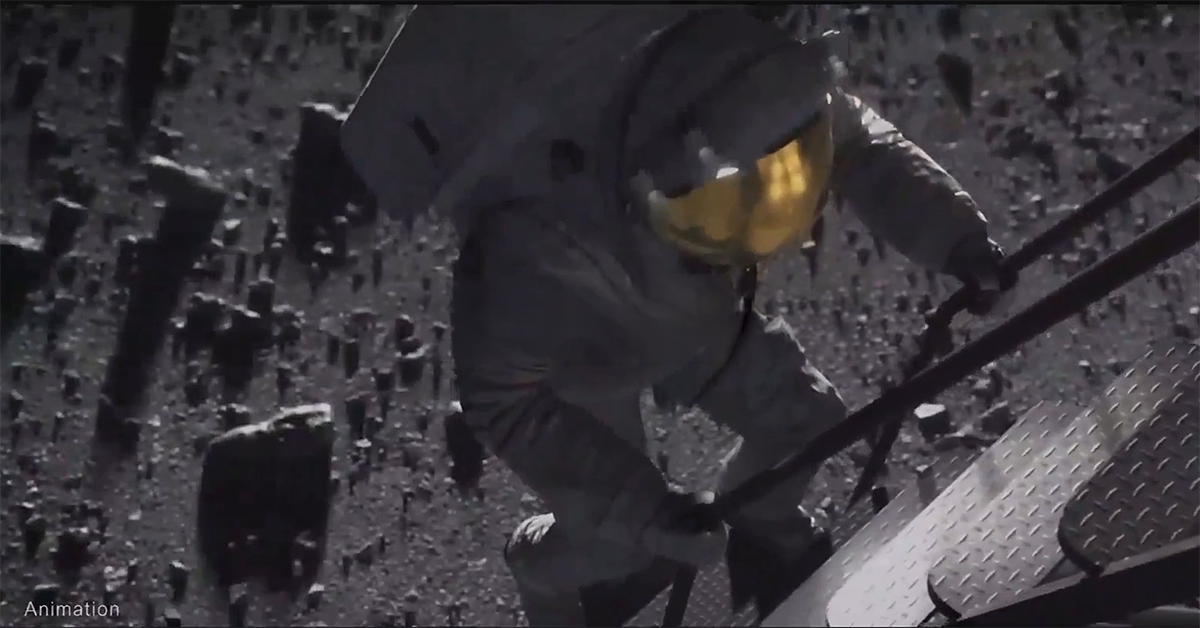
When most media organizations talk about scaling streaming infrastructure, they are referring to millions of viewers, new distribution partners or cloud-native workflows. The team at NASA+ are thinking about something slightly more ambitious: livestreaming the moon.
During the session “Streaming the Next Frontier with NASA+” at NAB Show New York 2026, Rebecca Sirmons, general manager of NASA+, Lee Erickson, enterprise video services lead for AEGIS at NASA, and Ron Gonser, multimedia broadcast engineer supporting NASA through eMITS, pulled back the curtain on the technology, partnerships and operational challenges behind bringing humanity’s return to deep space audiences around the world.
Key Takeaways:
- NASA+ was built around the mission of making space accessible by meeting audiences wherever they choose to watch.
- Delivering live video from the moon requires new approaches to cloud production, distribution and infrastructure resilience.
- NASA’s streaming ecosystem depends on unprecedented collaboration among competing technology and distribution partners.
- Future lunar missions will push media technology forward with 4K streaming, always-on video feeds and new imaging standards.
- NASA is deliberately building open standards that allow the broader media and technology ecosystem to participate in the next era of exploration.
Why NASA Became a Streaming Company
The story behind NASA+ began with a surprisingly familiar media challenge: discoverability.
Sirmons described a personal experience trying to watch a launch with her daughter during the pandemic and struggling to find NASA’s programming.
“If I’m having a problem, imagine how many other people are having a problem,” she said.
That realization became a guiding principle for NASA+, which launched in 2023.
“No matter who you are, where you are, where you choose to watch, I want to meet the audience where they’re at,” Sirmons said.
NASA’s mandate, established in the Space Act of 1958, requires it to share its story with the widest practical audience possible. That mission led NASA to embrace a streaming-first strategy and distribute content across some of the world’s largest platforms.
When Competitors Become Teammates
According to the NASA team, livestreaming the Artemis II mission required an unprecedented level of coordination among major streaming platforms, technology vendors and distribution partners. Organizations that typically compete for audience share instead worked together to ensure that viewers around the world could experience the mission.
Reflecting on those efforts, Erickson described the experience of working alongside major streaming services: “We’re all on one team, and we’re all working together, and we’re all helping each other.”
For Erickson, the moment represented a stark contrast with traditional broadcasting environments, where organizations often guard operational knowledge.
“Here are these top, major platforms, and we’re all talking together on how we can fix things and how we can make it better so that you, the audience, can benefit from them,” Erickson reflected.
Here are these top, major platforms, and we’re all talking together on how we can fix things and how we can make it better so that you, the audience, can benefit from them.
— Lee Erickson, Enterprise Video Services Lead, AEGIS, NASA
Building a Cloud-Native Broadcast Operation for Space
The technical architecture behind NASA+ reads like a blueprint for the future of live production.
Faced with requirements that traditional broadcast workflows could not easily support, NASA partnered with cloud providers and technology vendors to create virtualized production and distribution environments. Erickson described building ingest, routing and master control capabilities in the cloud while maintaining flexibility to scale operations up or down based on mission requirements.
Once content enters NASA’s ecosystem, the workflow remains largely IP-based.
The cloud infrastructure allows NASA to add captioning, graphics, distribution formats and redundancy while minimizing unnecessary processing. It also enables rapid deployment to new distribution partners and platforms.
The Challenge of Streaming the Moon
Livestreaming a rocket launch was difficult, but livestreaming a lunar landing is an entirely different challenge.
NASA’s future vision includes live 4K video, 24/7 streaming from the lunar surface and as many as 22 simultaneous camera feeds. Achieving that goal requires solving problems that most media companies never encounter.
Developing lunar communications networks, creating encoders capable of surviving extreme temperatures and operating in unforgiving environments are a few of the obstacles the NASA team mentioned.
Erickson described some of the requirements: “I need an encoder that can go to 140 degrees Celsius and -40 degrees Celsius and not melt or freeze. I need to be able to drop it 40 stories without it breaking. I need to put it in a microwave for 7 minutes to see if anything melts on it, and oh, by the way, it needs to go off a 12 volt. Then we get to the tech part.”
Yet the objective is not technical excellence. It is transparency. Sirmons emphasized the importance of enabling audiences to witness exploration in real time.
“It’s making sure that everybody is able to see this, see it as clearly as possible,” Sirmons said. “It must be the best-looking thing that we could possibly see livestreaming from the moon.”
The goal is to make audiences feel like participants in humanity’s next chapter of exploration.
It’s making sure that everybody is able to see this, see it as clearly as possible. It must be the best-looking thing that we could possibly see livestreaming from the moon.
— Rebecca Sirmons, GM of NASA+, NASA
Open Standards for a New Era of Exploration
NASA’s vision extends beyond its own operations. To encourage innovation, the agency is publishing technical standards designed to help vendors and technology providers build compatible solutions. Rather than creating proprietary technologies, NASA is embracing commercially available standards and encouraging broader ecosystem participation.
As Erickson explained, the objective is to create a level playing field that allows organizations of all sizes to contribute.
“We try to make it easy for what we call COTS, commercial off-the-shelf products, to be made to support us,” he said. “Instead of coming up with some weird Codec or some weird encoder, we try to make standards that were achievable by industry.”
Those standards are also being shared internationally, creating opportunities for interoperability across future exploration programs.
The future of streaming is often framed around personalization, monetization and audience growth, but NASA+ offers a different perspective. The next frontier may be literal. As NASA prepares to return humans to the moon, the agency is also redefining what large-scale livestreaming can be, proving that the most ambitious media workflows are often built in service of the most ambitious human endeavors.
Watch the full NAB Show New York 2026 session, “Streaming the Next Frontier with NASA+.”
Thank you for attending NAB Show New York 2026.
We look forward to seeing next year!
September 29-30, 2027 | Javits Center, New York, NY