
NAB Show
Trends and Topics: Sports.
Game On: Why Sports on Broadcast Still Matters
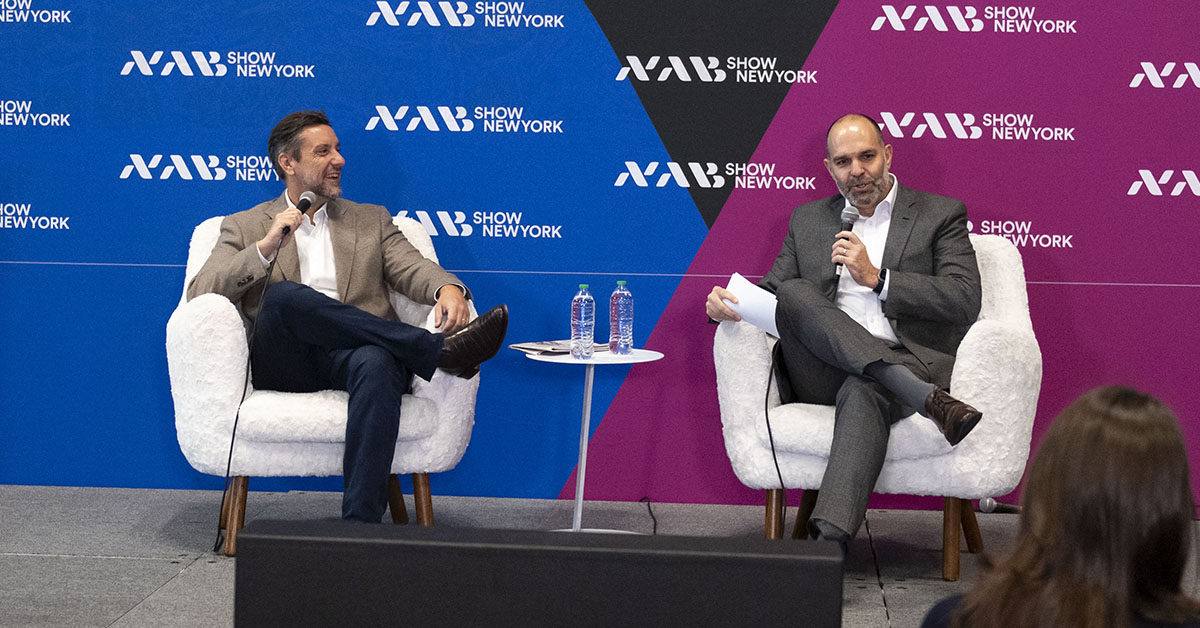
At a time when media audiences are more fragmented than ever, sports remain one of the few experiences capable of bringing together millions of people in real time. That was the central theme of “Game On: The Power of Sports on Broadcast,” a conversation between Curtis LeGeyt, president and CEO of the National Association of Broadcasters, and Clay Travis, FOX Sports contributor and host of The Clay Travis Show, at NAB Show New York 2026.
They discussed what sports mean culturally, why accessibility matters, how younger audiences are developing fandom and what broadcasters can do to remain indispensable in an increasingly complex media landscape.
Key Takeaways:
- Sports remain one of the last truly mass-market experiences capable of uniting audiences across communities and viewpoints.
- Fans increasingly want simplicity, affordability and easy access to games, regardless of platform.
- Younger generations develop lifelong fandom through accessible viewing experiences, making distribution decisions critical for the future of sports.
- Broadcast sports create value beyond the game itself by strengthening local news, weather and community programming.
- Broadcasters must continue experimenting with new formats and platforms while preserving the broad accessibility that makes sports culturally powerful.
Sports Is America’s Shared Experience
Travis remembers the moment he became a lifelong sports fan. At the age of 6, he watched the University of Tennessee play Miami in the Sugar Bowl — by himself on broadcast television. This formative cultural experience, which sparked a passion that shaped his identity and career, was made possible by free and widely available broadcast sports.
In today’s environment of audience fragmentation, sports continue to deliver something increasingly rare: simultaneous attention from large, diverse audiences. This gives sports the unique power to create cultural touchstones and a community built on shared participation, making it a valuable unifying force.
“What I’ve always said I love about sports is when your favorite team wins and you’re in a stadium or you’re in an arena … you don’t think about their politics, you don’t think about their gender identity, you don’t think about anything other than the shared communal experience washing over you of being a fan,” Travis said. “Sports is in many ways, to me, the last fabric that unites America.”
The ability to create shared moments remains one of broadcast television’s most powerful advantages.
Sports is in many ways, to me, the last fabric that unites America.
— Clay Travis, FOX Sports contributor and host of The Clay Travis Show
The Fan Experience Is Becoming More Complicated
Many fans feel increasingly frustrated as sports rights become distributed across multiple services and platforms.
“The average sports fan wants to have one remote, and they want to easily be able to watch every game, and they want to be able to do it in an affordable way,” Travis said.
Instead, he argued, many fans face a growing patchwork of subscriptions, passwords, blackouts and streaming services. The result is an experience that often feels more expensive and less convenient than it did years ago.
“What has supremely frustrated me is we are charging sports fans way more, and they’re getting way less,” he said.
Travis pointed to practical frustrations such as streaming delays, authentication hurdles and blackout restrictions that can diminish the experience of watching live sports. For an industry built around immediacy and excitement, even small barriers can have an outsized impact on engagement.
As media companies evaluate new distribution strategies, audience experience remains a critical competitive differentiator.
Winning the Next Generation of Fans
Accessibility affects all viewers, but LeGeyt and Travis expressed particular concern about younger audiences.
According to Travis, fandom often takes root between the ages of 8 and 11, making those years especially important for sports leagues and media companies. If young viewers are unable to easily find games, they may turn elsewhere for entertainment.
“These kids are programmed so much every single day,” Travis said. “They’ve never had more entertainment option available to them ever.”
For broadcasters, that challenge is also an opportunity. Sports remains one of the few content categories capable of attracting live, multigenerational audiences. Accessible sports programming can serve as an entry point to lifelong fandom and create viewing habits that extend beyond sports itself.
Sports Is a Gateway to Local Programming
Sports do not exist in isolation. Because audiences often remain tuned in before and after major sporting events, they can connect audiences to other forms of content, particularly local programming.
“Sports is often the bridge that allows people to become aware that you have a great local news program,” Travis said. “I just think we oftentimes miss the degree to which sports connect to local news, and sports connects to local weather, and sports is a bridge to those communities.”
By attracting audiences, sports also support journalism, weather coverage and community engagement, which creates value for broadcasters and communities.
I just think we oftentimes miss the degree to which sports connect to local news, and sports connects to local weather, and sports is a bridge to those communities.
— Clay Travis, FOX Sports contributor and host of The Clay Travis Show
Innovation Matters. So Does Access.
Looking ahead to the future of sports media, Travis encouraged broadcasters to experiment with new formats, platforms and audience touchpoints — with a focus on innovation that expands, instead of restricts, access.
“I think we need to have more big signature events on major broadcast networks,” he said.
The biggest sports moments deliver their greatest value when they are widely accessible and shared across communities.
Ultimately, the conversation reinforced a simple but powerful idea: sports are most valuable when they are shared. As broadcasters adapt to changing technologies and audience behaviors, preserving accessibility and community connection is as important as embracing innovation.
Watch the full session recording from NAB Show New York 2026, “Game On: The Power of Sports on Broadcast.”
Thank you for attending NAB Show New York 2026.
We look forward to seeing next year!
September 29-30, 2027 | Javits Center, New York, NY