
NAB Show
Trends and Topics: Creator Economy.
David S. Goyer Sees Technology Reshaping How Hollywood Builds Franchises
Christopher Nolan’s latest blockbuster, The Odyssey, is a technological triumph in film, with the director’s vision compelling the creation of multiple custom camera technologies.
A frequent collaborator with Nolan, Hollywood writer and producer David S. Goyer joined us NAB Show 2025 to talk about how technology is reshaping Hollywood and his latest project for a creator economy built on AI and community participation.
Key Takeaways:
- Hollywood’s traditional studio system often slows innovation by requiring approval from numerous stakeholders, making it harder to create distinctive stories.
- Goyer’s “Emergence” project aims to test a future in which fans and creators can contribute to intellectual property while preserving ownership and payment rights.
Hollywood’s Biggest Challenge
David S. Goyer, whose credits include The Dark Knight trilogy, Blade and Foundation, has always been technology adjacent, or “tech interested,” as he described it.
After selling his first screenplay when he was 21 years old, he has since done film and television shows, written novels and comic books, branched out into the Call of Duty video game franchise and worked with Lucasville on their first VR initiative.
At a time when Hollywood is grappling with changing audience habits and a new technology environment, Goyer believes the industry’s biggest challenge may be its own structure. Namely, the development process for major film and television franchises is increasingly complex.
Reflecting on his experience working with Christopher Nolan on Batman Begins and The Dark Knight, Goyer described how studio decision-making expanded dramatically as the franchise became more successful. What began as conversations with a single executive evolved into meetings filled with dozens of stakeholders, each bringing different priorities and business objectives.
“We were developing The Dark Knight, and we had a kickoff meeting,” Goyer recounted. “I remember it was in this big conference room, and there’s something like 25 or 30 executives there. All these stakeholders in these different silos at the company that had their own needs and their own opinions about what we should be doing for the next Batman movie. And that’s just not a good way to tell a story.”
Goyer suggested that this dynamic frequently works against creativity and makes it harder for studios to generate the kinds of breakthrough properties that become cultural phenomena.
“Fortunately, with someone like Chris Nolan, we had the power to just say, ‘No, we’re not going to listen to any of that,’” Goyer said. “But that is how most of the big movies and TV shows get made these days.”
In earlier periods in Hollywood, Goyer said executives were more willing to make instinctive creative bets. For example, he recalled former New Line Cinema executive Mike De Luca greenlighting Blade because he believed in the project, despite financial uncertainty.
Goyer believes the success of productions increasingly depends on balancing corporate oversight with a singular creative vision. He pointed to recent successes such as Barbie as evidence of a film that succeeded largely because it maintained a clear point of view.
“If you achieve a level of success as a TV show runner or a film director where you can kind of stave off the mob, then you’ve got a chance of getting something made that has some kind of authorship,” Goyer said.
In response to Hollywood’s challenges, Goyer advocates for new tools that help creators cut through bureaucracy while preserving authorship, experimentation and innovation.
I was intrigued with the idea of applying some of the lessons that I’d learned in various mediums and seeing what was applicable and what had to be reinvented and different ways of storytelling.
— David S. Goyer, Executive Producer/Director, Phantom Four Films
A New Technology Stack for IP and Creator Participation
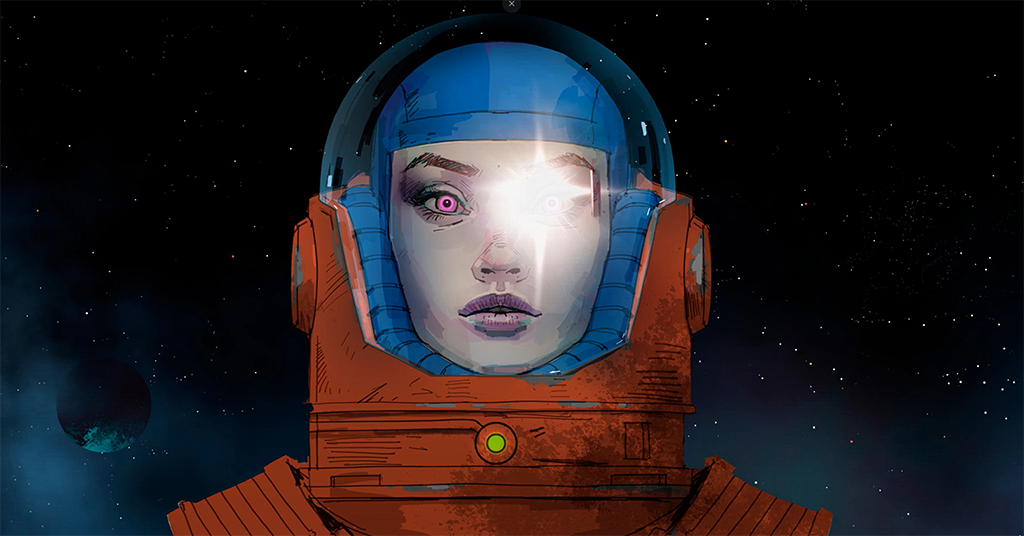
To that end, Goyer developed a science fiction universe, “Emergence,” as a proof of concept for a new creator economy built around blockchain infrastructure, AI tools and community participation.
“I was intrigued with the idea of applying some of the lessons that I’d learned in various mediums and seeing what was applicable and what had to be reinvented and different ways of storytelling,” Goyer said.
The catalyst for the project was a frustrating experience with existing intellectual property systems: He was reviewing studio-approved merchandise for a television project and discovered fan-created products on Etsy that were far more compelling. However, there was no efficient legal mechanism for rights holders to work directly with those creators.
To address that problem, the tech platform seeks to automate licensing, attribution and royalty tracking. Rights holders can establish rules governing how their intellectual property is used, while creators can generate approved content without negotiating individual licensing agreements.
“If I’m a creator and I want to make a T-shirt, a mug or whatever, I click, ‘Create the T-shirt.’ It tracks everything,” Goyer explained. “It kicks me, the creator, back a tiny bit, 2%. 98% goes back to the creator of the T-shirt. The creator of the T-shirt didn’t have to create a licensing agreement or hire a lawyer. So that’s one way that it works.”
In the Emergence universe, participants can create characters, stories and artwork that may eventually become official canon. Contributions are tracked, attributed and potentially compensated.
Goyer compared the idea to the comic book fandom he experienced growing up.
“When I was a kid reading Marvel Comics, I would write letters into the editor. And the best you could hope for was that maybe your letter would be printed in the letters page of a comic book, or if you drew a sketch, it might be printed,” Goyer said. “But there was no mechanism for an idea that you had or a character that you created to ever join the Marvel Universe. There was just no mechanism for that. But it would be interesting if there were a way for that to happen. And so that’s what we’re trying to dip our toe into.”
While acknowledging that the concept remains experimental, Goyer believes Hollywood and Silicon Valley must work together more closely. He argued that technologists often underestimate how difficult it is to create enduring entertainment brands, while media companies frequently struggle to innovate inside legacy systems.
“It’s much harder than people realize to create something sticky, to create something that a mainstream audience is going to want to like.”
Ultimately, Goyer presented Emergence as an attempt to build franchises differently, creating new opportunities for creators while preserving ownership, attribution and creative vision.
Regardless of whether Emergence ultimately succeeds, Goyer’s experiment reflects a broader industry question: can Hollywood use technology to not simply to produce content more efficiently, but to reimagine how the next generation of franchises is created, owned and expanded?
Watch the full session recording from NAB Show 2025, “AI, Hollywood and New Worlds of Story Telling.”
Thank you for attending NAB Show New York 2026.
We look forward to seeing next year!
September 29-30, 2027 | Javits Center, New York, NY