
NAB Show
Trends and Topics: Creator Economy.
Beyond the Following: Building the Next Entertainment Franchise
A loyal following gives creators a powerful starting point for building an entertainment business. Turning that connection into programming with lasting value requires a distinctive idea, the right collaborators and a clear understanding of why audiences keep coming back.
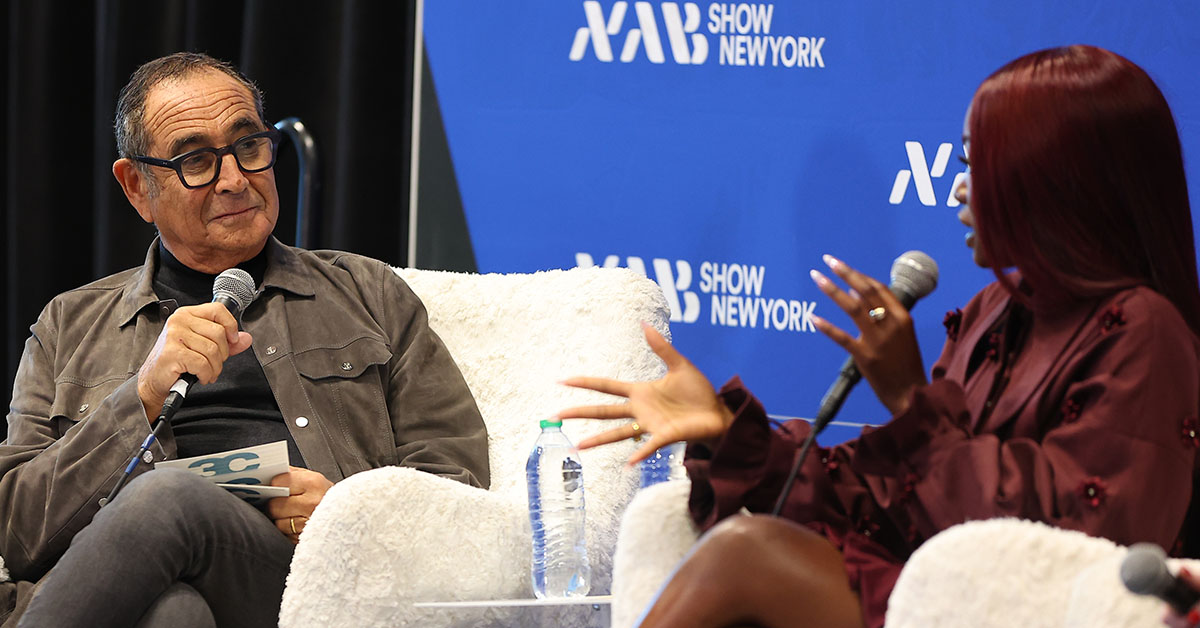
At NAB Show New York 2026, “From Following to Franchise: Building the Next Generation of Creator-Led Entertainment” explored how creators, media companies and brands can build those businesses together. Creators may arrive with an audience already invested in them. The challenge is translating that attention into original programming, meaningful partnerships and opportunities that extend beyond a single show.
Moderated by Michael Kassan, founder and CEO of 3C Ventures, the conversation featured Chelley Bissainthe, creator and media personality from Love Island USA; Christine Cotter, managing director of 360i and head of social innovation at dentsu; and Jarret Myer, co-founder and CEO of UPROXX.
Key Takeaways:
- A creator’s distinctive talent and relationship with fans can provide a stronger foundation for original programming than follower counts alone.
- Media companies and brands must contribute expertise, resources and collaboration while protecting the creator’s voice.
- Building a franchise means developing room for a property to grow into new formats, products and experiences.
Finding the Talent Behind the Following
For Myer, evaluating a potential entertainment property begins with understanding what a creator brings beyond reach.
UPROXX’s work in music has shaped that perspective. Artists influence how people dress, speak and experience culture, he explained. When developing programming, he looks for creators with a similarly distinctive ability.
“You have to have a superpower, not just numbers, to create culture,” Myer said.
In Bissainthe, he identified empathy as her superpower.
After audiences connected with her on Love Island USA, Bissainthe partnered with UPROXX on Love Songs, a music interview show. After he described a gap in music interviews where the pursuit of virality overshadowed meaningful discussions, Myer saw an opportunity for conversations in which musicians could discuss their work with someone interested in understanding their creative process.
Bissainthe’s ability to connect with people offered the foundation for a different approach.
For Bissainthe, that quality reflects the same personality viewers responded to on television. After Love Island USA wrapped, she discovered a community that connected with her experiences, her interactions with others and her emphasis on relationships.
That connection carries expectations. Audiences recognize when a creator is presenting something that feels inconsistent with who they are.
“People can tell when it’s not genuine,” Bissainthe said.
Moving from On-Screen Talent to Creative Partner
Developing Love Songs also gave Bissainthe a different role in shaping what audiences see.
On reality television, she explained, she entered a production whose narrative and creative direction were established by others. Building a show with UPROXX allowed her to participate from the beginning.
“Now I get to have my hands in every single thing,” Bissainthe said.
Her involvement extends to cameras, sound, guests and scripts. For her, being an executive producer means helping make decisions that determine whether the finished program reflects her voice.
That approach also informs Myer’s view of a media company’s responsibilities. When a creator already brings talent and direct audience access, a partner must offer a clear contribution.
For UPROXX, Myer described collaboration as a way to combine complementary strengths, with each participant contributing knowledge the others may lack.
“Yes, any creator with a fan base can put a camera on themselves and broadcast to their audience,” Myer said. “But to make something substantial — an incredible album, a show that stands the test of time — you do need a team.”
Yes, any creator with a fan base can put a camera on themselves and broadcast to their audience. But to make something substantial — an incredible album, a show that stands the test of time — you do need a team.
— Jarret Myer, Co-Founder and CEO, UPROXX
The opportunity for media companies is to help creators develop their ideas into ambitious programming while preserving the qualities that attracted audiences in the first place.
Building Brand Partnerships Around Trust
For advertisers, the value of creator partnerships is evolving as well.
Cotter described a shift from prioritizing large audiences and impressions toward building deeper connections that can inspire action. Smaller communities can be especially valuable when followers are highly engaged and trust a creator’s recommendations.
“They want long-standing creator partners that go beyond being a vendor and a transaction and almost co-create their brands with them,” Cotter said.
That requires brands to approach creators as partners with their own identities and business interests. Creative direction should emerge through collaboration, informed by the creator’s understanding of their audience.
For Bissainthe, a lasting working relationship depends on that shared investment and alignment. She described successful partnerships as ones in which brands trust her vision while she delivers what they need.
Asked which creative decisions she would be unwilling to surrender, her answer was direct: “Any part that takes away my voice.”
She also emphasized the responsibility that comes with recommending products. Promoting something she would not use herself could undermine the credibility she has built with supporters.
I don’t look at my supporters and audience as a dollar sign.
— Chelley Bissainthe, creator and media personality
Giving a Show Room to Become Something Bigger
As Kassan observed, a successful show gives audiences something they want to watch. A franchise creates additional possibilities through new formats, talent, experiences, partnerships and intellectual property.
For Bissainthe, Love Songs is still at the beginning of that journey. She suggested it could eventually expand into a music label or an educational resource for people creating music, while making clear that those possibilities remain exploratory.
Myer framed his role around supporting that ambition: “What do you want it to become, and how can I help?”
Cotter, meanwhile, urged marketers to recognize how deeply creators already participate across the media industry. Their work belongs within the broader marketing strategy, with each investment contributing toward a shared business goal.
The discussion positioned franchise-building as a process of developing the talent, relationships and ideas behind a following. For creators, that means having a meaningful role in shaping their work. For media companies and brands, it means helping that work grow while protecting the audience connection that gives it value.
Watch the full session recording from NAB Show New York 2026, “From Following to Franchise: Building the Next Generation of Creator-Led Entertainment.”
Thank you for attending NAB Show New York 2026.
We look forward to seeing next year!
September 29-30, 2027 | Javits Center, New York, NY