
NAB Show
Trends and Topics: Creator Economy.
Why Mobile-First Storytelling Is Rewriting Hollywood’s Playbook
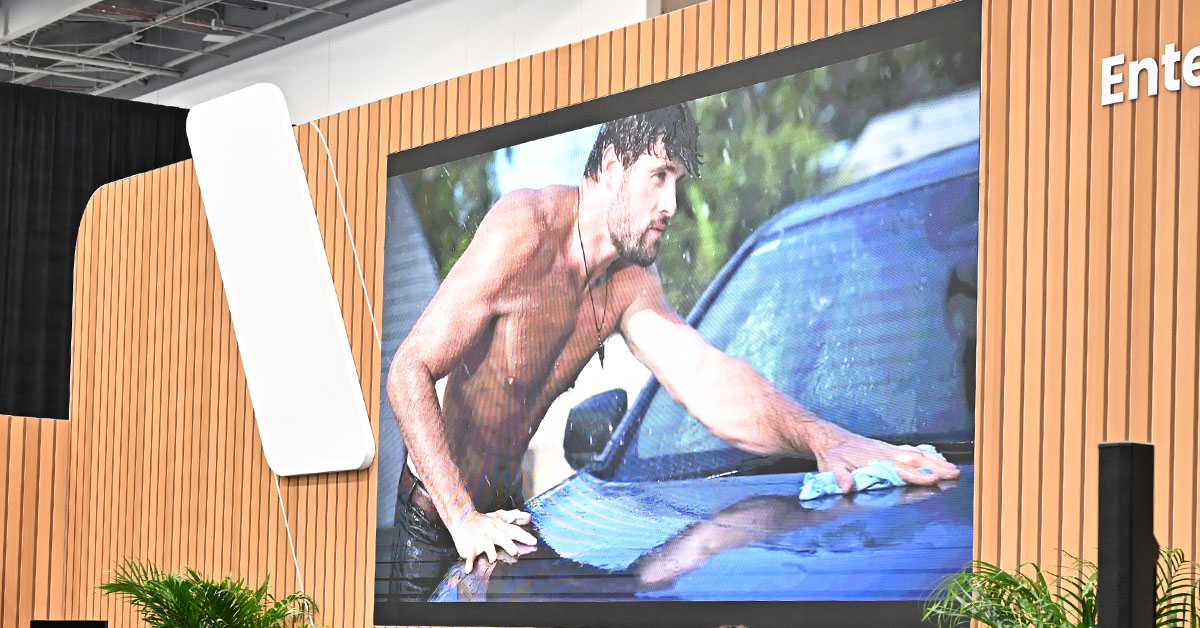
The vertical video boom is becoming one of the most consequential shifts in entertainment, attracting Hollywood veterans, creator economy powerhouses and new technology platforms eager to redefine how stories are made, distributed and monetized.
At NAB Show 2026, leaders from across the vertical video ecosystem discussed how mobile-first storytelling, creator economy production models, audience data and new monetization strategies are accelerating the evolution of vertical series from a niche format into a mainstream entertainment business.
Key Takeaways:
- Mobile-first vertical storytelling is emerging as a sustainable entertainment business, not a passing trend.
- Hollywood executives increasingly view vertical series as a lower-risk environment for content experimentation and audience development.
- Creator economy production methods are influencing how entertainment companies think about efficiency, rights ownership and distribution.
The Audience Moved First
Consumers have changed their viewing habits, and that shift created fertile ground for vertical series, which are designed for smartphones rather than adapted from traditional television.
“People’s desire for certain kinds of stories never changes,” said CEO of MicroCo Jana Winograde during the NAB Show 2026 session “Microdramas: The 60-Second Studio Surge.” “What changes is the way they watch them.”
The first truly mobile-native scripted entertainment format to achieve meaningful scale in the U.S. market, vertical storytelling is a format built for audience behavior shaped by TikTok, YouTube Shorts and algorithm-driven content experiences, explained Scott Brown, founder and CEO of Second Rodeo Productions. Those platforms have conditioned viewers to expect immediate engagement and constant narrative momentum.
“Microdrama is not competing with longer-format — not competing with Netflix — but definitely competing with TikTok, with Instagram,” said Fiona Li, studio head and general manager of COL Media, during the session “Verticals and Microdramas: What the Future Holds for the Fastest Growing Sector of the Entertainment Industry.”
Creator Economy Thinking Meets Hollywood Storytelling
Rather than treating vertical series as a smaller version of television, the consensus among vertical video leaders is that successful projects embrace the strengths of the format.
“We’re not trying to make a Netflix show in a vertical aspect ratio,” Brown said. “We’re trying to make a great vertical series.”
Susan Rovner, former chairman of entertainment content at NBCUniversal, said she and Winograde were drawn to a format where lower production costs enable more creative risk-taking.
“When traditional Hollywood suddenly is spending $80 million for one series, the risk is so high. The barrier to entry and the barrier to take a risk is so high,” Rovner said.
The shorter production timeline of vertical storytelling also enables rapid experimentation and faster responses to audience demand.
“You’re able to really test simply by creating,” said Erin McFarlane, head of vertical content at Dhar Mann Studios. “You really create an entire film, and you put it out there. Those learnings — whether something was wildly successful or on the off chance that maybe it didn’t reach quite as many as you hope — you still walk away with those learnings to apply to your next greenlighting.”
The result is a model that combines Hollywood storytelling expertise, creator-economy agility and direct audience feedback in ways that traditional television rarely can.
People’s desire for certain kinds of stories never changes. What changes is the way they watch them.
— Jana Winograde, CEO, MicroCo
Efficiency Becomes a Competitive Advantage
One of the key differences between traditional television productions and vertical series is production.
Many vertical productions operate on roughly three- to four-month development cycles, according to McFarlane. By comparison, traditional television projects can spend years moving through development, greenlighting and release processes.
“We’re really learning what it means to be scrappy in terms of production,” McFarlane said. “We have this wonderful idea. We have this passion for the demographic that wants this type of content. And now we’re really going to remove the barriers of a traditional media scope of a six- to 10-month development cycle, and we’re just going to create content for the people that really want it.”
Productions resemble independent filmmaking, Brown explained, with smaller crews, three-camera setups and increasingly digital workflows. He also highlighted AI as a practical production tool that can help creators visualize environments and scenarios that would otherwise exceed budget constraints.
The traditional television industry may have as much to learn from vertical production methods as the other way around, Rovner suggested, pointing to greater efficiency and less waste.
The Next Disruption: Ownership and Monetization
Although much of the public conversation about vertical video has focused on storytelling, the real disruption may come from new ownership and monetization structures.
As more creators, actors and producers enter the space, the ability to retain rights, control distribution and participate in monetization could become just as important as viewership.
Entertainment lawyer Dave Feldman said that creators who retain control over successful intellectual property could benefit as projects expand into larger franchises, television adaptations or premium productions.
“What’s going to be interesting now is with so many outlets for microdramas, it’s an opportunity for talent to own their content, produce their content, have control, put it up, reap the benefits in the short term. And if it works and blows up, they control it for future distribution, future markets,” Feldman said.
In a media environment where traditional backend participation has declined, vertical content could create new opportunities for talent to share directly in upside. That makes ownership an increasingly strategic differentiator.
Evolving from a niche content experiment into a mobile-first entertainment ecosystem, vertical video has the potential to reshape both Hollywood economics and storytelling itself.
Watch the full session recordings from NAB Show 2026, “Microdramas: The 60-Second Studio Surge” and “Verticals and Microdramas: What the Future Holds for the Fastest Growing Sector of the Entertainment Industry.”
Join Us at NAB Show New York
October 21-22, 2026
Javits Center | New York, NY
Discover practical insights, evolving workflows, emerging business models, technology adoption and new opportunities across the media ecosystem.