
NAB Show
Changing Frequencies: The NAB Show Podcast.
The Creator Economy at Risk: Ownership, Identity and AI | Episode 4
Aired on April 1, 2026.
Listen and Follow


About the Episode
AI isn’t just changing how content gets made. It’s changing who owns it, and who owns you. In this episode of Changing Frequencies, host Josh Miely sits down with Luke Arrigoni, founder and CEO of Loti, to unpack how generative AI is forcing a new conversation around identity, ownership and control in the creator economy.
They break down:
- How AI has moved from enhancing creativity to replicating identity at scale
- Why name, image and likeness (NIL) is becoming a central issue for creators, not just athletes and celebrities
- What consent, compensation and control actually look like in an AI-driven ecosystem
- How creators can protect themselves while still leveraging AI as a tool for growth
- The emerging tension between personal identity and scalable digital extensions of it
- Why policy, platforms and business models are all struggling to keep up
As AI expands what’s possible, creators are being pushed to define what’s permissible … and what they’re willing to give away.
Stay until the end of the episode for an exclusive podcast promo code that gives you a free NAB Show Floor Pass to the 2026 NAB Show in Las Vegas (April 18-22)!
Subscribe for more conversations with the people shaping what’s next in media, entertainment and technology.
New episodes every other week, leading into NAB Show in Las Vegas in April.
Meet the Guest
Luke Arrigoni, Founder and CEO, Loti AI
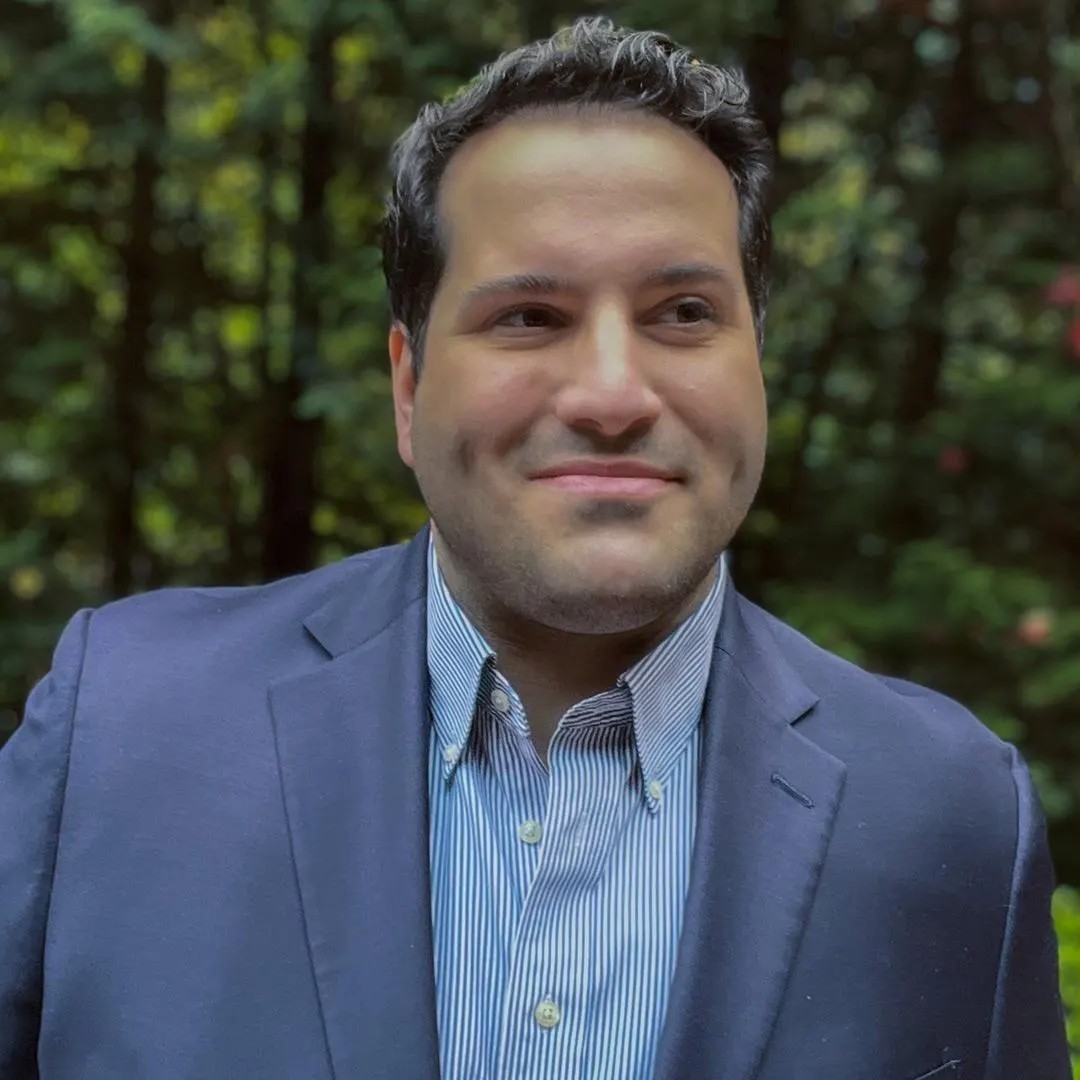
Luke Arrigoni is an innovator, entrepreneur and an architect of possibility — a rare individual who sees not just the world as it is, but as it should be. Driven by curiosity, resilience and an unrelenting bias toward action, Luke is fearless in taking calculated risks in pioneering an ethical Generative AI world.
A trained mathematician and applied AI veteran, Luke has spent the last decade at the intersection of machine learning and intellectual property. He studied mathematics at Columbia University, then built AI systems for Getty Images, UPS, Johnson & Johnson and FOX, working across content recognition, logistics optimization and media intelligence.
At Getty, he saw firsthand how digital rights infrastructure failed to keep pace with the platforms consuming the content. That gap became the thesis behind Loti AI. Today Luke is equal parts visionary and pragmatist combining creative thinking with operational discipline in building Loti to solve real problems at scale while inspiring and challenging the GenAI industry as a whole to mature in a responsible, just and ethical manner.
Before founding Loti, Luke consulted for Fortune 500 companies on applied ML strategy, specializing in translating research-grade models into production systems with measurable P&L impact. His work consistently sat at the boundary between technical capability and commercial viability, a skill set that now drives Loti’s product and go-to-market approach.
Listen Now

View Transcript
The Creator Economy at Risk: Ownership, Identity and AI | Episode 4
JOSH MIELY, HOST: The media landscape doesn’t stand still, nor does the business behind it. Welcome to “Changing Frequencies,” a podcast from NAB Show. Each episode explores how media, entertainment and storytelling are evolving from broadcast to streaming, content creators to the cloud and sports to AI, spotlighting the people who are defining what’s next. I’m NAB’s Josh Miely, and today we’re looking at the creator economy. Not from the perspective of growth or audience, though, from something more fundamental: ownership.
And stay with us until the end of the episode, because we’ll share an exclusive promo code for our listeners that gives you a free Show Floor Pass to the 2026 NAB Show in Las Vegas coming up April 18th through the 22nd.
Now, over the past year, the conversation around AI and creativity has moved from theory to reality. You saw it in Hollywood with the SAG-AFTRA strike that put AI and digital likeness at the center of labor negotiations. Questions around consent, compensation and control are no longer abstract. They’re economic. And those same issues are now moving directly into the creator economy. Because today, it’s not just content that can be scaled, it’s your identity.
At the 2026 NAB Show, these themes are front and center. How AI is reshaping creation and distribution and monetization, and what that means for creators operating in a more complex landscape. That’s also the thinking behind NAB Show’s new Content Creator VIP program, designed to help creators navigate that shift. So today we’re looking at the creator economy through the lens of identity, likeness and control. To do so I am joined by Luke Arrigoni, founder and CEO of Loti, a company that helps creators protect and control their digital likeness online. Luke, welcome to the show.
LUKE ARRIGONI: Thanks for having me. Happy to be here.
MIELY: I’m excited for this conversation because, I mean, this is front and center and has been in the news for our communities, right? We’ve already seen these issues surface at the highest levels of the industry from actors to voice talent, where AI and their digital likeness become central in labor negotiations. So from your perspective, let’s open the conversation like this. How much of what’s happening to creators today is part of that same larger shift?
ARRIGONI: You know, I think it would be impossible to run any part of your creator business without first trying to understand what your rights are. What does it mean for AI, for likeness, for someone to copy your own material and just put it somewhere else? And the landscape is becoming ever more complex. And there’s legislation that’s trying to simplify, things like NO FAKES that are trying to at least say, if you copy someone’s name, image, likeness into some AI program, you owe them something for it, or they can even control what gets made in general.
So I think if you are in this space right now, while it might have felt like a fringe thing to understand what, like, NIL rights were in the past, now it’s very manifest for your business to have kind of a firm understanding of, “Do I get special rights?” Like, if you’re in Tennessee, you get Elvis, right? And trying to figure out how that maps to a bigger play strategically for you is gonna be something I think more people are gonna need to figure out this year.
MIELY: All right, so when we delve into that, I mean, obviously we talk about AI, we’re talking about the creative side of it, but this really is that, you know, that ability to replicate identity at scale. How should creators then frame their thinking about this with that tradeoff of, hey, AI can help me, but AI can be really detrimental to my business.
ARRIGONI: Yeah, I think that there’s this spectrum that everyone needs to understand. It’ll be different for every brand, right? So whoever you are as a creator, you’ll have a different kind of approach to it. But you should be considering things like, what kind of topics would I allow someone to make me of? Is there a political topic that I’m okay with it generating it? If you’re outspoken about a certain kind of politics, well, that might be a complete red-hot issue you’d never want to touch. For some influencers, that might be what the majority of the things they’re, they’re generating are.
Um, you want to figure out how you can kind of collect all of your endorsements and make sure that no one generates anything that is, you know, could put you in a bad spot on that contract, where it’s like you saying you don’t like the thing that you endorsed last month. Uh, so I would say that the real analysis that everyone needs to think about for AI and being able to generate themselves or others generating you is a rule set of what matters to you. And you should think about it as in real bespoke rules, not something like an on-off switch like drugs or no drugs. You might say something like, “I’m okay with things along the lines of cannabis. That’s all right with my brand.” And you should kind of try to memorialize that in a Google Doc somewhere.
MIELY: All right, so in talking about what’s right for you, and I think about, you know, some of the creators I’ve talked to and a lot of them, you know, they think about their content mainly as their product and what’s right for them and what they want to shape around. As you’re talking, you’re talking about, it’s actually their likeness as an asset. So what is that sort of shift in thinking the need to be when they put it in practice?
ARRIGONI: It’s definitely an interplay between them, right? It’s their content and that’s what people are really watching, but also them as an entity, as an identity that has some economic value. And they should of course try to figure out the balance between what is the authentic version of my brand, which is just like, me, not AI versus a new, cool, creative way to reach audiences, right? Like you don’t have to think about it as inauthentic, right? You could think about it as there’s a way in which I can engage in a very meaningful, cool conversation with a thousand people at the same time. And AI can allow that.
So I think understanding where you as the product can be moved at scale to do more personalized things. That’s where, like, AI would come into play. And that rule set we talk about would come into play versus, like, the content itself. Like, what do you authentically as you going to spend time to make a video of? And it’s a balance. You’ll have to figure out what’s good for your brand.
MIELY: No, and that’s going to be different for every brand. It’ll be kind of exciting to see over the next 18 months, those that are able to understand and harness that. I guess I still, I want to keep delving into this a bit so we can educate. You know, when we think about AI-generated versions of real people, which is a side of this that we’ve kind of brushed on and alluded to in the first couple of minutes, but not gone, like, full-on in. Let’s go full-on in right now. Where are creators most exposed when it comes to misusing their identities?
ARRIGONI: I think it’s two big places we see. The first is impersonation accounts. Someone just literally will boot up a social media account that says it’s the authentic version or a private chat or some other way to reach people. And then they sell them inauthentic products or outright scam-type services, trying to get them to donate to charities that are not actually charities that, just a sinkhole of blockchain money. That’s probably the most profound way that we’ve seen people misuse deep fakes because then you can have a deep fake on one of these accounts saying that they’re the authentic version.
And the other way when it comes to identity is people creating endorsements of products with deep fakes using the influencers’ likeness, using any kind of digital-first creators’ likeness. So they go to promote a certain type of cosmetics brand. And then you, of course, show up promoting this brand that you’ve never even heard of. And this can be doubly problematic for you. One, you could just be in conflict with a different cosmetics brand that you’ve done work with. We’ve seen that, and that’s really hard to navigate, right? Cause the person that actually paid you needs you to go remedy it or wants you to remedy it even though there’s not great, there’s not great mechanisms for that. So, you have that problem. And then, of course, you just have the problem of people are using your likeness to promote things, which is also how you make money and you need to limit that. You have to create a kind of economic scarcity around it.
MIELY: That’s it’s a great way to put it. How do you, how do you protect yourself, then? Where do you guys come in to help people protect themselves once they’ve diagnosed, “Oh, this is happening to me and I want it to stop.”
ARRIGONI: Well, this is where selfishly and biasedly, I will say that this is what we do. We do it better than anyone, right? But, but the idea is you should probably get a provider that scans the internet for what you look like and sound like and then has the ability to delete things where you don’t belong. Now, Loti is really good at it. You know, where we, we take pride in the fact that we have so many more assets that we watch, that our take-down capabilities are better than others.
But it doesn’t remove the fact that someone, you should hire someone to go and do this, because it’s, it’s very expensive to do on your own. So, it’s one of those businesses that naturally makes sense at scale. You couldn’t, for instance, like vibe-code an internet scraper. You know, we spend a lot of money every month to try and digest that. And it’s not just for one person. It’s just, you have to get it all at one time. But understanding what the landscape looks, what a competitive landscape looks like for companies like mine will be important. Like, which way do I want to go? How do I want to get some kind of protection will be important. And the pricing is pretty, is a huge range from a freemium-like product to a couple thousand dollars a month and everywhere in between.
MIELY: Well, and then that makes sense because look, we’re talking about, you know, the universe is the most vast expanse out there. The second most vast thing is the worldwide web and where anything and everything can go. So, I take it that there’s any different size for folks. You know, as we think about these creators a bit more, you know, a lot of the deals they’ve made are around just, you know, their traditional content and the rights for that. Are they losing something if they’re not trying to base deals around themselves, I guess?
ARRIGONI: Pretty soon that will be something they need to consider is the product being themselves, the endorsement, the trust. And they shouldn’t consider this as, like, an inauthentic way or selling out or anything like that. Cause sometimes you get that vibe a little bit. You get in a conversation with someone and they really want to lean hard into, like, oh. it feels unethical to use AI to make an endorsement. The reality is, as long as your team is still vetting the products, if you yourself actually still think that this is a viable thing that you’d want to promote and endorse. That’s really what your, your fans, your customer base is interested in. Whether they don’t, probably don’t care if you are the one with the camera up and it’s staring at you and you’re doing 48 takes to get the thing right. That’s not as important as, like, actually, I know a lot about this particular product space and this product is actually the best.
So, thinking about it as a way to, to endorse the things that you care about in a way that you can reach more people, because you can also think about things that are more personalized. And this is you as the product, not the content, right? Imagine doing a deal with a brand, and the brand has you as someone that’s, like, walking through a particular part of their product.
Here’s a good example: If I sold financial literacy software, like I go through your checkbook and find all of the duplicate subscriptions, there’s a bunch of apps that do this kind of thing, right? It might be cool if my brand as a creator is financial knowledge that I’m, like, walking through it with you. You, like, go to the dashboard of the app and then me as the advisor is walking through and be like, oh my God, you have two Netflix. Maybe you shouldn’t eat so much Domino’s, right? Like I’m just kind of jabbing at them a little bit, but it’s my brand, it’s who I am. It doesn’t violate my rules necessarily, but it’s a lot more fun and engaging for both your customers and the product. And it’s something that’s only possible with AI.
And people don’t necessarily feel like they’re being robbed out of that. They know it’s AI and it’s still just a lot more fun to have their favorite financial YouTuber go through their checkbook than it is to have, like, Clippy in the corner do it.
MIELY: Well, come on, now. We all liked Clippy back in the day.
ARRIGONI: Clippy was amazing.
MIELY: Yeah. Hopefully he has a ripe comeback here in the AI time. But I take the point. That’s great, because it adds kind of like a personalized touch if you’re the user tied to something that you enjoy, or if you flip it on the other side, you’re the content creator, if it’s somebody new, that that person that’s using the app is being exposed to it might take them to your content. Correct?
ARRIGONI: Correct. This is a great use of AI that people all know. It’s not uncanny valley. They know it’s AI. They still like the experience, right? And it benefits you, benefits the brand.
MIELY: I dig that a lot. What else can you tell me if you think about how things might fundamentally change with stuff creators can monetize, you think, over the next three to five years, kind of built off of this?
ARRIGONI: I think the strategists are going to win here. I think that it’s like electricity just got piped into the building and there’s a lot of really cool things we could build from it. And so the example I just gave about the checkbook thing, it’s probably a dumb and rudimentary idea, but your, you know, your audience, the creators could probably think about, “Well, hold on, what if I didn’t just do it to just make more podcasts or make more videos? Like, that’s, that’s like, the first, kind of, oversimple way to use AI. What if I thought of a different way?”
I think the people that are very creative in the use of their likeness as the product to combine with the brands they enjoy, and I know that sounds vague, but that’s kind of the space where creativity lives. I think those people are going to be really successful because there’s so much that is possible now.
MIELY: I think you’re absolutely right. And look, it’s, I think there’s going to be some pure innovation and things nobody’s thought of, but I think there’s going to be a lot of, you know, we think about all the different, you know, I’ll just, I’ll say like movie promotions we’ve seen over the last few decades and these little one-off things that, you know, someone might remember from 15 years ago, tied to whatever title that, “Oh, that was a cool little thing.” And it never really happened again because it was tough to do. All somebody has to do is remember that, and all of a sudden it becomes the same example that, know, similar to the same example you just gave, right?
ARRIGONI: Yeah.
MIELY: So I brought up the word innovation. When we think about innovation over the next three to five years, which, you know, you used to always say five to 10, now it’s three to five, because everything is just moving so fast.
ARRIGONI: Telescoping. I agree.
MIELY: With AI tools and platforms, what’s missing around, when it comes to our infrastructures for ownership and control, for any creator in general?
ARRIGONI: So this is something that uniquely we’re trying to solve for at Loti. This is something that, we’re building a system called Interchange that lets GenAI platforms and others do a real-time clearinghouse. So you might say, “I want to generate Josh,” right? And you’d be like, “Well, I put Josh in. What are Josh’s rules? What are Josh’s prices, right? And then how does Josh get paid out of it, right?”
Like, there’s all of these kind of boring aspects of the plumbing required so that if I’m a user and I want to create that, there’s not like a way to do that. Like, is a major GenAI platform going to pick up the phone on a hundred million calls and call each individual person? Probably not, right? And so we strongly believe that infrastructure solves a lot of these liquidity problems. So, to answer your question, there’s not a lot of infrastructure on that right now. And we are trying to build all of the infrastructure for that.
MIELY: Yeah, that sounds like a big bite of the apple. Kind of take us through the different steps of how and what that might be. Like, is the end result, like, we’re just going to land on a webpage, be able to type in all our stuff and boom, there we go?
ARRIGONI: Yeah, I think what you do is in, so, our thesis is that the core way in which you can sell and defend your brand is through defense. There’s actually being able to say when people don’t listen to your rules, there’s something that goes out there and deletes it, that takes it down, which is what our core product is. Right? You can think about it as if you could walk around the toll booth, no one would pay for it. So we build a really strong toll booth, big fences. And that’s what we’ve been doing for years now.
And now we’re at a point where, you know, if you do go land on a website, you know, or if you are a creator, you go to your Loti dashboard and you put in all these rules, all the natural language ones, the bespoke, kind of, “What is me or the brands I’ve endorsed?” You kind of enter it all in 30 minutes tops, and you set prices. And then if a fan goes to one of the many GenAI platforms and they do actually type your name to be put in, there’s no interaction required. It feels very seamless for the user. 300 milliseconds or less, they get cleared, right? So for most people, it’s just like a bat of an eye. It’s not like they’re waiting 10 minutes or even a minute. It’s just less than a second. They get found, they can find it. Yeah, you can generate this. You’re good. Or maybe we nudge them a little bit.
For us, it’s about rails, not guardrails. We really want to create liquidity. And so if someone comes to us with a prompt and says, “Hey, I really want to make Josh doing his thing,” but you have a rule that you always need to be in a blue sports coat, right? Like maybe it’s part of your brand, right? Like, this is the iconic blue sports coat, right? And someone tries to put you in a red sports coat, we will gently nudge the GenAI provider, like, actually back in brand is putting him back in that blue coat. And we feel like this is the easiest way that’s also kind of frictionless for users when they get things wrong a little bit, that we just nudge them back into the OK space, and then it gets generated. And then we can deliver all those analytics to creators. Like, by the way, a lot of people want to generate you in a red coat these days. Maybe you do a video with a red coat, right?
Like I, I’ve of course picked the funniest and most ridiculous thing, but I think for every creator, when they hear me give that example, they know what I’m talking about for their blue coat, right? And it’s not about shutting down generations, because no one wants that. It’s about making sure that the generations do happen, but on the terms that everyone agrees with.
MIELY: No, I mean, setting up their parameters and then allowing that to go out into the ecosystem and then getting information back, you know, like crowdsourced, here’s what people actually might want to nudge on those. So you can make, you know, realistic and thoughtful decisions around it. That’s what you’re talking about, and that’s what I love. And I love the—
ARRIGONI: At scale.
MIELY: At scale. And I love the, you know, the, talking about it as though, you know, if you don’t have a good enough toll booth set up, that people are just going to go around it. It immediately made me think about “Blazing Saddles,” which is kind of funny. But it’s, it rings true. And it’s, look, the more we distill this down at base levels for people, the more it imprints on their brain and they kind of get where we’re going. Because this can get to be some pretty heady stuff pretty quick. And people, you can see eyes glaze over and I don’t think we’re having that happen [inaudible].
ARRIGONI: No, think about the red coat, right? As someone does generate the red coat, someone says, “You know what? Screw Loti. We’re just going to generate it anyway.” Right? Someone generates it, they ignore us, the GenAI platform just ignores, they upload it, they put it on Instagram. Well, Loti goes around and shuts it all down. We’ll delete it off of Instagram, right? That doesn’t fit the brand.
And now you’ve sold something as a GenAI platform to someone that’s unusable. They can’t upload it anywhere, they can’t send it anywhere. It’s infringing. They’re getting marks on their account because it’s, like, it’s out of copyright. It’s out of whatever they didn’t have the authorization to do it. You basically create lots of problems for your customers as a GenAI platform because you have Loti doing the enforcement. And so as a GenAI platform you have to say, “OK, I need to either tell them it needs to be in a blue coat or we’ll never show you the red coat, because if we do, it creates problems for you and for us,” right? Because we also know where it gets generated, right?
So we can trace it back and be like, “You’re the one that tried to jump the fence over the toll booth.” Right? There’s that attribution that I think will keep everyone more honest because then we can just kind of freeze people out of the ecosystem if they want to continually violate creators’ rights. And we’re really like, “Sorry, you continually create fraud on your system. You don’t get access to rights to protect our users.” And I think that’s something that only comes from the power of defense, from the first part of what we talked about, of, like, downloading the internet.
MIELY: And I love that you kind of circled it back there, because we’re about at time. I guess, Luke, where I want to leave it is one or two things, kind of, off of this conversation that if you want people to say, “these are the things I’ve got to remember,” these are what those one or two things are. And then just, you know, what you guys are doing, when is it coming to market, where is it at, that sort of thing.
ARRIGONI: I would say you should embrace AI for your brand and that’ll look different from everyone. Figure out how you can be creative and strategic and that’ll be your edge over everyone else. And then for us, we’re gonna be releasing Interchange here soon. We’re really excited about it. And if anyone would like an account to protect themselves, we do of course have many plans that work for everyone at any stage of your career. Please visit us at LotiAI.com.
MIELY: There we go. LotiAI.com. Luke, thank you so much for helping us unpack one of the most important and least understood shifts in the creator economy.
ARRIGONI: Thanks for having me.
MIELY: As AI continues to reshape how content is created and distributed, questions of ownership, identity and control are becoming central to the future of media. These are exactly the kind of conversations we’ll be continuing at the 2026 NAB Show in Las Vegas and through the new Content Creator VIP program, designed to help creators navigate this increasingly complex landscape.
As promised, listeners of “Changing Frequencies” can use the promo code PODCAST26 to receive a free Show Floor Pass when registering at NABShow.com. That’s PODCAST26, and we’ll see you all in Las Vegas. I’m Josh Miely. Thank you for listening to “Changing Frequencies.” Subscribe, share and join us next time, as we continue spotlighting the people shaping what’s next.
Join Us at NAB Show New York
October 21-22, 2026
Javits Center | New York, NY
Discover practical insights, evolving workflows, emerging business models, technology adoption and new opportunities across the media ecosystem.