
NAB Show
Changing Frequencies: The NAB Show Podcast.
Beyond the Brand Deal | Episode 2
Aired on March 4, 2026
Listen and Follow

About the Episode
Creators aren’t just influencers anymore. They’re CEOs, production studios and media companies rolled into one. In this episode of “Changing Frequencies,” host Josh Miely sits down with Dylan Huey (CEO of REACH), Nicki Sun (filmmaker and founder of Nicki Sun Media) and Travis Keyes (commercial photographer and former APA president) for a candid, business-first conversation about what it really takes to build a sustainable creator enterprise.
They break down:
- When content creation becomes a real business
- How creators underprice themselves (licensing, scope creep and trust transfer)
- What brands misunderstand about audience value
- The difference between viral and shareable content
- How AI is actually improving workflows — and where it creates risk
- Why the future belongs to creators who own their audience, IP and infrastructure
This isn’t a hype conversation. It’s a practical look at contracts, revenue models, recurring income, production standards and long-term positioning in a rapidly evolving media landscape.
Stay until the end of the episode for an exclusive podcast promo code that gives you a free NAB Show Floor Pass to the 2026 NAB Show in Las Vegas!
Subscribe for more conversations with the people shaping what’s next in media, entertainment and technology.
New episodes every other week, leading into NAB Show in Las Vegas in April.
Meet the Guests
Dylan Huey
Dylan Huey is a creator-entrepreneur and ecosystem builder focused on the infrastructure that supports creators as scalable media businesses. As CEO of REACH, he works at the intersection of content, monetization platforms and creator community development, helping creators connect with brands, audiences and new revenue opportunities. Huey’s work centers on building systems that enable creators to operate beyond personal influence—developing business models, engagement-based monetization approaches and collaborative creator networks that support long-term sustainability in the creator economy.

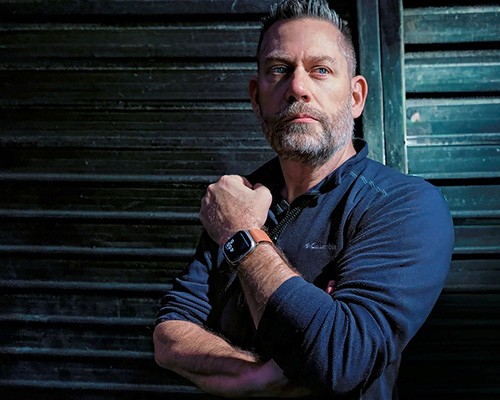
Travis W Keyes
Travis W Keyes is a commercial photographer and filmmaker whose work spans cinematic portraiture, corporate branding and creator-led production. Operating at the intersection of creator media and commercial creative services, he collaborates with brands, organizations and public figures on visual storytelling and branded campaigns. Keyes also brings industry leadership experience through professional creative associations, giving him deep insight into licensing, usage rights and the evolving business standards shaping creator and commercial media work today.
Nicki Sun
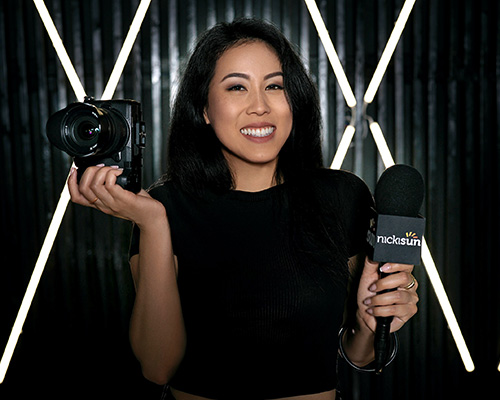
Nicki Sun is a host, filmmaker and founder of Nicki Sun Media, a boutique studio-style creator business specializing in branded storytelling, production and strategic partnerships. Through her company, she produces professional video content and brand collaborations for major technology and media companies while also hosting and creating original programming. Sun represents the “creator as studio” model, combining on-camera work, production expertise and entrepreneurial strategy to deliver high-quality content and partnerships across multiple platforms.
Listen Now

View Transcript
Beyond the Brand Deal | Episode 2
JOSH MIELY, HOST: The media landscape doesn’t stand still, nor does the business behind it. Welcome to Changing Frequencies, a podcast from NAB Show. Each episode explores how media entertainment, storytelling are evolving, from broadcasting to streaming, content creators to the cloud and sports to AI, spotlighting the people who are defining what’s next.
I’m Josh Miely from NAB, and today we’re talking about creators, not just as personalities or influencers, but as business operators. Creators today are expected to function like media companies: revenue streams, contracts, production standards, platform strategy and long-term sustainability.
Today I’m joined by Dylan Huey, Nicki Sun and Travis Keyes. All three of them are founding members of NAB Show’s Creator Council. Dylan is CEO of REACH, a creator-focused ecosystem spanning marketing services, talent representation, ventures and studio work. He helps build an infrastructure that enables creators to operate as scalable, sustainable businesses.
Nicki Sun is host, filmmaker and founder of Nicki Sun Media, a producing branded content for companies including Samsung and RØDE. She’s the creator of The Nicki Sun Show, and she’s a champion of professionalization and entrepreneurship in the creator economy.
And Travis W Keyes is a commercial photographer and filmmaker operating at the intersection of cinematic storytelling, brand partnerships and creator-led production. Travis works in the hybrid space between independent creator and commercial creative, bringing deep experience in corporate branding, ambassador roles and industry leadership.
His tenure as president of American Photographic Artists concluded in January of this year. Thank you to all of you for joining me today. Our time is limited, so let’s just jump right into this conversation. And Travis, why don’t we start with you? When did you realize you were running a business and not just creating content?
TRAVIS KEYES: You know, it’s a funny thing. We start out, we kind of make all this content we love doing. And then you get that first email, it’s like, what are your rates? And you’re like, oh my God, this is serious. And how do I how do I approach that? And what is a breakdown of rates and how do I, you know, and when you don’t realize you have that full answer, you know, like, oh my God, this is a business and I have to, like, address it as such.
And there’s that pressure of, you know, when you first make, you know, if you are an ambassador something, and you’re that pre-ambassadorship when you’re just making it because you love the content. There’s no pressure. But when, as soon as you go into that, like, suddenly you’re under contract and you have to perform and there’s analytics and all this kind of stuff.
You realize, whoa, this is a business — And now the pressure of making content, it feels a lot stronger. So then you have to really understand what the business side of it is. And I think a lot of people, when they go into creating, it’s because they want to tell a story and they want to connect with their audience, but they don’t realize the repeatability of it, the sheer weight of what it means to do something and be a business.
And that is something that, is not really taught in, in the creator circles and shared, you know. I think it was very gate-keeped in numbers and contracts because people didn’t want someone to underbid them overbid them and a lot of that. And so it was one of those things that I realized I have a lot to learn about answering an email if someone asks me, what are my rates?
MIELY: Gosh. And Dylan and Nicki, what about you?
DYLAN HUEY: Yeah, I would say. I mean, that’s exactly spot on. I started off in the creator space when, I was 14, so I would say, I’ve been an entrepreneur at an early age. No, but I come from Silicon Valley, and I think growing up in Silicon Valley, I always had some sort of entrepreneurial mindset.
You know, when I was 14, I loved the joy of getting all these PR packages. It felt like Christmas in my front door every single day in middle school and high school. You know, but I think, you know, especially with the creator economy not really being the creator economy back in 2016, it was more of a smaller function of marketing.
You know, I was a 14-year-old outreaching to brands every single day, about 100 brands a day, telling them why they should pay a 14-year-old 5000, 2000 bucks at a time. You know, I think that that was always my ethos, being someone who came from a very tech-focused family, who grew up in Silicon Valley, now starting to become a creator.
And you know, I love my career journey being an influencer, because the first week I started social media, I gained 30,000 followers. So there’s no trigger, there’s no ramp-up. There’s a lot of learning on the go, which I thought was great. But, you know, I think very early on is when I, when I learned, kind of the ins and outs of the business world and being a founder and a CEO, really stemmed from content creation originally for me.
MIELY: And Nicki, what about you? When did you cross over that Rubicon?
NICKI SUN: Yeah. So my background is professional, on-camera host, and it kind of transitioned into behind-the-scenes filmmaking really when I went to NAB Show. I was actually the MC for the Post Production stage in 2018, and actually due to not — due to seeing a lack of women in the space, I decided to launch my own, a tech channel called Tech Nicki Speaking, which is a play off of my name, “technically speaking,” and I launched a YouTube page where I was reviewing cameras, showing people how to do tutorials that go viral on TikTok, like the Lookalike Challenge.
And I realized my creations became a business when companies at NAB Show interacted with me so, you know, that I hit a different market and they would send me stuff. It would be like, how can we work with you? How can you, like, shoot a product tutorial about this? And that was me wanting to go behind the camera.
But in doing so, it forced me to be in front of the camera because I was actually in front of the camera talking about how to do things behind the camera. So it’s very meta in that way. But I realized that there’s so many brands that had wanted to work with me, that this is a legitimate business, and I need to make sure that I have all my ducks in a row before I continue going forward.
So I would say, really, 2018, 2019 was when I realized that I wasn’t just creating to create anymore. It was also creating, and I have to have a business side, in mind as well.
MIELY: I’ll tell you what, what a decade it’s been as all three of you have just kind of been in this space and seen it explode for yourselves as we’re sitting here with it, and let’s go to Dylan for this one, how do you describe your business model today? Where does revenue actually come from?
HUEY: Yeah, that’s a great question. You know, I think as a creator, there’s so many ways to monetize. And I’ve very much been someone who’s seen all the different ways that you can monetize, right?
I think very early on, for me, it was solely focused on brand deals and then the standard monetization on TikTok and all the other platforms. But because I turned into more of a business-centric person, I say brand deals are great, but I honestly try to do zero brand deals. I don’t want to flood my account and I post mainly on Snapchat now. I get 20 million views every day on Snapchat. And I don’t want to flood my feed with branded content.
On the flip side, what I do now is I’ll work with a lot of creator economy and tech-focused brands and advise them and tell them and be that liaison between industry and the creators. I think that that’s my superpower here, being someone who is very in the industry and as well a creator, and that, honestly, it pays way more than the Snapchat Mid Roll program, which is great. I love Snapchat. Don’t get me kicked off of that Mid Roll program. But I make a lot of money, and that’s how I grow.
And then, you know, beyond that, my main company, REACH, which is a marketing agency and talent management company and venture fund, you know, I’m spearheading and leading that and we have 40 employees. So I’ve really turned my expertise in social media and creator economy to be able to monetize, help other creators monetize, help brands scale and grow, in a very unique and unprecedented way in this creator space.
MIELY: So it’s just really great to hear from you how you had to pivot as you went through this journey over the past few years. Travis, do you find that it’s been it was similar for you? I’m sure it’s different pivots, but that you had to constantly reassess what you were doing?
KEYES: I did that every day, I think. I think we have to. You know, I didn’t enter as a content creator, and it was something that I never, kind of—it wasn’t on my journey, what I expected. I started out in film and TV and working in production and movies and making films and wanting to do that. And then I found I just was disenchanted with the whole film industry and people, like, making their lives of how they knew other people. And their worth was set on like, “Oh, I know this person or I can get this done.”
So I kind of got out of that and distracted for a while and opened up bars and nightclubs in New York and Miami and Connecticut and was lost for a long time and just wasn’t happy. And I found photography. And photography led me down to a happy place where I was, like, this is incredible, but now I want to tell a story.
And as in, early on my days, that was when the influencer boom, I think, kind of happened. And that got kind of annihilated because influencer was taking advantage of, you know, “Oh, I want free things” and doing that. And then this whole thing kind of took—then I think the birth of the content creator was born. And the content creator was someone that knew how to tell stories, knew multimedia from telling stories, whether it be photography, through podcasts, through video.
And that storytelling was — earned trust between their audience and who they were kind of talking to. And that’s what I fell in love with. It was about really kind of finding that space where we could connect with people. And that’s when the content creator was born and the authenticity of what we do was starting to get valued and wasn’t like, oh, bad mis-label, they’re an influencer. No, there was a content creator. And I think anyone that wants to be, you know, successful nowadays has to be versed in being a content creator because you have to connect on so many different levels, with the brand, with the behind-the-scenes, with the audience. And if you’re not doing that, you’re kind of falling behind. And that’s, I think, why this space right now is so important.
MIELY: And Nicki, I want to bring you in on this kind of hear what your story was. But also, you know, as we sit here today, how do creators most underprice themselves and leave money on the table as they’re working through their business models?
KEYES: [Chuckles] You got a day?
SUN: Yeah. So I — I know! I can only speak to what I’ve experienced, but I would say when I was first starting, because, like Travis, I didn’t start out as a content creator or influencer. I love how we both put “influencer” in quotes, because that’s just not how I ever, like, defined myself. It would be like, OK, I realize there’s a difference between charging a package versus charging a la carte, and sometimes as a beginning creator back then, I felt the need that I had to do everything like a YouTube video, 3 to 5 minute.
I had to add, you know, a plug. I had to do social media, vertical content. We got to do collaborations. But I realized I could either package all that up with a higher ticket price or also just charge more. So the biggest thing that I learned while doing this is, the biggest thing to me that creators also leave off the table is licensing fees, their collaboration. Because yes, for you to create the content to put on your page is going to be so much more, because you really are getting — giving them access to your trusted audience. You’ve taken forever to build your audience. And your audience is going to know you, if you put something up that you don’t really believe in.
So it really is a huge thing. Like Dylan said, like, I really, when it comes to brand partnerships, like, I really don’t take a lot. Like, it has to really go with my flow or be a part of my brand. But yeah, licensing, if you create the video, that’s great. But there’s also months afterwards and being able to leave that video up for six months or a year or two years, charge for that, because this company is making money by running your ad with paid ads.
Not just organically, but you don’t, as a creator, see the compensation for that. So you need to charge for them using your video beyond that. So I would say that’s, that was a big thing for me learning, really real is, optimize the scope. Like if the price or the budget is not as high as you’d like it to be, you can totally optimize your scope, like take off a video, just do like, “Oh, you just wanted a photo? Okay, cool.” I don’t have to do all these other things in order to do that. And, yeah, I would say just with licensing fee, just — advocate for yourself. Like no one knows, but you have to advocate for yourself. But those were the biggest things for me.
MIELY: We are always our biggest advocates. And as you were answering that, Nicki, Travis, I saw you just shaking your head a bunch. So I want you to chime in and also kind of talk about what brands most misunderstand about what they’re actually paying for when they hire you or they hire a creator in general.
KEYES: Yeah, I’m glad you brought that up, because they both kind of go back into each other. And both, you know, Dylan and Nicki, you kind of focus in on key things that I had prepped as well. And when, Nicki, you were talking about things that, really, people undervalue themselves and don’t look into that, licensing was number one for me.
I think that scope creep is a huge thing. I think if we don’t have those—and a lot of times we don’t take that time or they don’t give us the time for that pre-production and letting us say, what is the scope of this? What do you expect, what are the deliverables? And every time that they, you know, how many times we’ve said, “Oh, you know, we’ll do it for this price. And then suddenly, “Oh, can you just do another 30-second or can you do one revision or you can do this or can you?” And then suddenly they hired you as a photographer, filmmaker and then they have you as a creative director and like, “Why aren’t you coming up with the ideas for this one?” “Well, you didn’t hire me for that, or you should have hired me for that.”
You know, there’s all these things that kind of creep in: distribution rights and, you know, undervaluing usage is huge. You know, all those things are massive. But when you were going back to, you know, talking about, I think, what brands kind of misunderstand in that kind of whole circle, you know, they’re paying for reach there. You know, that’s what they think. They think they’re paying for reach. When they hire you, they’re like, “Oh, they have a great reach.” But impressions are rented, trust is earned. And then what they’re actually paying for is that trust transfer.
And Dylan, one thing you said is like and Nicki, you reiterated, was you were not trying to put that much brand up, branding on your site. And that is because by doing that, we’re devaluing the trust we’ve earned. And the trust we’ve earned is so valuable that that is what I think that a lot of these brands misunderstand is that earned trust. You may have a smaller viewership, but your engagement is higher and your trust is higher. That is what you’re really kind of putting out there, you know?
And beyond that, it’s your production standards. It’s your storytelling fluency. It’s, you know, your consistency. All of that is what — so, I find that brands kind of misunderstand that the most.
HUEY: If I can add, I think that, you know, when I’m talking to creators every single day now, I have a lot of creators who we manage who have millions and millions of followers, 5 million followers, 10 million followers, and they’ll be, like, “I’ll do every single brand deal that’s 500 bucks.” You know? And I tell them, like, I can get you 10,000 brands hypothetically at 500 bucks, and it’s great. But, you know, your audience doesn’t want to see 10,000 brand deals. And, you know, it’s an oversaturation.
I tell creators to think of their own social media accounts kind of like it’s a TV channel, right? If you were watching ESPN and basketball and every single 10 seconds was a commercial, would you watch that? No. I personally wouldn’t, and I don’t think anybody in the world would watch it, right? You have to have an even distribution, knowing your audience and knowing when the right time to place brands into, to really make sure that your followers believe you and trust you.
Because at the end of the day, if your fans and your followers stopped trusting you, then when you do a brand deal, when you do the next brand deal, who’s going to actually buy into that brand? Who’s going to believe it’s an authentic brand deal? Who’s going to, you know, every CPG and DTC and tech company, they will tell you maybe that brand awareness is a major factor of the campaign.
But at the end of the day, let’s be honest, a CPG and D2C brand, it’s sales. And for a tech company, it’s downloads and MRR, right? And if you can’t help them get that, well, you’re not going to get a renewed contract, right? And the best thing that you could do is figure out how to get a long-term partnership with a renewed contract.
And it’s proving yourself out first. Right? It’s making sure that they believe, that same company believe that your audience is the best audience to advocate for that company. And I found that to be really helpful, that comparison for creators would be like, “Oh my God, you’re so right. We shouldn’t be going for these $10,000 brand deals since we have 25 million followers. Let’s go for the bigger brands that are long-term, that can pay us 400, 500, $600,000, but also make sense for our content and where we can build a really long-term series that this brand can be a part of after this first deal happens.”
MIELY: And Nicki, I want to bring you back in on this because I’m sure you’ve got an opinion. But also I want to know, because we’ve talked about a lot of metrics here in these answers. What are your success metrics? What matters the most to you as you’re producing your content?
SUN: Yeah, to me it’s never been about and, you know, I could be wrong or whatever, but it’s never been about the follower count or the view count. For me, the biggest things, because working in both corporate and non-corporate environments, you know that the marketing director doesn’t get it when they’re asking you to make things go viral. That’s just not a thing. Like, “Make things go viral.” So I’m like, okay, I like to turn that word into make things “shareable.” So for me, what makes you as a person share this piece of content with your friend, your mom, your colleague? Does it have those features of entertaining, inspiring, informational? That’s where I usually guide clients that I work with into creating content.
So for me, one of my biggest metrics is the shareability of it. Like, how many times was it shared? Did you hear about it? But then outside of, like, data, for me, my measure, my metric of success has always been being top of mind when it comes to collaborating with certain brands. If I’m, like, in the top 10, like, creators that they want to work with, that’s amazing.
Also, having a seat at the table. For me, metrics is—having been in it, I just want to help, like, guide creators, you know, in a direction so they don’t have to experience some of the struggles or challenges that I faced. So actually just being on the NAB Creator Council, that to me is a measure of success, is like, being — having a seat at the table to allow, to make changes and decisions that help other people walk in the door. That to me is like my current measure of success.
MIELY: That’s really cool. And listen, we are so excited we have all three of you on the Council. And Travis, I do want to get you to really chime in. You know, one of the things I just picked up on with what Nicki said was, you know, it’s not viral content. It’s shareable content. People want to share content that they feel kind of part of the community, part of your community. Would you agree with that or no?
KEYES: Oh, well, absolutely. I think, you know, I think so many people go in for, you know, initially when they start for the likes and think that if they’re not getting all the likes, then, you know, trying to reach everybody in the world, you know, that they’re not being successful.
But, I mean, if you reach 1% and you build your tribe and you build your trust and you build your people, that is success. I mean, it’s like going to Comic-Con or, you know, or, you know, Space Camp. Those are your people. You know, you’re not going to — everybody’s not going to love what you do, nor should they.
And if you’re not adding some controversy and some back and forth and, I just produced my first film and the scope of the reviews are, “We love it and we hate it.” And I think that’s actually a really good measure of success is, like, if it was somewhere in the middle, like, or if they weren’t talking about it, then, you know, not so great, you know. But if people love it, and they hate it, that’s speaking, you know, I think that brings you to a point where, like, “Wow, they’re talking about it.” That’s what we want. We want people to have those kind of, you know, reactions and connect with the people that we’re trying to tell stories for.
You know, my stories aren’t gonna, you know, connect with everybody, but if I find the right people that — There’s nothing better when you sit in a room with, like, fellow creators like this and we just suddenly start talking and we you instantly we’re like, “Oh my God, what about this? What about that?” And you can’t stop talking because you have so much in common and you’re just kind of riffing off each other. I think that’s, you need to find your people, and that’s where it’s all about.
MIELY: So, Dylan, at one point in our conversation, you kind of mentioned the Grammys a little bit. Obviously we are the National Association of Broadcasters. Want to get your take and then everybody around the panel. You know, when you look at broadcasters, when you look at those traditional networks, ABC, NBC, CBS, you know, what have creators learned from them, what do they aspire for, in terms of what they’ve done? And then where do you think that those networks and those broadcasters can learn from creators themselves?
HUEY: Yeah, that’s a great question. You know, I talk to a lot of people every single day and brands who know what working with traditional broadcasting looks like and CPMs and numbers and numerical, right? And the business world is very saturated with people who know radio and broadcasting very well.
You know, at least for me, I think the first and foremost thing that I’ve seen, a big juxtaposition between traditional broadcasting and also the creator space is just the fact of, like, age and demographic, right? We’ve definitely pivoted into an environment and a society where people are watching TV, film, radio, all of that less and cable.
And now switching to watching social media, YouTube, right? I think, you know, YouTube is most watched on the TV nowadays. Right? And I think that that’s been the ethos of just seeing that change. Right? You have very legacy, 50-, 60-, 70-year-old guys on the broadcasting side. And that’s juxtaposed by, if you go to famous birthdays and you look at famous birthdays, like top 20 creators, I think 60% of them are under 18, which is insane, right?
And I think it’s showing how audience is really transforming. Right? I think there’s a lot of things for creators to take away, right? At the end of the day, the goal for a lot of creators is to be very traditional. Digital is trying to be traditional. Traditional is trying to be digital, right? A lot of traditional companies like CBS and CNN, they’re trying to figure out ways to crack influencers and to leverage influencers to help them.
They’re also trying to figure out ways to go on the internet and focus outside of their cable and to rebrand themselves as a more digital-focused company. And that’s exactly what creators have been able to do, is figuring out how to build long-term legacy audiences digitally on social media. I think the things that creators can take away, it’s just the aspect—and I think Travis talked about this, and, you know, a few other times we’ve talked about kind of just a focus of creators wanting to turn themselves into brands, right? And I think that these traditional broadcasting companies have really been able to successfully build a long-term legacy empire. Right? And the goal for creators is to be a long-term legacy empire.
I think, you know, when I first started on social media, my mother told me that creators only have a four-year lifespan. And I was like, OK, how do I causally reinvent myself? I don’t know whether or not that’s true, by the way. So don’t quote that, but that’s what my mom always told me. But I always try to figure out how can I continue to reinvent myself so that my audience, while my audience continues to mature and evolve, ’cause they stay with me.
And I think that that’s what legacy brands or legacy entertainment has been able to do successfully is have a really strong cult following long-term, where people are constantly watching them, and creators can learn from that. Because if you do, truly, if my mom is right with the four-year thing, then you constantly have to change your narrative, change who you are as a creator constantly to evolve with adjusting algorithms. And learning from traditional entertainment would be really helpful on that.
MIELY: Well, I’ll tell you what, Dylan, I would agree with your mom and the examples I would put out there are Madonna from the ’80s into the ’90s and the 2000s and Taylor Swift these days. So Travis, you got mentioned in that. I want you to kind of follow up on it and put it through the lens again of working with or thinking about broadcast media as you answer.
KEYES: You know, it’s one of those things. It’s like, why would a creator want to come to NAB and what does NAB want to do with creators? And I think, you know, it’s like when — I’ll mark myself, I think I’m quite older than Nicki and both Dylan. But I grew up when, you know, there was not internet. Go figure. How does someone exist there? And there was like three channels on TV. You know, it’s like we — whether you were young or old, you went to the same place for your information.
Now there’s — it’s so segmented where, you know, the older generations are going still to broadcast TV, but the younger generations are not going to that. They’re not using it as their — where they’re getting their information or their entertainment. They’re doing it through their phones. They’re in, you know, YouTube, through Twitch. You know that, you know, that that few kids watch, you know, hours and hours of someone playing a game on Twitch is not — it’s something that the older generation doesn’t understand.
And so coming to NAB where you understand the legacy of, you know, traditional broadcasting and reaching that scalability to huge audiences to where content creators now have a voice and a direct line into a certain tapped group of people that they’ve really entrusted and learn their trust and have those — and, you know, the broadcasters can’t figure out how to get to those people. We both have something to learn from each other. And if we allow each other to learn from each other, that’s where we get that hybrid of, you know, of really working together and understanding with the next generation of this whole media and connecting with people is going to look like.
Because it’s not going to be one or the other, it’s going to be something in between. And that’s where, you know, these great meeting up of minds can really work off each other and really kind of, that’s the most important thing. I hate using word “community,” but it’s that — because I don’t want that to feel like anybody’s not supposed to be in that community. Because we’re all supposed to be there. We’re all supposed to — so these creative circles need to come together and share with each other and help each other and build off each other.
MIELY: Well, yeah. And listen, when someone uses the term community, you can be part of multiple communities. And that’s what bridges and brings those communities together and makes those communities kind of even larger just with different subsects.
And I love that you said, you know, “hybrid.” And Nicki, I want to bring you in on this, you know, in to work off of that. Because when you think about kind of, you know, creator content, sometimes that is, you know, that’s not as linear as what broadcast does. And yet there’s pluses and minuses to that on both sides. Correct?
SUN: Yes, I agree with my colleagues here. No notes. I think starting out in broadcast journalism like over 10 years ago, that’s what I wanted to do. I wanted to be a broadcast journalist, but at the same time I was like, I don’t want to report on possible sad news all the time. So I really wanted to stick with the infotainment, like it’s informational, but it’s also entertaining.
And I realized that after I graduated college, I don’t think any three acronym legacy media was going to hire this punk kid right out of college. So I ended up just starting my own YouTube channel, and I did my own talk show where I interviewed a lot of those who, to me, I felt were underrepresented in media, particularly like indie musicians and artists in the Asian-American/Native Hawaiian/Pacific Islander community. So I really was able to build a community through that. And so I think now, having been to—this would be my ninth NAB Show, I’ve definitely experienced and seen the changes from broadcast level and balancing the intersection between legacy media and digital media, and I’ve always tried to be there to help bridge what needs to be, like, connected.
But like Travis said, like, you can’t have one or the other. It’s like it’s going to be a meeting of the middle. So it’s how can we work together? How can we learn from those who have laid down the foundation but also learn from the new generation of storytellers who have really got it, like, they have a head start and they really know what they’re doing.
So finding that level of respect and that groundedness to come together to realize we can really actually learn something from each other. We are really doing two things, maybe two sides of the same coin, but we just got to get on the same level that at the end of the day, it really comes down to core storytelling. Regardless if you’re in broadcast legacy media or even, influencer or a content creator like, how is your storytelling? How can we improve that from all ends? And I think that’s the way forward.
MIELY: Storytelling and purpose. And that’s what we do when we get together at NAB Show. And listen, I know at one point in time, you know, we’ve talked a lot about everything on the business side and we’ve talked about storytelling. We haven’t really talked about the tech side. So next thing I want to do is jump into AI and kind of talk about the tools that you guys are using. And whether or not it’s effective.
HUEY: I love AI, personally, and I think that that might be a hot take. I don’t know about the rest of everyone on this on this podcast, but I love AI. Now I know where my strengths are and I know where my weaknesses are and I know where my limits are. Right? I’m never gonna overuse AI. I cannot fully be replaced by AI. People watch my content because they want to see my personality. And it goes into this aspect that we just talked about: virality versus shareability. Right? At the end of the day, I could make a million viral videos, but if nobody recognizes me and watches me, what brand have I been able to build? Nothing. Right?
But I do love a good viral video, right? And virality does equate to shareability. For me, like, my entire content workflow is optimized with AI and I think if you’re not using AI, you’re missing the mark of being able to be more productive. Now, am I going to use it to completely film my videos and to, you know, have an AI background and to replace my face with an avatar? No, not at all. That’s—my audience would hate that because they came to me and watched my content because it was me.
However, can I utilize it to help me edit a little bit faster, right? Or can I use it to help storyboard what I wanted to film and put it into tangible soundbite ideas just because I can’t write that well? Yes. And that, I think, is what’s great, right? When I’m on meetings and I’m brainstorming with my team, I can use AI to note-take. And after 15 meetings at the end of the day and being tired, I probably didn’t remember what I said at 9 a.m., right?
Those are ways that AI really helps me as a creator, especially on the business side of things, right? Obviously, for me, I’ve been able to optimize my workflow. And I think we had this meeting at one of the Creator Council meetings, at the end was, like, “What’s our, like, AI tech stack?” And I was like, “I use this for, you know, all of my text messages. And to schedule my meetings, I have an AI tool that I add to my emails and, you know, for sales, I have this tool. And then, you know, for anyone who wants to call me on the phone and I can’t pick up, they can talk to an AI that knows everything about my business,” and to be able to talk about that.
You know, the business side is always really great, but the creativity aspect is something that a human needs to do that AI, at least for right now, and for me, in my opinion, would never be able to replace. It’s always going to be— a human has to be the product. Because yes, AI avatars and AI creators are a thing. You know, and we’ve seen an AI creator at Wimbledon and it’s been great. But that’s just a fad. I mean, it’s trendy. Nobody can really relate to that. There’s no authenticity. And how do you scale and grow that after, you know, having a little bit of a viral moment because it’s something interesting, right? A person is really the spearhead of the brand. That’s my opinion on the AI side.
MIELY: Dylan, I love it. There are a couple of pull quotes in that answer. I am sure we’re going to be seeing those circulated as we run up to NAB Show. Guys, and I guess we’ll go to Nicki for it, you know, a follow-up on that. Do you use then AI more so on the business side than on the creative side, because I think, you know, some people might not even think about doing that.
SUN: I would say when it comes to AI, I am cautiously optimistic. But like Dylan said, it’s like, you know, you cannot replace humans. And I think that the whole reason of why I create is to have that shared human connection with my audience. But I will say, like, when it comes to AI, so much AI is already embedded into a lot of the tools that I already use, like DaVinci Resolve. When I’m recording my podcast, that AI dialog, it helps me to really just take out all the hums and hisses. At the end of the episode, when it’s an hour, I basically transcribe the whole thing, throw it into an AI tool, and then it shoots out a summary for me that I could utilize.
But it’s not — for me, it’s not copy-paste. Again, it’s like a nice way to brainstorm what, like, the conversation, what I thought it was, and then it could also challenge me to think, “Oh, well, it was more about this,” and it helps me do more of my internal research of how I should be able to, I guess, put it out in the world.
So I use AI in that way, and I have used AI tools too to help edit faster. But in using the AI, I realized I didn’t like the AI. So, if anything, again, I’m cautiously optimistic. But I would say I use AI, certain parts and creativity when it comes to editing programs, when I’m editing videos, but it’s never fully AI, like this is the final results. It’s more like, “Oh, that’s what you could do with AI.” Well, this is what I can do as a human. So it’s always that compare-contrast, and you take it with a grain of salt, in a way.
MIELY: I love it: compare-contrast. Listen, guys, we are almost out of time. I got one last question. I’m going to ask you to put your prognosticator hats on, if you will. Five years from now, what will the most successful creator businesses look like? Travis, let’s start with you.
KEYES: That’s a good question. I think we’re getting to a place where the creator becomes their own company and their own identity, their own person. Where that is creating small teams, production infrastructure. They really own their audience channels. They have a recurring revenue, you know, system, models in place, data literacy, clear IP ownership. I think the more literate they become as a business model and really understanding, becoming almost like their own mini TV stations and content creators.
That’s, I mean, you look at people that started out with the love of it, you know, Marquese Brownlee or Linus and stuff like that, that just started making videos that they love. And now they have these empires of studios and production teams and stuff like that. It’s scalable. It’s — we’ve never lived in a point where, it’s sort of the renaissance of creativity, where I like saying that, you know, where we used to make movies and it’s, you have to bring in a helicopter to do a, you know, a huge aerial shot and have giant, you know, things that do, you know, these moving shots. That all fits in a backpack, you know? So there’s never been greater storytelling now that those tools are accessible to everybody. And with that, the AI is kind of scary with that. But also at the same time, I’ll bring in a Star Wars reference. You know, there’s the Dark Side and then you can go to the light, you know.
So everything is a tool and it’s how we use it. And I think that five years from now is going to hopefully see AI kind of go into the — right now, I think people are fearful that, saying, you know, AI, and I think a lot of people instantly think, “Oh, this whole thing was created with AI.” And the scary thing is, a lot of us good content creators will throw out something like, “Oh, this was AI, and now we have to show the behind the scenes to show that no, it wasn’t AI. We actually shot it.” So we have to authenticate that we’re actually doing something real and it’s good and not AI, which it really, kind of, drives you mad.
But I think we’ll kind of get to the process where people are using AI as tools to help, you know, be efficient. But also the badge, moniker of “this was not created with AI” is going to be something that comes back around and be very wanted and authentic.
MIELY: Yeah, I definitely would agree with that. And Dylan, I saw you shaking your head as well. Do you agree? And you know the most successful, how are they going to be in five years?
HUEY: Yeah, I think Travis is pretty spot on. I mean, I always have been saying this for the last few months. I think the next big creators are going to be the ones that own everything, verticalize in-house, right, and have everything oriented into their own company.
You know, Travis named a few of those creators. But, you know, I want to spit three creators that I think are doing this very similar thing that are, are successful. Allen Chikin Chow, Dhar Mann and then MrBeast, right? Those are three creators who are very much the case studies of merging entertainment and creator.
And I think, you know, we’ve seen digital and traditional very much contrast each other. And I think the future is going to be that very much synergetic, you know, of traditional and digital finding its footing into culture equally as much, right? I don’t think that we should be calling a creator a creator, right? We should figure out how to turn these creators into celebrities as well.
You know, and it’s funny, cuz I was talking to some of my friends and I was naming creators. I’m like, do you think this is a creator? Or do you think this is a celebrity? And they were like creator, streamer, creator, right? And I’m like, OK, how can we get that foot in the door to make these creators actually be seen as legitimate celebrities in the same way we see a Ryan Reynolds, a Ryan Gosling, etc. Right?
You know, I was, I was talking to my friends about the Grammy Awards, right? And why I don’t think that Alex Warren would have had any chance to win, right? Because people think of him as a TikToker. And I’m like, what can we do to prove that he’s an actual viable music artist more than just a TikToker while he’s getting 50 million streams right now?
I think that that’s the direction that we’re going to see continuing to transform the digital space into merging with very traditional entertainment, whether that be music, whether that be film and TV. But then as well, having these creators really think of themselves as a very business-oriented mindset, having a CEO rather than having a go get a manager at an outside company. How can they bring up, partnerships, brand partnerships in-house? How can they make sure that they have a very structured finance team and legal team and all of that, where it’s all usually separated, right? It’s all still the Wild West. You have, you know, all these different people and players that are outside agencies and how can you bring it into one where you have them part of your team for your team with you?
MIELY: See, and that’s building the business and that’s, I guess, what we’re kind of leaving people with as we wrap up. Nicki, I do want to give you one last chance to chime in, and I do want to say, hey, Dhar Mann was at NAB Show last year. And you guys are going to be at NAB Show this year, which is super exciting.
SUN: I know, we’re so excited to have more creators or people who identify as creators, at NAB Show this year. I would just say, to add on to both Travis and Dylan, ownership for sure. I do think, personally, I don’t know this hot take, but the year or the time of worshiping and idolizing celebrity is kind of gone for me. I think we could just see how, just, the world is responding to current things that are coming out right now that, yeah, like the people that you idolize before may not be the people that we should be idolizing, which is also why I’ve always had this problem with the term “influencer,” of being, saying you’re a self-proclaimed influencer.
But I would say with that, I think that’s why it’s so important to feel like you own your audience, not relying on one specific platform. There’s other great places like, you know, Substack or, you know, being able to just build your own or having your own email list. I mean, that’s still key in this day is like, if you can have access to someone’s email, like they’re trusting you with your email, I feel like that’s, like, point one. Because you never know when a social media platform may not survive.
So I would say just being able to own your content across the board, having a team, having infrastructure and mini studios, but just operating, as, you know, a business. But that’s also, if that’s your M.O. at the end of the day, like, a successful creator business is where you start and where you want to go. Does that align with your vision? Because sometimes it could get totally taken out of context, and you wanted to just be a creator and create and not have to worry about all this stuff. That’s an option too. So not every single creator has to build a studio. But at the end of the day, that if that is your M.O., that’s what I think a successful business would look like to a creator who wants to go that route.
MIELY: I think that is a great point for us to end on. You’ve got to know your purpose. You follow your purpose, make your content and everything else kind of falls in place. Dylan, Nicki, Travis, thank you so much for this candid conversation. You guys really know what it means to operate and be a creator in the creator economy today. We’re psyched to have you come out and see us when we are in Vegas.
I’m Josh Miely. Thanks for listening to “Changing Frequencies.” Subscribe, share and join us next time as we continue spotlighting the people that are shaping what’s next.
Join Us at NAB Show New York
October 21-22, 2026
Javits Center | New York, NY
Discover practical insights, evolving workflows, emerging business models, technology adoption and new opportunities across the media ecosystem.